Casearia graveolens
Casearia graveolens · Accepted scientific name
Scientific literature: Very Sparse (13 studies) · ★☆☆☆☆
, scientifically known as Casearia graveolens, is a versatile medicinal shrub highly valued in traditional ethnobotany. Renowned for its potent bioactive compounds, it is frequently utilized to treat inflammation, skin ailments, and gastrointestinal issues. Exploring its pharmacological potential offers promising insights into developing new natural therapeutic agents for modern medicine.
- Family
- Salicaceae
- Native range
- Asia-Temperate
- Parts used
- Leaf
- Common names
- Not available
- Scientific synonyms
- Casearia Macrogyna · Casearia Graveolens Var. Lintsangensis · 3 more
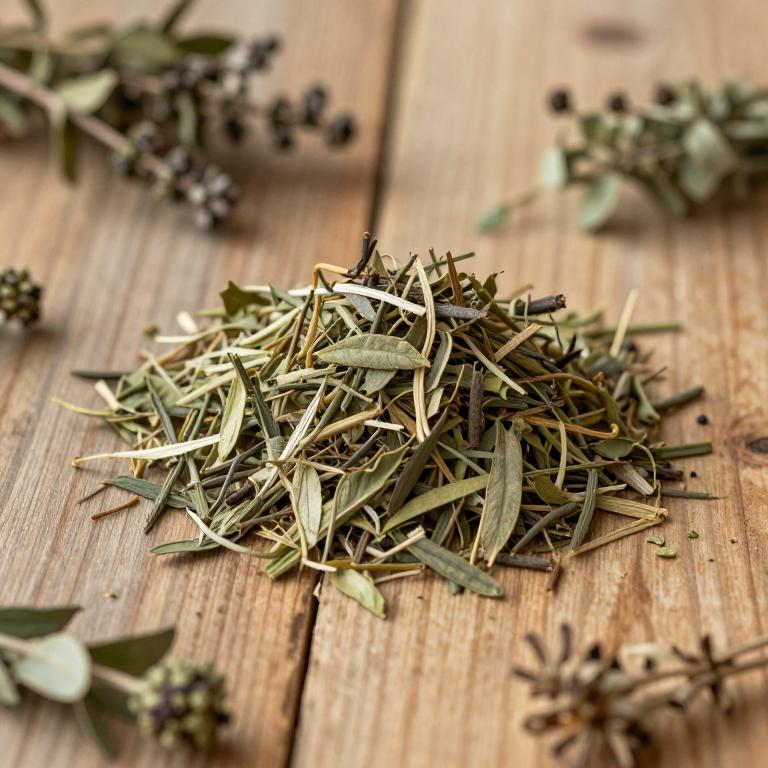
Names and Synonyms
Scientific Names
Accepted name
Casearia graveolensSynonyms
- Casearia macrogyna
- Casearia graveolens var. lintsangensis
- Guidonia ovata
- Samyda glabra
- Anavinga ovata
Sources: Wikidata, Catalogue of Life
Taxonomical Classification
This plant belongs to the kingdom Plantae within the phylum Streptophyta and is classified under the class Equisetopsida. Following the subclass Magnoliidae, it is situated in the order Malpighiales and the family Salicaceae. Finally, its taxonomic identity is defined by the genus Casearia.
| Rank | Classification |
|---|---|
| Kingdom | Plantae |
| Phylum | Streptophyta |
| Class | Equisetopsida |
| Subclass | Magnoliidae |
| Order | Malpighiales |
| Family | Salicaceae |
| Genus | Casearia |
Sources: The World Checklist of Vascular Plants (WCVP)
Distribution
This plant exhibits a widespread distribution across several key regions in Asia. Within China, it is primarily found throughout the South-Central areas. Its presence is also significant across the Indian Subcontinent, where it can be located in India and Bangladesh. Furthermore, the species is documented in the specific region of Assam. Finally, its geographical range extends into the East Himalaya region.
| Region | Area |
|---|---|
| China | China South-Central |
| Indian Subcontinent | Assam |
| Indian Subcontinent | Bangladesh |
| Indian Subcontinent | East Himalaya |
| Indian Subcontinent | India |
| Indian Subcontinent | Nepal |
| Indian Subcontinent | Pakistan |
| Indian Subcontinent | West Himalaya |
| Indo-China | Cambodia |
| Indo-China | Laos |
Sources: The World Checklist of Vascular Plants (WCVP)
Botanical Identification
Ecology
The ecology of Casearia graveolens is characterized by its adaptation to a broad altitudinal gradient within its native habitats, allowing it to thrive across diverse topographical landscapes. This species is typically found distributed across an elevational range that begins at 200 m AMSL and extends up to a maximum of 1400 m AMSL. This wide vertical distribution suggests a high degree of ecological plasticity, enabling the plant to inhabit various forest strata and microclimates ranging from lowland tropical environments to more temperate montane ecosystems. Such a range indicates its ability to tolerate fluctuations in temperature, humidity, and atmospheric pressure associated with varying altitudes.
- Elevational range max:
- 1400 m AMSL
- Elevational range min:
- 200 m AMSL
Morphology
The morphology of Casearia graveolens is characterized by its robust growth form, primarily manifesting as a woody tree. While some species within related taxa may exhibit climbing tendencies, this plant is distinguished by its self-supporting nature, functioning as a self-supporting structure rather than an obligatory or facultative liana, vine, or climber. As a terrestrial organism, it develops within the soil substrate rather than following an epiphytic lifestyle. Its structural integrity is defined by its woody composition, providing the necessary firmness and perennial strength characteristic of its tree-like habit.
- Climber :
- self-supporting
- Epiphyte :
- terrestrial
- Growth form :
- tree
- Woodiness :
- woody
Sources: Global Inventory of Floras and Traits (GIFT)
Plant Parts
Casearia graveolens has 1 reported plant parts identified across 1 scientific publications and several other databases that are studied for medicinal purposes. The most consistently reported plant part include leaf.
| Plant part | Supporting sources | Consensus |
|---|---|---|
| Leaf | 1 supporting sources | ★☆☆☆☆ |
Leaf
- Journal of natural products
Chemicals
Casearia graveolens has 2 reported phytochemicals identified across 1 scientific publications and several other databases. The most consistently reported chemicals include Bucidarasin A, compound 8.
| Chemical | Supporting sources | Consensus |
|---|---|---|
| Bucidarasin A | 1 supporting sources | ★☆☆☆☆ |
| compound 8 | 1 supporting sources | ★☆☆☆☆ |
Bucidarasin A
- Chemico-biological interactions
compound 8
- Chinese journal of natural medicines
Activities
Casearia graveolens has 3 reported activities identified across 1 scientific publications and several other databases. The most consistently reported activities include Anticancer, Antitumor, Cytotoxic.
| Activity | Supporting sources | Consensus |
|---|---|---|
| Anticancer | 1 supporting sources | ★☆☆☆☆ |
| Antitumor | 1 supporting sources | ★☆☆☆☆ |
| Cytotoxic | 1 supporting sources | ★☆☆☆☆ |
Anticancer
- Chinese journal of natural medicines
Antitumor
- Chinese journal of natural medicines
Cytotoxic
- Journal of natural products
Conditions
Casearia graveolens has 5 reported investigations on conditions identified across 1 scientific publications and several other databases. The most consistently reported conditions include Alzheimer's disease, Hepatocellular carcinoma, metastasis, neuron degeneration, tumor cell lines.
| Condition | Supporting sources | Consensus |
|---|---|---|
| Alzheimer's disease | 1 supporting sources | ★☆☆☆☆ |
| Hepatocellular carcinoma | 1 supporting sources | ★☆☆☆☆ |
| Metastasis | 1 supporting sources | ★☆☆☆☆ |
| Neuron degeneration | 1 supporting sources | ★☆☆☆☆ |
| Tumor cell lines | 1 supporting sources | ★☆☆☆☆ |
Alzheimer's disease
- Journal of natural products
Hepatocellular carcinoma
- Chemico-biological interactions
Metastasis
- Chinese journal of natural medicines
Neuron degeneration
- Journal of natural products
Tumor cell lines
- Chemico-biological interactions
Preparations
Casearia graveolens has 3 reported preparations identified across 1 scientific publications and several other databases. The most consistently reported preparations include bucidarasin A, ethyl acetate-soluble extract of the twigs, twigs.
| Preparation | Supporting sources | Consensus |
|---|---|---|
| Bucidarasin a | 1 supporting sources | ★☆☆☆☆ |
| Ethyl acetate-soluble extract of the twigs | 1 supporting sources | ★☆☆☆☆ |
| Twigs | 1 supporting sources | ★☆☆☆☆ |
Bucidarasin a
- Chemico-biological interactions
Ethyl acetate-soluble extract of the twigs
- Journal of natural products
Twigs
- Chinese journal of natural medicines