sour fig
Carpobrotus edulis · Accepted scientific name
Scientific literature: Very Sparse (8 studies) · ★☆☆☆☆
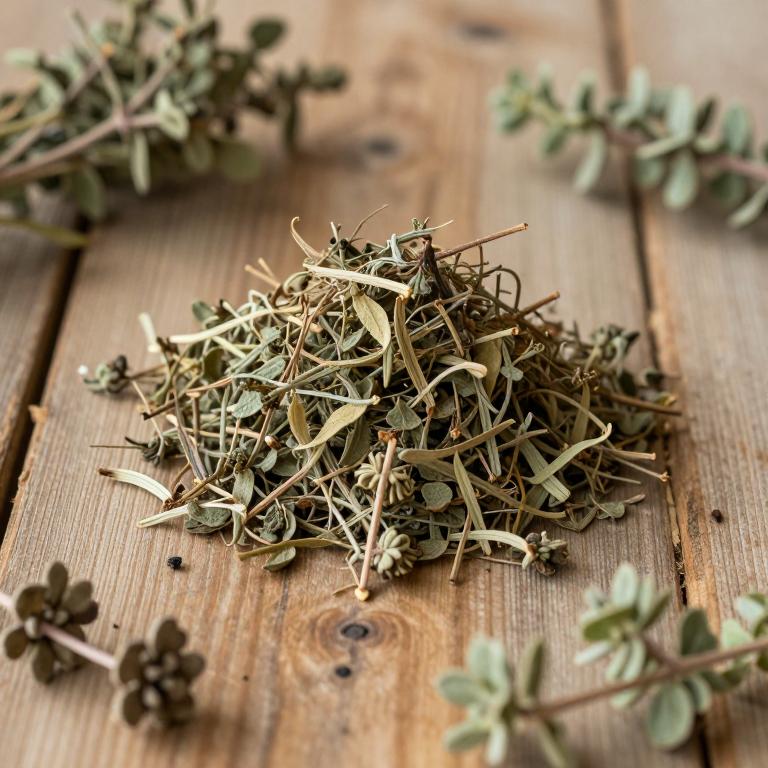
Sour fig, scientifically known as Carpobrotus eduulis, is a resilient succulent native to South Africa. Highly valued for its edible fruit, this medicinal plant offers significant antioxidant properties. It is traditionally used to treat various ailments, providing a unique blend of nutritional benefits and therapeutic potential in folk medicine.
Names and Synonyms
Common Names
- Hottentot-Fig
- Kaffir Fig
- Common Sourfig
- Edible Sourfig
- Hottentot Fig
- Wild Fig
- Yellow Sourfig
- ice plant
- pigface
- sea fig
- sour fig
Scientific Names
Accepted name
Carpobrotus edulisSynonyms
- Abryanthemum edule
- Carpobrotus edulis subsp. edulis
- Mesembryanthemum edule
- Carpobrotus edulis var. chrysophthalmus
Regional and Traditional Names
Spanish:
- Mesembryanthemum edule
- uña de gato
- higo del Cabo
- higo marino
- Doca sudafricana
- Garra de León
- Planta sudafricana de hielo
- crespinillo
- uña de gato
German:
- Essbare Mittagsblume
- Hottentottenfeige
- Eßbare Mittagsblume
- Hottentottenfeige
- Pferdefeige
- Essbare Mittagsblume
- Gelbe Mittagsblume
French:
- Figuier des Hottentots
- figue marine
- Griffe-de-sorcière commune
- griffe de sorcière
Sources: Wikidata, Catalogue of Life
Taxonomical Classification
This plant belongs to the kingdom Plantae and is classified under the phylum Streptophyta and the class Equisetopsida. Within the subclass Magnoliidae, it falls under the order Caryophyllales and the family Aizoaceae. Its specific taxonomic designation is within the genus Carpobrotus, identifying the species as Carpobrotus edulis.
| Rank | Classification |
|---|---|
| Kingdom | Plantae |
| Phylum | Streptophyta |
| Class | Equisetopsida |
| Subclass | Magnoliidae |
| Order | Caryophyllales |
| Family | Aizoaceae |
| Genus | Carpobrotus |
Sources: The World Checklist of Vascular Plants (WCVP)
Distribution
This plant exhibits a diverse geographical distribution across several regions of Europe. In Northern Europe, its presence is documented within Great Britain and Ireland. Moving toward the Mediterranean, it can be found in various parts of Southwestern Europe. Specifically, its range includes the islands of Baleares and Corse. Finally, the species is also distributed throughout France.
| Region | Area |
|---|---|
| Northern Europe | Great Britain |
| Northern Europe | Ireland |
| Southwestern Europe | Baleares |
| Southwestern Europe | Corse |
| Southwestern Europe | France |
| Southwestern Europe | Portugal |
| Southwestern Europe | Spain |
| Southeastern Europe | Albania |
| Southeastern Europe | Greece |
| Southeastern Europe | Italy |
Sources: The World Checklist of Vascular Plants (WCVP)
Botanical Identification
Ecology
The ecology of Carpobrotus edulis is characterized by its adaptation to specific coastal and montane environments, primarily occupying Restinga habitats. This plant thrives across a significant altitudinal gradient, spanning from sea level up to a maximum elevation of 1100 m AMSL. Its presence in Restinga ecosystems highlights its ability to endure the unique environmental pressures associated with these sandy, coastal restinga formations, while its broad elevational range demonstrates a remarkable capacity to colonize diverse topographical zones.
- Elevational range max:
- 1100 m AMSL
- Elevational range min:
- 0 m AMSL
- Habitat :
- Restinga
Life history
The life history of Carpobrotus edulis is characterized by a perennial lifecycle, allowing the plant to persist across multiple growing seasons. It adopts a chamaephyte life form, specifically categorized as a chamaephete, which enables it to maintain its structure close to the ground. Furthermore, the plant exhibits an evergreen deciduousness, ensuring that its foliage remains functional and photosynthetic throughout the year without the need for seasonal shedding.
- Deciduousness :
- evergreen
- Life form :
- chamaephyte
- Lifecycle :
- perennial
Morphology
The morphology of Carpobrotus edulis is characterized by its growth form as a non-woody herb, specifically behaving as a self-supporting plant that does not function as a climber or a parasite, maintaining an independent existence. As a terrestrial species, it is neither aquatic nor epiphytic. The plant exhibits a prostrate shoot orientation, spreading across the substrate. Its physical stature is relatively low, with plant height ranging from a minimum of 0.06 m to a maximum of 1.2 m, maintaining an average height of approximately 0.15 m.
- Aquatic :
- terrestrial
- Climber :
- self-supporting
- Epiphyte :
- terrestrial
- Growth form :
- herb
- Parasite :
- independent
- Plant height max:
- 1.2 m
- Plant height mean:
- 0.15 m
- Plant height min:
- 0.06 m
- Shoot orientation :
- prostrate
- Woodiness :
- non-woody
Physiology
The physiology of Carpobrotus edulis is characterized by a specialized metabolic and morphological framework adapted for moisture retention and efficient resource utilization. It utilizes a C3 photosynthetic pathway to facilitate carbon fixation. The plant exhibits significant succulence, a key physiological adaptation that allows for the storage of water within its tissues to survive arid conditions. Morphologically, the leaves are oblong in form, displaying a varied size range with a minimum length of 4 cm and a maximum length reaching up to 13 cm. The leaf width is similarly variable, ranging from a minimum of 0.8 cm to a mean of 1.5 cm, with a maximum width of 1.7 cm. Furthermore, the species does not function as a nitrogen fixer, relying instead on external nutrient availability within its environment.
- Leaf form :
- oblong
- Leaf length max:
- 13 cm
- Leaf length min:
- 4 cm
- Leaf width max:
- 1.7 cm
- Leaf width mean:
- 1.5 cm
- Leaf width min:
- 0.8 cm
- Nitrogen fixer :
- no
- Photosynthetic pathway :
- C3
- Succulence :
- yes
Reproduction
The reproduction of Carpobrotus edulis involves both sexual and asexual mechanisms, with the sexual process characterized by bisexual flowers. The flowering period typically begins in March and concludes in June, though the timing can be variable. The flowers are pink in color and possess significant dimensions, ranging in length from 2 cm to 4.5 cm and in width from 8 cm to 10 cm. This species utilizes a biotic pollination syndrome, specifically relying on insects such as bees to facilitate fertilization; notably, self-fertilization is absent, ensuring genetic diversity through cross-pollination. Once fertilized, the plant produces prolific quantities of seeds, often exceeding 1,000 seeds per fruit. These seeds are relatively small, with a consistent mean length of 1.15 mm and a mean mass of 3e-04 g. The dispersal of these seeds follows a zoochorous syndrome, specifically endozoochorous, meaning they are dispersed via the internal passage through animals.
- Dispersal syndrome :
- zoochorous
- Dispersal syndrome :
- endozoochorous
- Flower colour :
- pink
- Flower length max:
- 4.5 cm
- Flower length min:
- 2 cm
- Flower width max:
- 10 cm
- Flower width min:
- 8 cm
- Flowering time :
- Mar
- Flowering time :
- Jun
- Pollination syndrome :
- insect
- Pollination syndrome :
- bee
- Pollination syndrome :
- biotic
- Reproduction asexual :
- present
- Reproduction sexual :
- bisexual
- Seed length mean:
- 1.15 mm
- Seed mass mean:
- 3e-04 g
- Seeds_per_fruit :
- >1000
- Self fertilization :
- absent
Sources: Global Inventory of Floras and Traits (GIFT)
Plant Parts
Carpobrotus edulis has 1 reported plant parts identified across 1 scientific publications and several other databases that are studied for medicinal purposes. The most consistently reported plant part include fruit.
| Plant part | Supporting sources | Consensus |
|---|---|---|
| Fruit | 1 supporting sources | ★☆☆☆☆ |
Fruit
- Pharmaceuticals (Basel, Switzerland)
Chemicals
Carpobrotus edulis has 4 reported phytochemicals identified across 1 scientific publications and several other databases. The most consistently reported chemicals include Avicularin, Fatty acids, Monoterpenes, resveratrol.
| Chemical | Supporting sources | Consensus |
|---|---|---|
| Avicularin | 1 supporting sources | ★☆☆☆☆ |
| Fatty acids | 1 supporting sources | ★☆☆☆☆ |
| Monoterpenes | 1 supporting sources | ★☆☆☆☆ |
| resveratrol | 1 supporting sources | ★☆☆☆☆ |
Avicularin
- Plant physiology and biochemistry : PPB
Fatty acids
- BMC complementary and alternative medicine
Monoterpenes
- BMC complementary and alternative medicine
resveratrol
- Inflammopharmacology
Conditions
Carpobrotus edulis has 2 reported investigations on conditions identified across 1 scientific publications and several other databases. The most consistently reported conditions include antioxidant, inflammation.
| Condition | Supporting sources | Consensus |
|---|---|---|
| Antioxidant | 1 supporting sources | ★☆☆☆☆ |
| Inflammation | 1 supporting sources | ★☆☆☆☆ |
Antioxidant
- Molecules (Basel, Switzerland)
Inflammation
- Journal of ethnopharmacology