Salsola imbricata
Caroxylon imbricatum · Accepted scientific name
Scientific literature: Very Sparse (10 studies) · ★☆☆☆☆
Salsola imbricaata, scientifically known as Caroxylon imbricatum, is a resilient desert shrub valued for its diverse therapeutic properties. Traditionally used in various medicinal practices, this plant contains bioactive compounds that offer antioxidant and anti-inflammatory benefits. It serves as a vital natural resource for treating diverse ailments in arid regions.
- Family
- Amaranthaceae
- Native range
- Africa
- Parts used
- Leaf
- Common names
- Not available
- Scientific synonyms
- Salsola Imbricata
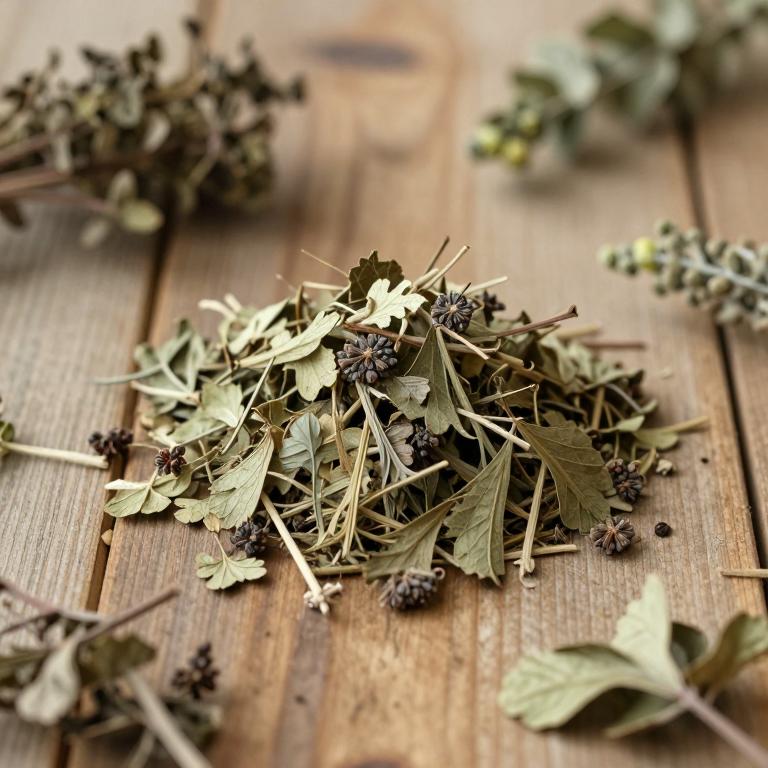
Names and Synonyms
Scientific Names
Accepted name
Caroxylon imbricatumSynonyms
- Salsola imbricata
Regional and Traditional Names
German:
- Salsola imbricata
- Chenopodium baryosmon
- Salsola baryosma
- Salsola foetida
- Caroxylon foetidum
French:
- Salsola imbricata
Sources: Wikidata, Catalogue of Life
Taxonomical Classification
This plant belongs to the kingdom Plantae and is classified under the phylum Streptophyta and the class Equisetopsida. Within the subclass Magnoliidae, it is organized under the order Caryophyllales and the family Amaranthaceae. Finally, it is identified by its specific genus, Caroxylon, as part of the species Caroxylon imbricatum.
| Rank | Classification |
|---|---|
| Kingdom | Plantae |
| Phylum | Streptophyta |
| Class | Equisetopsida |
| Subclass | Magnoliidae |
| Order | Caryophyllales |
| Family | Amaranthaceae |
| Genus | Caroxylon |
Sources: The World Checklist of Vascular Plants (WCVP)
Distribution
This plant is primarily distributed across the diverse landscapes of Northern Africa. Its presence is well-documented within the borders of Algeria, spanning various ecological zones. Furthermore, it can be found throughout the territories of Egypt and Libya. The species also inhabits the unique terrains of Morocco. Finally, its geographical range extends to include the regions of Tunisia.
| Region | Area |
|---|---|
| Northern Africa | Algeria |
| Northern Africa | Egypt |
| Northern Africa | Libya |
| Northern Africa | Morocco |
| Northern Africa | Tunisia |
| Northern Africa | Western Sahara |
| West Tropical Africa | Mauritania |
| West Tropical Africa | Niger |
| West Tropical Africa | Senegal |
| Northeast Tropical Africa | Chad |
Sources: The World Checklist of Vascular Plants (WCVP)
Botanical Identification
Ecology
The ecology of Caroxylon imbricatum is defined by its specific preference for mid-altitude montane environments, where it thrives within a distinct altitudinal niche. This medicinal plant is typically found inhabiting landscapes that fall within an elevational range spanning from a minimum of 400 m AMSL to a maximum of 700 m AMSL. Within this specific vertical gradient, the species occupies specialized ecological zones that provide the necessary environmental conditions for its growth and medicinal potency. The distribution within this 300-meter elevational belt suggests a sensitivity to the varying temperature regimes and atmospheric pressures characteristic of these lower to mid-level mountain slopes.
- Elevational range max:
- 700 m AMSL
- Elevational range min:
- 400 m AMSL
Life history
The life history of Caroxylon imbricaatum is characterized by a perennial lifecycle, allowing the plant to persist through multiple growing seasons rather than completing its cycle within a single year. Structurally, it is classified as a chamaephyte, a life form defined by its low-growing stature where the regenerative buds are situated close to or just above the soil surface. This specific growth habit, consistent across its morphological classifications as a chamaephyte, enables the plant to withstand varying environmental pressures by maintaining its vital organs at a protective level near the substrate.
- Life form :
- chamaephyte
- Lifecycle :
- perennial
Morphology
The morphology of Caroxylon imbricatum is characterized by a woody, shrub-like growth form that functions as a self-supporting plant. This terrestrial species maintains an independent life cycle, neither acting as a parasite nor requiring external support such as a climber. In terms of stature, the plant exhibits a height that typically reaches a mean of 1 m, with individual specimens ranging from a minimum of 0.3 m to a maximum height of approximately 1.22 m.
- Aquatic :
- terrestrial
- Climber :
- self-supporting
- Growth form :
- shrub
- Parasite :
- independent
- Plant height max:
- 1.219214826 m
- Plant height mean:
- 1 m
- Plant height min:
- 0.3 m
- Woodiness :
- woody
Physiology
The physiology of Caroxylon imbricatum is characterized by a highly efficient metabolic framework optimized for survival in arid and semi-arid environments. A defining physiological feature of this species is its photosynthetic pathway, which utilizes the C4 metabolic cycle rather than the standard C3 pathway. By employing this C4 mechanism, the plant facilitates the spatial separation of carbon fixation and the Calvin cycle, allowing for the concentration of carbon dioxide around the enzyme RuBisCO within specialized bundle sheath cells. This physiological adaptation significantly minimizes photorespiration and enhances water-use efficiency, enabling the plant to maintain high rates of biomass production and carbon assimilation even under conditions of high temperature and limited water availability.
- Photosynthetic pathway :
- C4
Reproduction
The reproduction of Caroxylon imbricatum is characterized by a specific seasonal flowering cycle that dictates its reproductive period. The flowering process begins in June, marking the onset of its reproductive phase, and continues through the summer months until it reaches its conclusion in September. This seasonal window ensures that the plant's reproductive efforts are concentrated within a four-month period, aligning its biological processes with these specific environmental timelines.
- Flowering time :
- Jun
- Flowering time :
- Sep
Sources: Global Inventory of Floras and Traits (GIFT)
Plant Parts
Caroxylon imbricatum has 1 reported plant parts identified across 1 scientific publications and several other databases that are studied for medicinal purposes. The most consistently reported plant part include leaf.
| Plant part | Supporting sources | Consensus |
|---|---|---|
| Leaf | 1 supporting sources | ★☆☆☆☆ |
Leaf
- Toxicology research
Chemicals
Caroxylon imbricatum has 4 reported phytochemicals identified across 1 scientific publications and several other databases. The most consistently reported chemicals include COPPER, Flavonoids, quercitrin, rosmarinic acid.
| Chemical | Supporting sources | Consensus |
|---|---|---|
| COPPER | 1 supporting sources | ★☆☆☆☆ |
| Flavonoids | 1 supporting sources | ★☆☆☆☆ |
| quercitrin | 1 supporting sources | ★☆☆☆☆ |
| rosmarinic acid | 1 supporting sources | ★☆☆☆☆ |
COPPER
- Molecules (Basel, Switzerland)
Flavonoids
- Molecules (Basel, Switzerland)
quercitrin
- BMC complementary and alternative medicine
rosmarinic acid
- BMC complementary and alternative medicine
Activities
Caroxylon imbricatum has 4 reported activities identified across 1 scientific publications and several other databases. The most consistently reported activities include Antioxidant, Antispasmodic, Hepatoprotective, Spasmolytic.
| Activity | Supporting sources | Consensus |
|---|---|---|
| Antioxidant | 2 supporting sources | ★☆☆☆☆ |
| Antispasmodic | 1 supporting sources | ★☆☆☆☆ |
| Hepatoprotective | 1 supporting sources | ★☆☆☆☆ |
| Spasmolytic | 1 supporting sources | ★☆☆☆☆ |
Antioxidant
- Toxicology research
- BMC complementary and alternative medicine
Antispasmodic
- Pharmaceutical biology
Hepatoprotective
- BMC complementary and alternative medicine
Spasmolytic
- Pharmaceutical biology
Preparations
Caroxylon imbricatum has 2 reported preparations identified across 1 scientific publications and several other databases. The most consistently reported preparations include extract, leaf extract.
| Preparation | Supporting sources | Consensus |
|---|---|---|
| Extract | 1 supporting sources | ★☆☆☆☆ |
| Leaf extract | 1 supporting sources | ★☆☆☆☆ |
Extract
- Molecules (Basel, Switzerland)
Leaf extract
- Toxicology research