Salsola cyclophylla
Caroxylon cyclophyllum · Accepted scientific name
Scientific literature: Very Sparse (9 studies) · ★☆☆☆☆
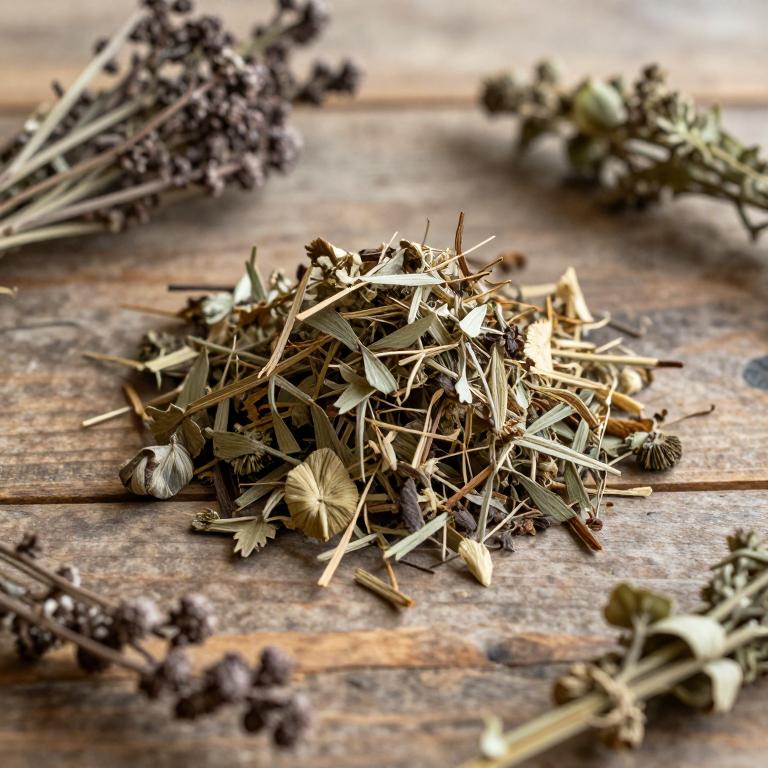
Salsola cyclophyllia, scientifically known as Caroxylon cyclophyllum, is a resilient medicinal plant adapted to arid environments. Renowned for its unique phytochemical profile, it offers significant therapeutic potential in traditional medicine. Research suggests its bioactive compounds may possess antioxidant and anti-inflammatory properties, making it a subject of growing pharmacological interest.
- Family
- Amaranthaceae
- Native range
- Africa
- Parts used
- Not available
- Common names
- Not available
- Scientific synonyms
- Salsola Cyclophylla
Names and Synonyms
Scientific Names
Accepted name
Caroxylon cyclophyllumSynonyms
- Salsola cyclophylla
Regional and Traditional Names
German:
- Salsola cyclophylla
French:
- Salsola cyclophylla
Sources: Wikidata, Catalogue of Life
Taxonomical Classification
This plant belongs to the kingdom Plantae and the phylum Streptophyta within the class Equisetopsida. It is further classified under the subclass Magnoliidae and the order Caryophyllales. Finally, it is a member of the family Amaranthaceae and falls under the genus Caroxylon.
| Rank | Classification |
|---|---|
| Kingdom | Plantae |
| Phylum | Streptophyta |
| Class | Equisetopsida |
| Subclass | Magnoliidae |
| Order | Caryophyllales |
| Family | Amaranthaceae |
| Genus | Caroxylon |
Sources: The World Checklist of Vascular Plants (WCVP)
Distribution
This plant exhibits a broad geographical distribution spanning across parts of Africa and Western Asia. In Northern Africa, its presence is specifically noted within the borders of Egypt. Moving into Northeast Tropical Africa, the species can be found throughout Sudan and South Sudan. Its range extends into Western Asia, where it inhabits the territories of Iran and Iraq. Additionally, the plant is distributed across the Levant region, specifically covering Lebanon and Syria.
| Region | Area |
|---|---|
| Northern Africa | Egypt |
| Northeast Tropical Africa | Sudan-South Sudan |
| Western Asia | Iran |
| Western Asia | Iraq |
| Western Asia | Lebanon-Syria |
| Western Asia | Palestine |
| Western Asia | Sinai |
| Arabian Peninsula | Gulf States |
| Arabian Peninsula | Kuwait |
| Arabian Peninsula | Oman |
Sources: The World Checklist of Vascular Plants (WCVP)
Botanical Identification
Life history
The life history of Caroxylon cyclophyllum is characterized by its status as a perennial species, allowing the plant to persist in its environment through multiple growing seasons rather than completing its cycle in a single year. As a perennial, it maintains a long-term presence in its habitat, establishing a robust physiological foundation that enables it to withstand seasonal fluctuations and return to reproductive stages year after year. This extended life cycle supports a sustained contribution to the local ecosystem, as the plant can accumulate resources over time to support more vigorous flowering and seed production in subsequent seasons.
- Lifecycle :
- perennial
Morphology
The morphology of Caroxylon cyclophyllum is characterized by a growth form that functions as a subshrub or small shrub, exhibiting woody characteristics throughout its structure. The plant is independent, functioning as a non-parasitic organism, and is capable of growing in a variety of habitats ranging from aquatic and semiaquatic environments to terrestrial settings. It is a self-supporting species rather than a climber, maintaining an upright posture. In terms of stature, the plant is relatively low-growing, with a height that typically ranges from a minimum of 0.2 m to a maximum of 0.6 m.
- Aquatic :
- terrestrial
- Climber :
- self-supporting
- Growth form :
- shrub
- Growth form :
- subshrub
- Parasite :
- independent
- Plant height max:
- 0.6 m
- Plant height min:
- 0.2 m
- Woodiness :
- woody
Physiology
The physiology of Caroxylon cyclophyllum is characterized by its specialized carbon fixation mechanisms, specifically utilizing the C4 photosynthetic pathway. Unlike plants that rely on the standard C3 pathway, this species employs a spatial separation of CO2 fixation and the Calvin cycle to minimize photorespiration and enhance water-use efficiency. By concentrating carbon dioxide within specialized bundle sheath cells, the plant maintains a high internal CO2 concentration, allowing for efficient enzymatic activity even under conditions of high light intensity or limited moisture availability. This C4 metabolic strategy enables Caroxylon cyclophyllum to optimize its photosynthetic rate and maintain metabolic productivity in environments where evaporative demand is significant.
- Photosynthetic pathway :
- C4
Reproduction
The reproduction of Caroxylon cyclophyllum is characterized by a specific flowering phenology that dictates its seasonal reproductive cycle. The flowering period for this species begins in October and extends through December, although the timing can be subject to environmental variability. This window of floral activity marks the critical phase for pollination and subsequent seed development within its life cycle.
- Flowering time :
- Oct
- Flowering time :
- Dec
Sources: Global Inventory of Floras and Traits (GIFT)
Chemicals
Caroxylon cyclophyllum has 7 reported phytochemicals identified across 0 scientific publications and several other databases. The most consistently reported chemicals include Coumarins, FE, Flavonoid, Flavonoids, MN.
| Chemical | Supporting sources | Consensus |
|---|---|---|
| Coumarins | 1 supporting sources | ★☆☆☆☆ |
| FE | 1 supporting sources | ★☆☆☆☆ |
| Flavonoid | 1 supporting sources | ★☆☆☆☆ |
| Flavonoids | 1 supporting sources | ★☆☆☆☆ |
| MN | 1 supporting sources | ★☆☆☆☆ |
| Phenols | 1 supporting sources | ★☆☆☆☆ |
| ZN | 1 supporting sources | ★☆☆☆☆ |
Coumarins
- Molecules (Basel, Switzerland)
FE
- Molecules (Basel, Switzerland)
Flavonoid
- Molecules (Basel, Switzerland)
Flavonoids
- Molecules (Basel, Switzerland)
MN
- Molecules (Basel, Switzerland)
Phenols
- Molecules (Basel, Switzerland)
ZN
- Molecules (Basel, Switzerland)
Activities
Caroxylon cyclophyllum has 1 reported activities identified across 0 scientific publications and several other databases. The most consistently reported activities include Analgesic.
| Activity | Supporting sources | Consensus |
|---|---|---|
| Analgesic | 1 supporting sources | ★☆☆☆☆ |
Analgesic
- Molecules (Basel, Switzerland)
Preparations
Caroxylon cyclophyllum has 3 reported preparations identified across 0 scientific publications and several other databases. The most consistently reported preparations include 95% aqueous-ethanolic extract, ethyl acetate extract, extract.
| Preparation | Supporting sources | Consensus |
|---|---|---|
| 95% aqueous-ethanolic extract | 1 supporting sources | ★☆☆☆☆ |
| Ethyl acetate extract | 1 supporting sources | ★☆☆☆☆ |
| Extract | 1 supporting sources | ★☆☆☆☆ |
95% aqueous-ethanolic extract
- Molecules (Basel, Switzerland)
Ethyl acetate extract
- Molecules (Basel, Switzerland)
Extract
- Molecules (Basel, Switzerland)