Caropodium platycarpum
Caropodium platycarpum · Accepted scientific name
Scientific literature: Very Sparse (28 studies) · ★☆☆☆☆
Caropodium platycarpum, scientifically known as Caropodium platycarpum, is a perennial herb belonging to the Apiaceae family. Native to specific European regions, this plant is valued in traditional herbalism for its unique chemical properties. It serves as a significant subject for botanical study regarding its potential therapeutic applications and bioactive compounds.
- Family
- Apiaceae
- Native range
- Asia-Temperate
- Parts used
- Fruit
- Common names
- Not available
- Scientific synonyms
- Stenodiptera Platycarpa · Grammosciadium Platycarpum
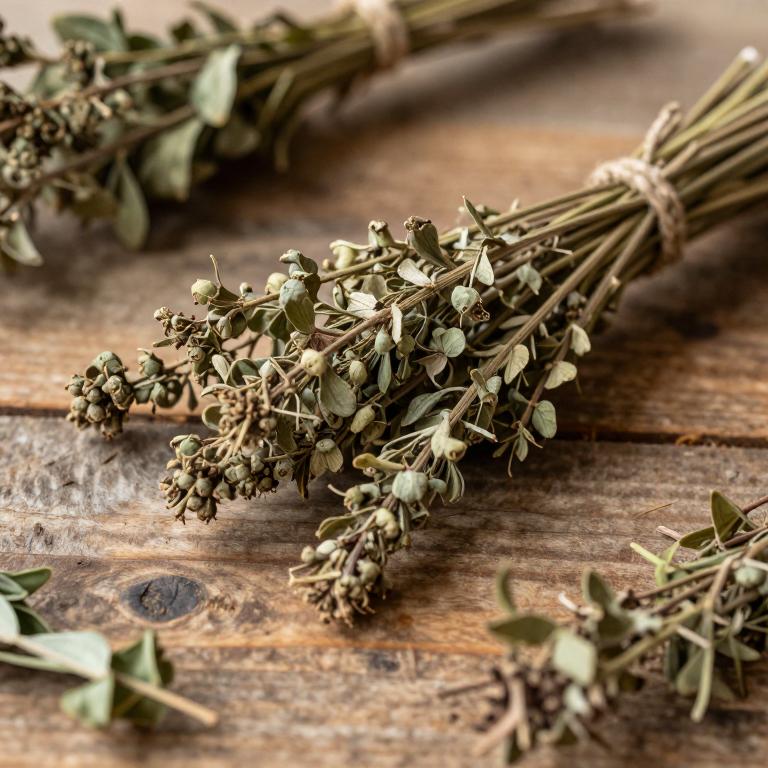
Names and Synonyms
Scientific Names
Accepted name
Caropodium platycarpumSynonyms
- Stenodiptera platycarpa
- Grammosciadium platycarpum
Sources: Wikidata, Catalogue of Life
Taxonomical Classification
This plant belongs to the kingdom Plantae and is classified under the phylum Streptophyta and class Equisetopsida. Within the subclass Magnoliidae, it is ordered as Apiales and sits in the family Apiaceae. Finally, it is identified by the genus Caropodium, specifically as the species Caropodium platycarpum.
| Rank | Classification |
|---|---|
| Kingdom | Plantae |
| Phylum | Streptophyta |
| Class | Equisetopsida |
| Subclass | Magnoliidae |
| Order | Apiales |
| Family | Apiaceae |
| Genus | Caropodium |
Sources: The World Checklist of Vascular Plants (WCVP)
Distribution
This plant exhibits a specific geographical range spanning parts of Western Asia and the Caucasus region. Within the Caucasus, its presence is specifically noted in the Transcaucasus area. Moving into Western Asia, it can be found growing in the territory of Iran. Additionally, the species is distributed across the country of Iraq. Finally, its natural habitat extends into the landscapes of Türkiye.
| Region | Area |
|---|---|
| Caucasus | Transcaucasus |
| Western Asia | Iran |
| Western Asia | Iraq |
| Western Asia | Türkiye |
Sources: The World Checklist of Vascular Plants (WCVP)
Botanical Identification
Ecology
The ecology of Carpodium platycarpum is characterized by its preference for specific environmental niches, primarily thriving within forest ecosystems and mountainous regions. These habitats provide the necessary structural complexity and microclimates required for its development, often benefiting from the shade and moisture retention provided by dense woodland canopies. In mountainous terrains, the plant is adapted to the unique topographical variations and varying elevations, which influence the local moisture availability and soil composition essential to its growth cycle.
- Habitat :
- forest, mountains
Life history
The life history of Caropodium platycarpum is characterized by its status as a perennial plant, meaning it persists through multiple growing seasons rather than completing its life cycle in a single year. As a perennial species, it maintains a continuous presence in its habitat, often developing robust root systems or underground structures that allow it to survive periods of dormancy or unfavorable environmental conditions. This long-term survival strategy enables the plant to establish a stable presence within its ecosystem, allowing for repeated reproductive efforts over several years, which contributes to its overall resilience and ability to colonize specific ecological niches.
- Lifecycle :
- perennial
Morphology
The morphology of Carpodium platycarpum is characterized by its growth form as a herb, exhibiting a non-woody structure throughout its development. This plant maintains a relatively low stature, with a plant height ranging from a minimum of 0.1 m to a maximum of 0.4 m.
- Growth form :
- herb
- Plant height max:
- 0.4 m
- Plant height min:
- 0.1 m
- Woodiness :
- non-woody
Reproduction
The reproduction of Carpodium platycarpum is characterized by a specific seasonal flowering window that is highly concentrated within a short period. The flowering process typically begins in June and concludes within the same month, marking a very brief reproductive phase. Because both the onset and the conclusion of the flowering period are centered around June, the plant exhibits a synchronized blooming pattern that is restricted to this specific timeframe, rather than being spread across the variable months of the year.
- Flowering time :
- Jun
Sources: Global Inventory of Floras and Traits (GIFT)
Plant Parts
Caropodium platycarpum has 1 reported plant parts identified across 2 scientific publications and several other databases that are studied for medicinal purposes. The most consistently reported plant part include fruit.
| Plant part | Supporting sources | Consensus |
|---|---|---|
| Fruit | 2 supporting sources | ★☆☆☆☆ |
Fruit
- BMC plant biology
- Scientific reports
Chemicals
Caropodium platycarpum has 12 reported phytochemicals identified across 2 scientific publications and several other databases. The most consistently reported chemicals include LIMONENE, Linalool, CHLOROGENIC ACID, RUTIN, ferulic acid.
| Chemical | Supporting sources | Consensus |
|---|---|---|
| LIMONENE | 3 supporting sources | ★★☆☆☆ |
| Linalool | 3 supporting sources | ★★☆☆☆ |
| CHLOROGENIC ACID | 2 supporting sources | ★☆☆☆☆ |
| RUTIN | 2 supporting sources | ★☆☆☆☆ |
| ferulic acid | 2 supporting sources | ★☆☆☆☆ |
| (S)-(+)-Linalool | 1 supporting sources | ★☆☆☆☆ |
| CHLOROPHYLL B | 1 supporting sources | ★☆☆☆☆ |
| Caryophyllene | 1 supporting sources | ★☆☆☆☆ |
| Flavonoid | 1 supporting sources | ★☆☆☆☆ |
| MDA | 1 supporting sources | ★☆☆☆☆ |
LIMONENE
- Zeitschrift fur Naturforschung. C, Journal of biosciences
- BMC plant biology
- Scientific reports
Linalool
- Zeitschrift fur Naturforschung. C, Journal of biosciences
- BMC plant biology
- Scientific reports
CHLOROGENIC ACID
- BMC plant biology
- Scientific reports
RUTIN
- BMC plant biology
- Scientific reports
ferulic acid
- BMC plant biology
- Scientific reports
(S)-(+)-Linalool
- BMC plant biology
CHLOROPHYLL B
- BMC plant biology
Caryophyllene
- Scientific reports
Flavonoid
- Pakistan journal of biological sciences : PJBS
MDA
- BMC plant biology
Preparations
Caropodium platycarpum has 3 reported preparations identified across 2 scientific publications and several other databases. The most consistently reported preparations include essential oil, extracts, seaweed extract.
| Preparation | Supporting sources | Consensus |
|---|---|---|
| Essential oil | 1 supporting sources | ★☆☆☆☆ |
| Extracts | 1 supporting sources | ★☆☆☆☆ |
| Seaweed extract | 1 supporting sources | ★☆☆☆☆ |
Essential oil
- BMC plant biology
Extracts
- Pakistan journal of biological sciences : PJBS
Seaweed extract
- BMC plant biology