Acanthus-leaved Carline-thistle
Carlina acanthifolia · Accepted scientific name
Scientific literature: Very Sparse (7 studies) · ★☆☆☆☆
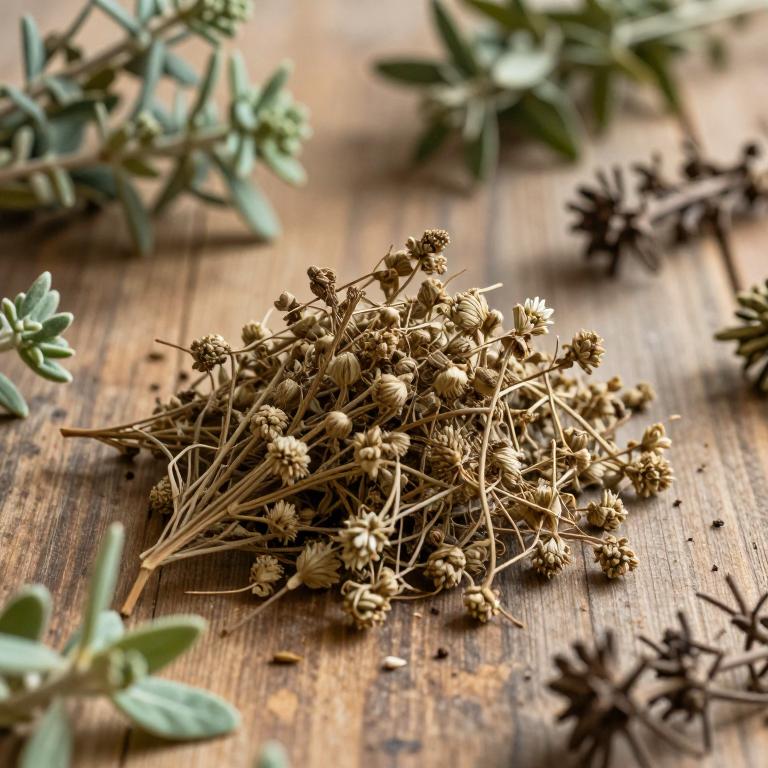
Acanthus-leaved Carline-thistle, scientifically known as Carlina acanthifolia, is a striking perennial herb native to European mountain ranges. Renowned for its silvery, spiny foliage and dramatic flower heads, this plant holds significant traditional importance, frequently utilized in herbal medicine for its diverse therapeutic properties and unique botanical characteristics.
- Family
- Asteraceae
- Native range
- Europe
- Parts used
- Root
- Common names
- Acanthus-Leaved Carline-Thistle
- Scientific synonyms
- Not available
Names and Synonyms
Common Names
- Acanthus-leaved Carline-thistle
Scientific Names
Accepted name
Carlina acanthifoliaRegional and Traditional Names
Spanish:
- Carlina acanthifolia subsp. acanthifolia
- Carlina acanthifolia subsp. cynara
- Carlina cynara
- Carlina utzka
- Carlina acanthifolia subsp acanthifolia
- Carlina acanthifolia subsp cynara
- Carlina acanthifolia var. argentea
- Carlina chardousse
- Chromatolepis magna
German:
- Akanthusblättrige Eberwurz
- akanthusblättrige Eberwurz
French:
- Cardabelle
- Carline à feuilles d'acanthe
- Chardousse
- Pinchinelle
- carline à feuilles d'acanthe
- chardonsoleil
Sources: Wikidata, Catalogue of Life
Taxonomical Classification
This plant belongs to the kingdom Plantae and is classified under the phylum Streptophyta and class Equisetopsida. Within the subclass Magnoliidae, it falls under the order Asterales and the family Asteraceae. Finally, its specific taxonomic placement is within the genus Carlina.
| Rank | Classification |
|---|---|
| Kingdom | Plantae |
| Phylum | Streptophyta |
| Class | Equisetopsida |
| Subclass | Magnoliidae |
| Order | Asterales |
| Family | Asteraceae |
| Genus | Carlina |
Sources: The World Checklist of Vascular Plants (WCVP)
Distribution
This plant exhibits a diverse geographical distribution across several key regions of Europe. In Middle Europe, its presence can be noted specifically within Poland. Moving toward the Mediterranean, it is found throughout Southwestern Europe in both France and Spain. Its range also extends into Southeastern Europe, where it inhabits the landscapes of Albania. Finally, the species is documented as growing in the Balkan region of Bulgaria.
| Region | Area |
|---|---|
| Middle Europe | Poland |
| Southwestern Europe | France |
| Southwestern Europe | Spain |
| Southeastern Europe | Albania |
| Southeastern Europe | Bulgaria |
| Southeastern Europe | Greece |
| Southeastern Europe | Italy |
| Southeastern Europe | Romania |
| Southeastern Europe | NW. Balkan Pen. |
| Eastern Europe | Ukraine |
Sources: The World Checklist of Vascular Plants (WCVP)
Botanical Identification
Ecology
The ecology of Carlina acanthifolia is characterized by its preference for high-altitude environments, specifically within mountainous regions and shrubberies. It thrives in these rugged landscapes where it can integrate into the complex vegetation of montane ecosystems. By occupying these specific niches, the plant adapts to the unique microclimates provided by shrubby growth forms and the varied topography of mountain slopes, which influence its distribution and growth patterns within its natural range.
- Habitat :
- mountains, shrubberies
Life history
The life history of Carlina acanthifolia is characterized by its nature as a perennial plant, allowing it to persist across multiple growing seasons. Functionally, it is classified as a hemicryptophyte, a life form in which the perennating buds are located at the soil surface, protected by leaf litter or soil cover during unfavorable conditions. This growth strategy enables the plant to maintain a stable presence within its ecological niche, utilizing its perennial lifecycle to navigate seasonal environmental changes.
- Life form :
- hemicryptophyte
- Lifecycle :
- perennial
Morphology
The morphology of Carlina acanthifolia is characterized by its growth form as a non-woody herb, which maintains a self-supporting structure without the need for climbing mechanisms. As a terrestrial species, it does not exhibit aquatic or semiaquatic tendencies, nor does it function as an epiphyte. The plant is biologically independent, meaning it is not a parasite and does not rely on a host for nutrients. Its physical structure is entirely non-woody, typical of many herbaceous perennials in its family.
- Aquatic :
- terrestrial
- Climber :
- self-supporting
- Epiphyte :
- terrestrial
- Growth form :
- herb
- Parasite :
- independent
- Woodiness :
- non-woody
Physiology
The physiology of Carlina acanthifolia is fundamentally defined by its utilization of the C3 photosynthetic pathway, a characteristic common to most members of the Asteraceae family. In this metabolic process, the plant fixes atmospheric carbon dioxide through the enzyme RuBisCO during the Calvin cycle, primarily occurring within the mesophyll cells. This C3 mechanism dictates the plant's water-use efficiency and transpiration rates, as it lacks the specialized carbon-concentrating mechanisms found in C4 or CAM species, making its physiological performance highly dependent on ambient temperature and moisture availability. Furthermore, its physiological processes are integrated with specialized secondary metabolism, where the synthesis of bioactive compounds is closely linked to its carbon fixation rates and overall energy assimilation.
- Photosynthetic pathway :
- C3
Reproduction
The reproduction of Carlina acanthifolia is characterized by a specific seasonal flowering window that dictates its reproductive cycle. The flowering process typically commences in August and continues through the month of September, though the exact timing can be variable depending on environmental conditions. During this period, the plant produces its reproductive structures to facilitate pollination and subsequent seed development.
- Flowering time :
- Aug
- Flowering time :
- Sep
Sources: Global Inventory of Floras and Traits (GIFT)
Plant Parts
Carlina acanthifolia has 1 reported plant parts identified across 1 scientific publications and several other databases that are studied for medicinal purposes. The most consistently reported plant part include root.
| Plant part | Supporting sources | Consensus |
|---|---|---|
| Root | 1 supporting sources | ★☆☆☆☆ |
Root
- Journal of ethnopharmacology
Chemicals
Carlina acanthifolia has 1 reported phytochemicals identified across 1 scientific publications and several other databases. The most consistently reported chemicals include Carlina oxide.
| Chemical | Supporting sources | Consensus |
|---|---|---|
| Carlina oxide | 1 supporting sources | ★☆☆☆☆ |
Carlina oxide
- Journal of ethnopharmacology
Activities
Carlina acanthifolia has 2 reported activities identified across 1 scientific publications and several other databases. The most consistently reported activities include Antimicrobial, Antioxidant.
| Activity | Supporting sources | Consensus |
|---|---|---|
| Antimicrobial | 1 supporting sources | ★☆☆☆☆ |
| Antioxidant | 1 supporting sources | ★☆☆☆☆ |
Antimicrobial
- Journal of ethnopharmacology
Antioxidant
- Journal of ethnopharmacology
Conditions
Carlina acanthifolia has 3 reported investigations on conditions identified across 1 scientific publications and several other databases. The most consistently reported conditions include gastric ulcer, skin diseases, stomach diseases.
| Condition | Supporting sources | Consensus |
|---|---|---|
| Gastric ulcer | 1 supporting sources | ★☆☆☆☆ |
| Skin diseases | 1 supporting sources | ★☆☆☆☆ |
| Stomach diseases | 1 supporting sources | ★☆☆☆☆ |
Gastric ulcer
- Journal of ethnopharmacology
Skin diseases
- Journal of ethnopharmacology
Stomach diseases
- Journal of ethnopharmacology
Preparations
Carlina acanthifolia has 1 reported preparations identified across 1 scientific publications and several other databases. The most consistently reported preparations include Carlina acanthifolia root essential oil.
| Preparation | Supporting sources | Consensus |
|---|---|---|
| Carlina acanthifolia root essential oil | 1 supporting sources | ★☆☆☆☆ |
Carlina acanthifolia root essential oil
- Journal of ethnopharmacology