Forest Num-num
Carissa bispinosa · Accepted scientific name
Scientific literature: Very Sparse (6 studies) · ★☆☆☆☆
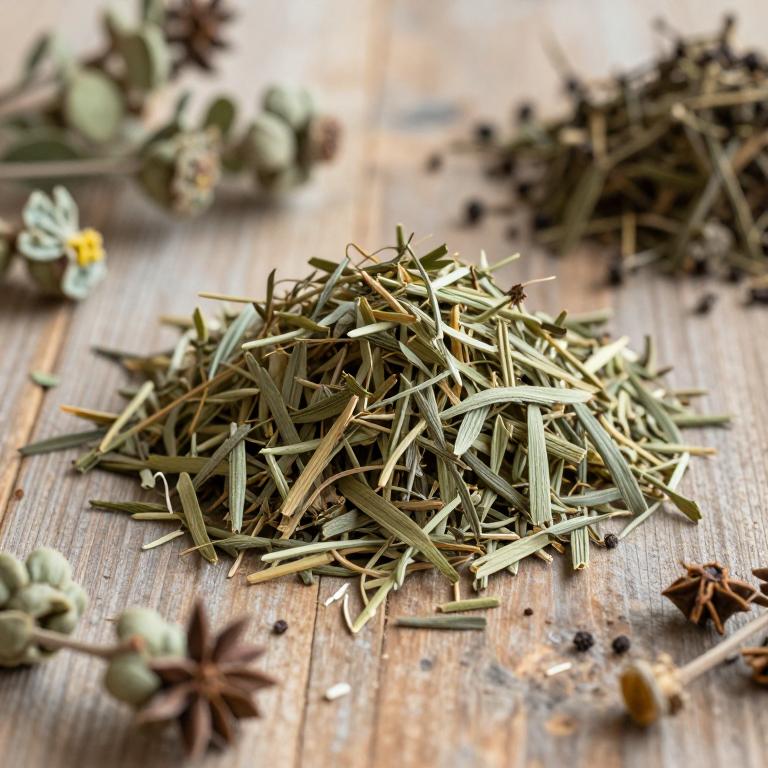
Forest Num-num, scientifically known as Carissa bispinosa, is a versatile, evergreen shrub native to Southern Africa. Renowned for its glossy leaves and white, star-shaped flowers, it serves both ornamental and medicinal purposes. Often used in traditional remedies, this resilient plant offers significant value in biodiversity and landscape design.
Names and Synonyms
Common Names
- Forest Num-num
- Fork-spined Carissa
- Karoo Num-num
- hedgethorn
- Common Num-num
- Large-Flowered Forest Numnum
- Large-Flowered Forest Numum
- Red Num Num
- Red Num-Num
- Small Amatungulu
- Y-thorn Carissa
- num-num
- y-thorned carissa
Scientific Names
Accepted name
Carissa bispinosaSynonyms
- Carissa acuminata
- Carissa erythrocarpa
- Carissa bispinosa subsp. zambesiensis
- Carissa myrtoides
- Carissa wyliei
- Arduina acuminata
- Arduina bispinosa
- Jasminonerium bispinosum
- Lycium cordatum
- Jasminonerium acuminatum
- Jasminonerium erythrocarpum
- Carissa cordata
- Arduina megaphylla
- Arduina erythrocarpa
- Carissa sessiliflora
- Carissa sessiliflora var. grandiflora
- Carissa sessiliflora var. meridionalis
- Carissa sessiliflora var. orientalis
- Carissa bispinosa var. acuminata
Regional and Traditional Names
German:
- dorniger Wachsbaum
Sources: Wikidata, Catalogue of Life
Taxonomical Classification
This plant belongs to the kingdom Plantae and the phylum Streptophyta, falling under the class Equisetopsida and subclass Magnoliidae. Within the order Gentianales and the family Apocynaceae, it is classified under the genus Carissa.
| Rank | Classification |
|---|---|
| Kingdom | Plantae |
| Phylum | Streptophyta |
| Class | Equisetopsida |
| Subclass | Magnoliidae |
| Order | Gentianales |
| Family | Apocynaceae |
| Genus | Carissa |
Sources: The World Checklist of Vascular Plants (WCVP)
Distribution
This plant is primarily distributed across several regions within the African continent. In East Tropical Africa, it can be found growing in Kenya, Tanzania, and Uganda. Moving toward the southern portion of the continent, its range extends into South Tropical Africa. Specifically, it is documented to inhabit the countries of Malawi and Mozambique. This diverse range demonstrates the plant's ability to thrive in various tropical environments.
| Region | Area |
|---|---|
| East Tropical Africa | Kenya |
| East Tropical Africa | Tanzania |
| East Tropical Africa | Uganda |
| South Tropical Africa | Malawi |
| South Tropical Africa | Mozambique |
| South Tropical Africa | Zimbabwe |
| Southern Africa | Botswana |
| Southern Africa | Cape Provinces |
| Southern Africa | Namibia |
| Southern Africa | KwaZulu-Natal |
Sources: The World Checklist of Vascular Plants (WCVP)
Botanical Identification
Ecology
The ecology of Carissa bispinosa is characterized by its ability to thrive across a broad altitudinal gradient, ranging from sea level up to an elevation of 2050 m AMSL. It is primarily found inhabiting dry bush- or woodland environments, where it integrates into the structural complexity of these ecosystems. This adaptability to varying elevations and its preference for semi-arid shrublands allow it to occupy diverse ecological niches within its natural range.
- Elevational range max:
- 2050 m AMSL
- Elevational range min:
- 0 m AMSL
- Habitat :
- dry bush- or woodland
Life history
The life history of Carissa bispinosa is characterized by its status as a perennial plant, ensuring its long-term presence within its ecological niche. It functions primarily as a phanerophyte, maintaining its photosynthetic organs on elevated woody structures, though it can also be categorized under the life form of nanophanerophyte depending on its specific growth habit and environmental context. Throughout its development, the plant maintains an evergreen deciduousness, retaining its foliage year-round rather than shedding it seasonally.
- Deciduousness :
- evergreen
- Life form :
- nanophanerophyte
- Life form :
- phanerophyte
- Lifecycle :
- perennial
Morphology
The morphology of Carissa bispinosa is characterized by its growth form as a woody shrub that functions as a self-supporting plant. As a terrestrial species, it does not exhibit aquatic, semiaquatic, or epiphytic tendencies, and it grows as an independent organism rather than a parasite. The plant displays significant variation in stature, with heights ranging from a minimum of 0.2 m to a maximum of 5.5 m, maintaining an average plant height of approximately 3 m.
- Aquatic :
- terrestrial
- Climber :
- self-supporting
- Epiphyte :
- terrestrial
- Growth form :
- shrub
- Parasite :
- independent
- Plant height max:
- 5.5 m
- Plant height mean:
- 3 m
- Plant height min:
- 0.2 m
- Woodiness :
- woody
Physiology
The physiology of Carissa bispinosa is characterized by its robust adaptive mechanisms suited for arid and semi-arid environments, primarily focusing on efficient water management and structural defense. As a succulent-leaning woody shrub, it employs specialized metabolic processes to maintain turgor pressure and minimize transpiration under high thermal stress. Regarding its nutrient cycling capabilities, the plant is not a nitrogen fixer, meaning it lacks the symbiotic relationship with diazotrophic bacteria, such as Rhizobium, necessary to convert atmospheric nitrogen into bioavailable forms; instead, it relies on the uptake of nitrogen from the soil through its root system. Its physiological makeup also includes the production of secondary metabolites, such as alkaloids and saponins, which serve as chemical defenses against herbivory, complemented by the development of sharp spines that act as mechanical deterrents. The photosynthetic activity is optimized to sustain growth during sporadic rainfall, utilizing a resilient vascular structure to transport nutrients and water efficiently throughout its dense, leathery foliage.
- Nitrogen fixer :
- no
Reproduction
The reproduction of Carissa bispinosa is characterized by the production of fleshy fruits classified as berries, which serve as the primary vehicle for offspring distribution. These fruits are indehiscent, meaning they do not split open at maturity to release their contents, but instead rely on a zoochorous dispersal syndrome, where animals consume the fruit and transport the seeds to new locations. The seeds contained within these berries are relatively uniform in size, possessing a mean seed mass of approximately 0.049425 g, with individual seed weights ranging from a minimum of 0.0484 g to a maximum of 0.05045 g.
- Dehiscence :
- indehiscent
- Dispersal syndrome :
- zoochorous
- Fruit type :
- berry
- Seed mass max:
- 0.05045 g
- Seed mass mean:
- 0.049425 g
- Seed mass min:
- 0.0484 g
Sources: Global Inventory of Floras and Traits (GIFT)
Activities
Carissa bispinosa has 2 reported activities identified across 0 scientific publications and several other databases. The most consistently reported activities include Antibacterial, Antioxidant.
| Activity | Supporting sources | Consensus |
|---|---|---|
| Antibacterial | 1 supporting sources | ★☆☆☆☆ |
| Antioxidant | 1 supporting sources | ★☆☆☆☆ |
Antibacterial
- Letters in applied microbiology
Antioxidant
- Letters in applied microbiology
Conditions
Carissa bispinosa has 4 reported investigations on conditions identified across 0 scientific publications and several other databases. The most consistently reported conditions include Enterococcus faecalis, Escherichia coli, Klebsiella pneumoniae, Staphylococcus aureus.
| Condition | Supporting sources | Consensus |
|---|---|---|
| Enterococcus faecalis | 1 supporting sources | ★☆☆☆☆ |
| Escherichia coli | 1 supporting sources | ★☆☆☆☆ |
| Klebsiella pneumoniae | 1 supporting sources | ★☆☆☆☆ |
| Staphylococcus aureus | 1 supporting sources | ★☆☆☆☆ |
Enterococcus faecalis
- Letters in applied microbiology
Escherichia coli
- Letters in applied microbiology
Klebsiella pneumoniae
- Letters in applied microbiology
Staphylococcus aureus
- Letters in applied microbiology