Mountain sedge
Carex montana · Accepted scientific name
Scientific literature: Very Sparse (1 studies) · ★☆☆☆☆
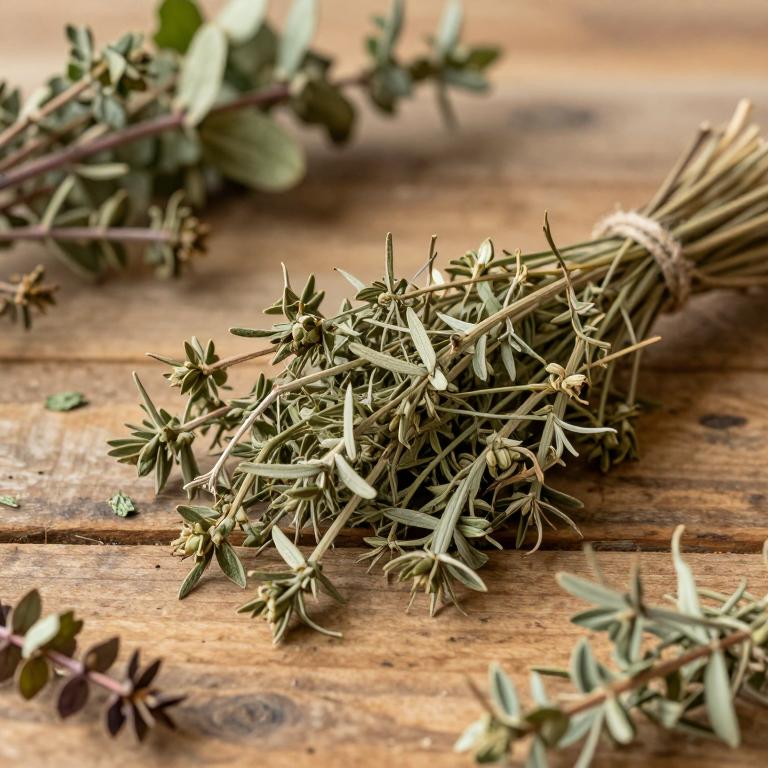
Mountain sedge, scientifically known as Carex montana, is a resilient perennial herb found in rocky, montane habitats. Valued for its ability to thrive in thin soils, this plant plays a vital role in stabilizing slopes. Its compact growth and distinctive foliage make it a fascinating subject for botanical study.
Names and Synonyms
Common Names
- Mountain sedge
- Soft-Leaved Sedge
- mountain sedge
Scientific Names
Accepted name
Carex montanaSynonyms
- Diemisa filiformis
- Trasus filiformis var. simplex
- Trasus filiformis
- Carex montana var. procerior
- Carex montana var. gracilior
- Carex montana var. procera
- Carex montana f. albescens
- Carex montana f. bulboides
- Carex montana subsp. czetzii
- Carex montana f. fimbriata
- Carex montana var. flavida
- Carex montana f. marginata
- Carex montana f. gracilior
- Carex montana var. luxurians
- Carex montana f. pallescens
- Carex montana f. pseudopallescens
- Carex montana f. remotiflora
- Carex montana var. rigida
- Carex montana f. truncata
- Carex montana var. verniformis
- Carex perennis
- Carex czetzii
- Carex conglobata
- Carex caryophyllaea
- Carex caryophyllata
- Carex emarginata
- Carex filiformis
- Carex montana var. emarginata
- Carex montana var. conglobata
Regional and Traditional Names
German:
- Berg-Segge
- Berg-Segge
French:
- laîche des montagnes
- Laiche des montagnes
Sources: Wikidata, Catalogue of Life
Taxonomical Classification
This plant, known as Carex montana, belongs to the kingdom Plantae and the phylum Streptophyta. Within the class Equisetopsida and subclass Magnoliidae, it is classified under the order Poales and the family Cyperaceae. It is ultimately categorized under the genus Carex.
| Rank | Classification |
|---|---|
| Kingdom | Plantae |
| Phylum | Streptophyta |
| Class | Equisetopsida |
| Subclass | Magnoliidae |
| Order | Poales |
| Family | Cyperaceae |
| Genus | Carex |
Sources: The World Checklist of Vascular Plants (WCVP)
Distribution
This plant exhibits a wide distribution across several key regions in the European continent. In Northern Europe, its presence is well-documented in Denmark, Finland, and Sweden. Additionally, the species can be found inhabiting the landscape of Great Britain. Moving toward the center of the continent, its range extends into Middle Europe. Specifically, this medicinal plant is also known to grow within the borders of Austria.
| Region | Area |
|---|---|
| Northern Europe | Denmark |
| Northern Europe | Finland |
| Northern Europe | Great Britain |
| Northern Europe | Sweden |
| Middle Europe | Austria |
| Middle Europe | Belgium |
| Middle Europe | Czechia-Slovakia |
| Middle Europe | Germany |
| Middle Europe | Hungary |
| Middle Europe | Poland |
Sources: The World Checklist of Vascular Plants (WCVP)
Botanical Identification
Ecology
The ecology of Carex montana is fundamentally defined by its preference for specialized niches within forest and mountain ecosystems. This species typically thrives in the shaded, moist understories of montane forests, where it occupies stable microhabitats characterized by dappled sunlight and consistent soil moisture. Within these mountainous regions, it is often found on well-drained slopes or along the margins of woodland clearings, playing a role in the ground cover of complex forest communities. Its presence is closely tied to the structural complexity of the forest floor, where it competes for light and nutrients alongside other shade-tolerant herbaceous plants. By colonizing these specific forest and mountain habitats, Carex montana contributes to the stabilization of forest soils and the maintenance of local biodiversity within high-altitude woodland environments.
- Habitat :
- forest, mountains
Life history
The life history of Carex montana is characterized by its status as a perennial plant, allowing it to persist in its environment through multiple growing seasons. It functions as a hemicryptophyte, meaning its perennable buds are located at or just below the soil surface, protected by leaf litter or soil. Additionally, this species exhibits a geophyte life form, relying on underground storage organs to survive unfavorable conditions. The plant is deciduous, shedding its foliage as part of its seasonal cycle to manage resource allocation and environmental stress.
- Deciduousness :
- deciduous
- Life form :
- geophyte
- Life form :
- hemicryptophyte
- Lifecycle :
- perennial
Morphology
The morphology of Carex montana is characterized by its growth form as a non-woody, graminoid herb. This plant is strictly self-supporting, lacking any climbing or vining tendencies, and functions as an independent organism without parasitic behavior. It is a terrestrial species, not adapted to aquatic or epiphytic lifestyles. In terms of stature, the plant maintains a relatively low profile, with a height that typically ranges from a minimum of 0.1 m to a maximum of 0.3 m, resulting in an average plant height of approximately 0.165 m.
- Aquatic :
- terrestrial
- Climber :
- self-supporting
- Epiphyte :
- terrestrial
- Growth form :
- herb
- Growth form :
- graminoid
- Parasite :
- independent
- Plant height max:
- 0.3 m
- Plant height mean:
- 0.165 m
- Plant height min:
- 0.1 m
- Woodiness :
- non-woody
Physiology
The physiology of Carex montana is characterized by its utilization of the C3 photosynthetic pathway, which facilitates carbon fixation through the Calvin cycle under typical environmental conditions. The plant exhibits specific morphological adaptations reflected in its leaf structure, maintaining an average leaf size of 2.8875 cm². Furthermore, its resource-use efficiency and leaf architecture are indicated by a mean Specific Leaf Area (SLA) of 196.35 cm²/g, a value that provides insight into the relationship between its leaf mass and surface area.
- Leaf size mean:
- 2.8875 cm²
- Photosynthetic pathway :
- C3
- Specific Leaf Area (SLA) mean:
- 196.35 cm²/g
Reproduction
The reproduction of Carex montana is characterized by a specific phenological cycle and specialized pollination and dispersal mechanisms. The flowering period typically begins in March and concludes in May, following a seasonal window that allows for successful reproductive development. The plant relies on abiotic pollination syndromes, specifically utilizing wind as its primary pollination vector to facilitate genetic exchange. In terms of genetic strategy, self-fertilization is noted as absent, suggesting a reliance on cross-pollination. The resulting seeds are quite small, with a mean mass of 0.00082 g, though the recorded mass range fluctuates between a minimum of 0.00099 g and a maximum of 0.00099 g. For the spread of its progeny, the species employs an anemochorous dispersal syndrome, meaning the seeds are dispersed primarily by the wind.
- Dispersal syndrome :
- anemochorous
- Flowering time :
- Mar
- Flowering time :
- May
- Pollination syndrome :
- wind
- Pollination syndrome :
- abiotic
- Seed mass max:
- 0.00099 g
- Seed mass mean:
- 0.00082 g
- Self fertilization :
- absent
Sources: Global Inventory of Floras and Traits (GIFT)
Chemicals
Carex montana has 1 reported phytochemicals identified across 0 scientific publications and several other databases. The most consistently reported chemicals include trans-resveratrol.
| Chemical | Supporting sources | Consensus |
|---|---|---|
| trans-resveratrol | 1 supporting sources | ★☆☆☆☆ |
trans-resveratrol
- Journal of agricultural and food chemistry
Preparations
Carex montana has 1 reported preparations identified across 0 scientific publications and several other databases. The most consistently reported preparations include extract.
| Preparation | Supporting sources | Consensus |
|---|---|---|
| Extract | 1 supporting sources | ★☆☆☆☆ |
Extract
- Journal of agricultural and food chemistry