Carapa guianensis
Carapa guianensis · Accepted scientific name
Scientific literature: Sparse (64 studies) · ★★☆☆☆
Carapeia guianensis, scientifically known as Carapeia guianensis, is a significant medicinal plant native to the Amazon rainforest. Renowned for its diverse therapeutic properties, it is frequently utilized in traditional medicine to treat various ailments, including inflammation and skin conditions, offering valuable insights for modern pharmacological research and development.
- Family
- Meliaceae
- Native range
- Southern America
- Parts used
- Seed · Flower
- Common names
- Not available
- Scientific synonyms
- Carapa Macrocarpa · Xylocarpus Guineensis · 3 more
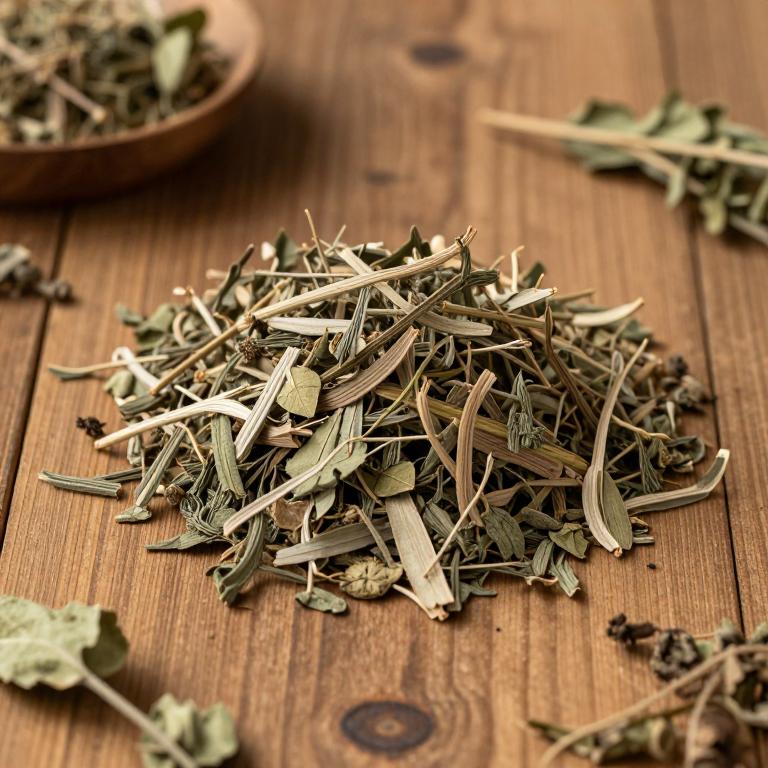
Names and Synonyms
Scientific Names
Accepted name
Carapa guianensisSynonyms
- Carapa macrocarpa
- Xylocarpus guineensis
- Guarea mucronulata
- Granatum guianense
- Persoonia guareoides
Regional and Traditional Names
Spanish:
- Tangaré
- Caoba del Brasil
- Andiroba
- Najesi
- Tangare
- Caoba bastarda
- Najesí
- cedro
German:
- Andiroba
- Läuseholz
Sources: Wikidata, Catalogue of Life
Taxonomical Classification
This plant, Carapa guianenis, belongs to the kingdom Plantae and the phylum Streptophyta. Within the class Equisetopsida and subclass Magnoliidae, it is classified under the order Sapindales and the family Meliaceae. Finally, it is identified by its specific genus, Carapa.
| Rank | Classification |
|---|---|
| Kingdom | Plantae |
| Phylum | Streptophyta |
| Class | Equisetopsida |
| Subclass | Magnoliidae |
| Order | Sapindales |
| Family | Meliaceae |
| Genus | Carapa |
Sources: The World Checklist of Vascular Plants (WCVP)
Distribution
This plant, Carapa guianensis, exhibits a specific geographical distribution across several countries in Central America. It can be found growing within the diverse ecosystems of Belize. Its presence is also documented throughout the various landscapes of Guatemala and Honduras. Furthermore, the species extends its range into the territories of Nicaragua. Finally, its distribution continues southward into the tropical regions of Costa Rica.
| Region | Area |
|---|---|
| Central America | Belize |
| Central America | Costa Rica |
| Central America | Guatemala |
| Central America | Honduras |
| Central America | Nicaragua |
| Central America | Panamá |
| Caribbean | Cuba |
| Caribbean | Dominican Republic |
| Caribbean | Leeward Is. |
| Caribbean | Trinidad-Tobago |
Sources: The World Checklist of Vascular Plants (WCVP)
Botanical Identification
Ecology
The ecology of Carapa guianensis is characterized by its presence in diverse forest ecosystems, specifically inhabiting both Floresta de Terra Firme and Floresta de Várzea. This species demonstrates a broad adaptability to varying topographical positions, occupying an elevational range that extends from sea level (0 m AMSL) up to a maximum altitude of 2300 m AMSL.
- Elevational range max:
- 2300 m AMSL
- Elevational range min:
- 0 m AMSL
- Habitat :
- Floresta de Terra Firme, Floresta de Várzea
Life history
The life history of Carapa guianensis is characterized by its status as a perennial species, allowing it to establish a long-term presence within its tropical forest ecosystems. As a long-lived woody plant, it undergoes a gradual developmental progression from seedling to a large, canopy-reaching tree, maintaining its biological functions across many successive years. This perennial nature enables the plant to endure seasonal fluctuations and contribute to the forest structure over an extended lifespan, undergoing multiple reproductive cycles throughout its existence.
- Lifecycle :
- perennial
Morphology
The morphology of Carapa guianensis is characterized by its stature as a large, woody tree that can reach a significant plant height, with an average height of approximately 35 m and a maximum potential height of up to 55 m. As a terrestrial species, it does not exhibit aquatic or semiaquatic tendencies and functions as an independent organism rather than a parasite. The plant is strictly self-supporting in its growth habit, lacking the climbing characteristics of lianas or vines, and it does not function as an epiphyte, maintaining a purely terrestrial existence. Its structural composition is defined by its woody nature, supporting its massive growth form within its natural habitat.
- Aquatic :
- terrestrial
- Climber :
- self-supporting
- Epiphyte :
- terrestrial
- Growth form :
- tree
- Parasite :
- independent
- Plant height max:
- 55 m
- Plant height mean:
- 35 m
- Woodiness :
- woody
Physiology
The physiology of Carapa guianensis is characterized by a standard C3 photosynthetic pathway, utilizing the Calvin cycle to fix atmospheric carbon dioxide into organic compounds, which is typical for many large tropical woody species. In terms of nutrient cycling and symbiotic relationships, the plant does not function as a nitrogen fixer, meaning it lacks the specialized root nodules containing nitrogen-fixing bacteria required to convert atmospheric nitrogen into usable forms; instead, it relies on the uptake of nitrates and ammonium from the soil through its extensive root system.
- Nitrogen fixer :
- no
- Photosynthetic pathway :
- C3
Reproduction
The reproduction of Carapa guianensis is characterized by a diverse dispersal syndrome that is considered unspecialized, encompassing anemochorous, zoochorous, autochorous, and hydrochorous mechanisms. The seeds produced by this species exhibit significant morphological variation, with lengths ranging from a minimum of 50 mm to a maximum of 100 mm. Furthermore, seed mass shows considerable fluctuation, ranging from a minimum of 3.448 g to a maximum of 27.51 g, with an overall mean seed mass of 17.69566667 g.
- Dispersal syndrome :
- unspecialized
- Seed length max:
- 100 mm
- Seed length min:
- 50 mm
- Seed mass max:
- 27.51 g
- Seed mass mean:
- 17.69566667 g
- Seed mass min:
- 3.448 g
Sources: Global Inventory of Floras and Traits (GIFT)
Plant Parts
Carapa guianensis has 2 reported plant parts identified across 6 scientific publications and several other databases that are studied for medicinal purposes. The most consistently reported plant part include seed, flower.
| Plant part | Supporting sources | Consensus |
|---|---|---|
| Seed | 5 supporting sources | ★★★☆☆ |
| Flower | 1 supporting sources | ★☆☆☆☆ |
Seed
- Polymers
- AAPS PharmSciTech
- Current research in toxicology
- Fitoterapia
- Molecules (Basel, Switzerland)
Flower
- Fitoterapia
Chemicals
Carapa guianensis has 12 reported phytochemicals identified across 6 scientific publications and several other databases. The most consistently reported chemicals include Andirobin, 7-deacetoxy-7-oxogedunin, gedunin, 6alpha-Hydroxygedunin, Epoxyazadiradione.
| Chemical | Supporting sources | Consensus |
|---|---|---|
| Andirobin | 3 supporting sources | ★★☆☆☆ |
| 7-deacetoxy-7-oxogedunin | 2 supporting sources | ★☆☆☆☆ |
| gedunin | 2 supporting sources | ★☆☆☆☆ |
| 6alpha-Hydroxygedunin | 1 supporting sources | ★☆☆☆☆ |
| Epoxyazadiradione | 1 supporting sources | ★☆☆☆☆ |
| FAT | 1 supporting sources | ★☆☆☆☆ |
| METHYL ANGOLENSATE | 1 supporting sources | ★☆☆☆☆ |
| Mexicanolide | 1 supporting sources | ★☆☆☆☆ |
| oil | 1 supporting sources | ★☆☆☆☆ |
| oleic acid | 1 supporting sources | ★☆☆☆☆ |
Andirobin
- Dr. Duke
- Fitoterapia
- Current pharmaceutical design
7-deacetoxy-7-oxogedunin
- Dr. Duke
- Current pharmaceutical design
gedunin
- Fitoterapia
- Current pharmaceutical design
6alpha-Hydroxygedunin
- Dr. Duke
Epoxyazadiradione
- Dr. Duke
FAT
- Dr. Duke
METHYL ANGOLENSATE
- Current pharmaceutical design
Mexicanolide
- Fitoterapia
oil
- AAPS PharmSciTech
oleic acid
- Dr. Duke
Activities
Carapa guianensis has 31 reported activities identified across 6 scientific publications and several other databases. The most consistently reported activities include 5-Alpha-Reductase-Inhibitor, Allergenic, Alpha-Reductase-Inhibitor, Anemiagenic, Antialopecic.
| Activity | Supporting sources | Consensus |
|---|---|---|
| 5-Alpha-Reductase-Inhibitor | 1 supporting sources | ★☆☆☆☆ |
| Allergenic | 1 supporting sources | ★☆☆☆☆ |
| Alpha-Reductase-Inhibitor | 1 supporting sources | ★☆☆☆☆ |
| Anemiagenic | 1 supporting sources | ★☆☆☆☆ |
| Antialopecic | 1 supporting sources | ★☆☆☆☆ |
| Antiandrogenic | 1 supporting sources | ★☆☆☆☆ |
| Antifibrinolytic | 1 supporting sources | ★☆☆☆☆ |
| Antiinflammatory | 1 supporting sources | ★☆☆☆☆ |
| Antileukotriene-D4 | 1 supporting sources | ★☆☆☆☆ |
| Antimalarial | 1 supporting sources | ★☆☆☆☆ |
5-Alpha-Reductase-Inhibitor
- Dr. Duke
Allergenic
- Dr. Duke
Alpha-Reductase-Inhibitor
- Dr. Duke
Anemiagenic
- Dr. Duke
Antialopecic
- Dr. Duke
Antiandrogenic
- Dr. Duke
Antifibrinolytic
- Dr. Duke
Antiinflammatory
- Dr. Duke
Antileukotriene-D4
- Dr. Duke
Antimalarial
- Dr. Duke
Conditions
Carapa guianensis has 9 reported investigations on conditions identified across 6 scientific publications and several other databases. The most consistently reported conditions include Rhipicephalus sanguineus, Wound Healing, allergy, gastric cancer, helminthiasis.
| Condition | Supporting sources | Consensus |
|---|---|---|
| Rhipicephalus sanguineus | 1 supporting sources | ★☆☆☆☆ |
| Wound healing | 1 supporting sources | ★☆☆☆☆ |
| Allergy | 1 supporting sources | ★☆☆☆☆ |
| Gastric cancer | 1 supporting sources | ★☆☆☆☆ |
| Helminthiasis | 1 supporting sources | ★☆☆☆☆ |
| Infections | 1 supporting sources | ★☆☆☆☆ |
| Inflammation | 1 supporting sources | ★☆☆☆☆ |
| Oxidative dna damages | 1 supporting sources | ★☆☆☆☆ |
| Stomach cancer | 1 supporting sources | ★☆☆☆☆ |
Rhipicephalus sanguineus
- Microscopy research and technique
Wound healing
- Polymers
Allergy
- Current pharmaceutical design
Gastric cancer
- Current research in toxicology
Helminthiasis
- Experimental parasitology
Infections
- Current pharmaceutical design
Inflammation
- Current pharmaceutical design
Oxidative dna damages
- Current research in toxicology
Stomach cancer
- Journal of applied toxicology : JAT
Preparations
Carapa guianensis has 3 reported preparations identified across 6 scientific publications and several other databases. The most consistently reported preparations include C. guianensis oil, Oils, oil of Carapa guianensis AUBLET seeds.
| Preparation | Supporting sources | Consensus |
|---|---|---|
| C. guianensis oil | 1 supporting sources | ★☆☆☆☆ |
| Oils | 1 supporting sources | ★☆☆☆☆ |
| Oil of carapa guianensis aublet seeds | 1 supporting sources | ★☆☆☆☆ |
C. guianensis oil
- Anais da Academia Brasileira de Ciencias
Oils
- Fitoterapia
Oil of carapa guianensis aublet seeds
- Molecules (Basel, Switzerland)