African caper
Capparis tomentosa · Accepted scientific name
Scientific literature: Very Sparse (12 studies) · ★☆☆☆☆
African caper, scientifically known as Capparis tomentosa, is a resilient, woody shrub native to various regions of Africa. Renowned for its medicinal properties, this plant is used in traditional healing to treat ailments ranging from inflammation to digestive issues. Its vibrant flowers and hardy nature make it a botanical treasure.
Names and Synonyms
Common Names
- African caper
- Cape Bush
- Wollerige Kapperbos
- Woolly Caper Bush
Scientific Names
Accepted name
Capparis tomentosaSynonyms
- Capparis verdickii
- Capparis tomentosa var. persicifolia
- Capparis subtomentosa
- Capparis polymorpha
- Capparis persicifolia
- Capparis puberula
- Capparis volkensii
- Capparis globifera
- Capparis lucens
- Capparis hypericoides
- Capparis alexandrae
- Capparis biloba
- Capparis corymbifera
Sources: Wikidata, Catalogue of Life
Taxonomical Classification
This plant belongs to the kingdom Plantae and is classified under the phylum Streptophyta and class Equisetopsida. Within the subclass Magnoliidae, it is part of the order Brassicales and the family Capparaceae. Its specific taxonomic placement is within the genus Capparis, where it is known as Capparis tomentoza.
| Rank | Classification |
|---|---|
| Kingdom | Plantae |
| Phylum | Streptophyta |
| Class | Equisetopsida |
| Subclass | Magnoliidae |
| Order | Brassicales |
| Family | Capparaceae |
| Genus | Capparis |
Sources: The World Checklist of Vascular Plants (WCVP)
Distribution
This plant is primarily distributed across the West Tropical Africa region. Within this geographical area, it can be found growing in the nation of Benin. Its presence extends further to include the territory of Burkina. Additionally, the species is documented within the borders of Gambia and Ghana. Finally, its natural range encompasses the country of Guinea.
| Region | Area |
|---|---|
| West Tropical Africa | Benin |
| West Tropical Africa | Burkina |
| West Tropical Africa | Gambia |
| West Tropical Africa | Ghana |
| West Tropical Africa | Guinea |
| West Tropical Africa | Ivory Coast |
| West Tropical Africa | Mali |
| West Tropical Africa | Mauritania |
| West Tropical Africa | Nigeria |
| West Tropical Africa | Niger |
Sources: The World Checklist of Vascular Plants (WCVP)
Botanical Identification
Ecology
The ecology of Capparis tomentoza is defined by its adaptability across a broad altitudinal gradient, thriving at elevations ranging from as low as 15 m AMSL to a maximum of 1980 m AMSL. This species is primarily found within diverse vegetative structures, specifically inhabiting riverine woodland or bushland, bushland, secondary bushland, and bushed grassland ecosystems. These habitats provide the necessary environmental conditions for its growth, allowing it to occupy various ecological niches from lowland riparian zones to higher-altitude scrublands.
- Elevational range max:
- 1980 m AMSL
- Elevational range min:
- 15 m AMSL
- Habitat :
- riverine woodland or bushland, bushed grassland, secondary bushland
Life history
The life history of Capparis tomentoza is characterized by its status as a perennial plant, ensuring its long-term presence within its natural ecosystem. As a phanerophyte, it maintains its buds well above the ground level, a structural adaptation that supports its growth habit. This species exhibits a deciduous nature, shedding its leaves periodically as part of its seasonal cycle. Its physiological development is categorized under the phanerophyte life form, reflecting its robust growth strategy and ability to persist through varying environmental conditions over multiple growing seasons.
- Deciduousness :
- deciduous
- Life form :
- phanerophyte
- Lifecycle :
- perennial
Morphology
The morphology of Capparis tomentoza is characterized by its woody structure and its growth habit as an obligatory climbing liana. Functioning as an independent organism rather than a parasite, this terrestrial plant displays a versatile growth form that can be described as a shrub-like liana. In terms of stature, it exhibits significant dimensional variation, with plant heights ranging from a minimum of 1 meter to a maximum of 15 meters, maintaining an average height of approximately 6.5 meters. As a terrestrial species, it does not exhibit aquatic or epiphytic tendencies, instead relying on its woody stems to ascend and support its structure within its natural habitat.
- Aquatic :
- terrestrial
- Climber :
- liana
- Climber :
- obligatory
- Epiphyte :
- terrestrial
- Growth form :
- shrub
- Parasite :
- independent
- Plant height max:
- 15 m
- Plant height mean:
- 6.5 m
- Plant height min:
- 1 m
- Woodiness :
- woody
Physiology
The physiology of Capparis tomentoza is characterized by its specific metabolic and nutritional strategies adapted to its environment. The plant utilizes a C3 photosynthetic pathway, meaning it fixes carbon dioxide through the Calvin cycle using the enzyme Rubisco, which is typical for many woody shrubs in its genus. Furthermore, regarding its nutrient acquisition processes, Capparis tomentoza is not a nitrogen fixer, relying instead on the uptake of available nitrogenous compounds from the soil through its root system rather than establishing symbiotic relationships with nitrogen-fixing bacteria.
- Nitrogen fixer :
- no
- Photosynthetic pathway :
- C3
Reproduction
The reproduction of Capparis tomentoza is primarily driven by the production of seeds, which exhibit specific morphological and mass-related characteristics essential for its life cycle. The seed mass within this species shows a measurable degree of variation, ranging from a minimum of 0.13425 g to a maximum of 0.20038 g. On average, the seed mass is recorded at 0.1749275 g, a metric that reflects the energy investment per individual reproductive unit. These quantitative traits are critical for determining the dispersal potential and the initial establishment success of the offspring in its natural habitat.
- Seed mass max:
- 0.20038 g
- Seed mass mean:
- 0.1749275 g
- Seed mass min:
- 0.13425 g
Sources: Global Inventory of Floras and Traits (GIFT)
Plant Parts
Capparis tomentosa has 1 reported plant parts identified across 1 scientific publications and several other databases that are studied for medicinal purposes. The most consistently reported plant part include leaf.
| Plant part | Supporting sources | Consensus |
|---|---|---|
| Leaf | 1 supporting sources | ★☆☆☆☆ |
Leaf
- Veterinary and human toxicology
Chemicals
Capparis tomentosa has 5 reported phytochemicals identified across 1 scientific publications and several other databases. The most consistently reported chemicals include ARSENIC, CHROMIUM, LEAD, NICKEL, stachydrine.
| Chemical | Supporting sources | Consensus |
|---|---|---|
| ARSENIC | 1 supporting sources | ★☆☆☆☆ |
| CHROMIUM | 1 supporting sources | ★☆☆☆☆ |
| LEAD | 1 supporting sources | ★☆☆☆☆ |
| NICKEL | 1 supporting sources | ★☆☆☆☆ |
| stachydrine | 1 supporting sources | ★☆☆☆☆ |
ARSENIC
- Analytica chimica acta
CHROMIUM
- Analytica chimica acta
LEAD
- Analytica chimica acta
NICKEL
- Analytica chimica acta
stachydrine
- Dr. Duke
Activities
Capparis tomentosa has 6 reported activities identified across 1 scientific publications and several other databases. The most consistently reported activities include Cardiotonic, Emmenagogue, Insectifuge, Lactagogue, Oxytocic?.
| Activity | Supporting sources | Consensus |
|---|---|---|
| Cardiotonic | 1 supporting sources | ★☆☆☆☆ |
| Emmenagogue | 1 supporting sources | ★☆☆☆☆ |
| Insectifuge | 1 supporting sources | ★☆☆☆☆ |
| Lactagogue | 1 supporting sources | ★☆☆☆☆ |
| Oxytocic? | 1 supporting sources | ★☆☆☆☆ |
| Systolic-Depressant | 1 supporting sources | ★☆☆☆☆ |
Cardiotonic
- Dr. Duke
Emmenagogue
- Dr. Duke
Insectifuge
- Dr. Duke
Lactagogue
- Dr. Duke
Oxytocic?
- Dr. Duke
Systolic-Depressant
- Dr. Duke
Preparations
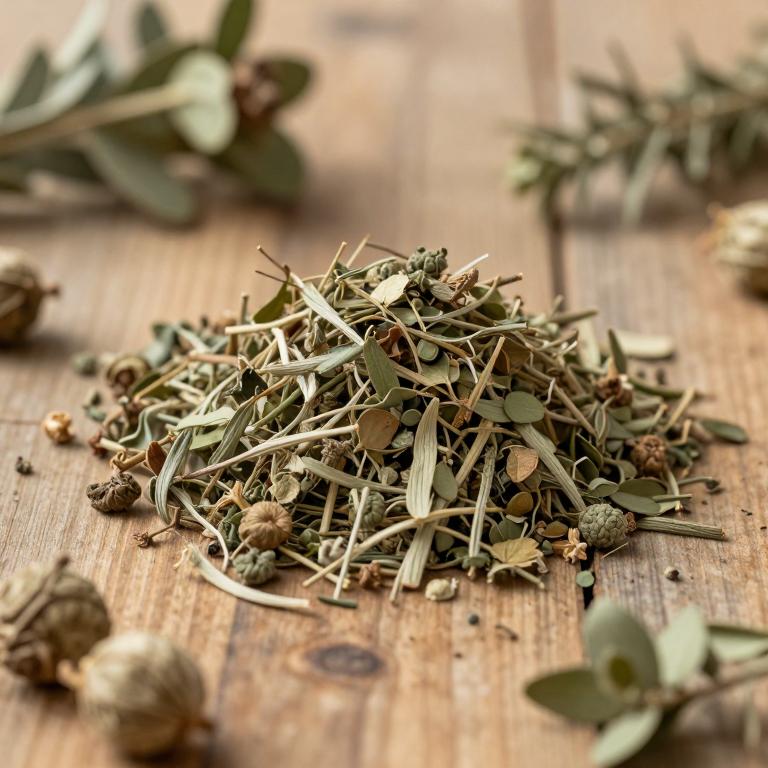
Capparis tomentosa has 1 reported preparations identified across 1 scientific publications and several other databases. The most consistently reported preparations include dry leaves.
| Preparation | Supporting sources | Consensus |
|---|---|---|
| Dry leaves | 1 supporting sources | ★☆☆☆☆ |
Dry leaves
- Veterinary and human toxicology