Capparis spinosa var. herbacea
Capparis spinosa var. herbacea · Accepted scientific name
Scientific literature: Very Sparse (8 studies) · ★☆☆☆☆
, scientifically known as Capparis spinosa var. herbacea, is a resilient medicinal shrub valued for its diverse therapeutic properties. Renowned in traditional medicine, this variety offers potent antioxidant and anti-inflammatory benefits. Often utilized to support digestive health and skin vitality, it represents a significant botanical resource in natural pharmacology.
- Family
- Capparaceae
- Native range
- Europe
- Parts used
- Not available
- Common names
- Not available
- Scientific synonyms
- Capparis Mucronifolia Subsp. Rosanowiana · Capparis Leucophylla Var. Microphylla · 6 more
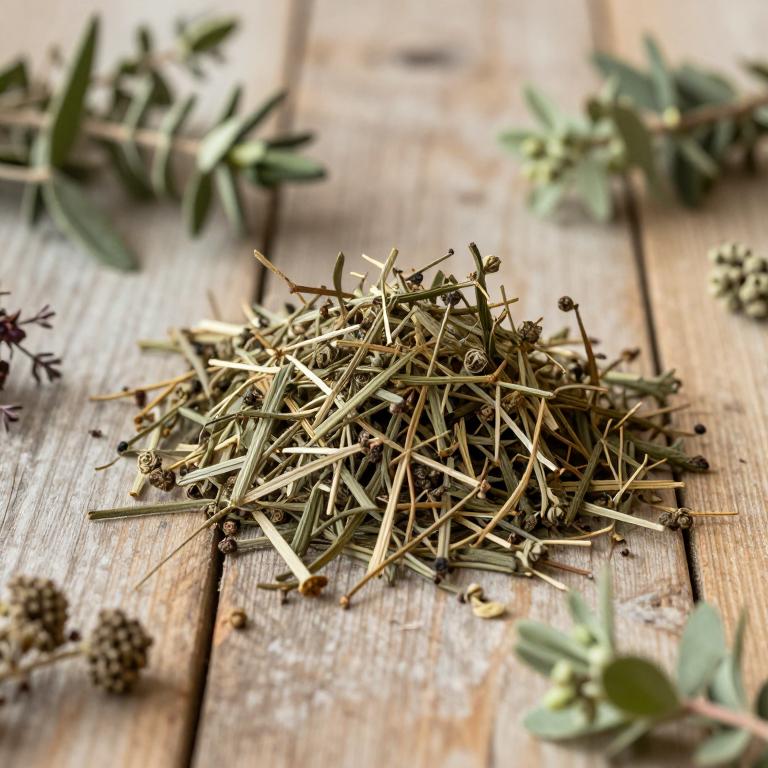
Names and Synonyms
Scientific Names
Accepted name
Capparis spinosa var. herbaceaSynonyms
- Capparis mucronifolia subsp. rosanowiana
- Capparis leucophylla var. microphylla
- Capparis ovata var. microphylla
- Capparis ovata var. herbacea
- Capparis rosanowiana
- Capparis herbacea
- Capparis herbacea var. microphylla
- Capparis sicula subsp. herbacea
Sources: Wikidata, Catalogue of Life
Taxonomical Classification
This plant belongs to the kingdom Plantae and the phylum Streptophyta, specifically falling under the class Equisetopsida and subclass Magnoliidae. Within the order Brassicales, it is classified under the family Capparaceae and the genus Capparis.
| Rank | Classification |
|---|---|
| Kingdom | Plantae |
| Phylum | Streptophyta |
| Class | Equisetopsida |
| Subclass | Magnoliidae |
| Order | Brassicales |
| Family | Capparaceae |
| Genus | Capparis |
Sources: The World Checklist of Vascular Plants (WCVP)
Distribution
This plant, Capparis spinosa var. herbacea, exhibits a specific geographical range across several key regions. In Eastern Europe, its presence is notably recorded in Krym. Moving into Central Asia, it is widely distributed throughout the country of Kazakhstan. The species also inhabits the mountainous and arid landscapes of Kirgizstan. Furthermore, its distribution extends across the neighboring territories of Turkmenistan and Tadzhikiskan.
| Region | Area |
|---|---|
| Eastern Europe | Krym |
| Central Asia | Kazakhstan |
| Central Asia | Kirgizstan |
| Central Asia | Turkmenistan |
| Central Asia | Tadzhikistan |
| Central Asia | Uzbekistan |
| Caucasus | North Caucasus |
| Caucasus | Transcaucasus |
| Western Asia | Afghanistan |
| Western Asia | Iran |
Sources: The World Checklist of Vascular Plants (WCVP)
Chemicals
Capparis spinosa var. herbacea has 7 reported phytochemicals identified across 0 scientific publications and several other databases. The most consistently reported chemicals include Bis(2-ethylhexyl) phthalate, Phytol, Pulegone, T-Cadinol, VITAMIN E.
| Chemical | Supporting sources | Consensus |
|---|---|---|
| Bis(2-ethylhexyl) phthalate | 1 supporting sources | ★☆☆☆☆ |
| Phytol | 1 supporting sources | ★☆☆☆☆ |
| Pulegone | 1 supporting sources | ★☆☆☆☆ |
| T-Cadinol | 1 supporting sources | ★☆☆☆☆ |
| VITAMIN E | 1 supporting sources | ★☆☆☆☆ |
| meta-cymene | 1 supporting sources | ★☆☆☆☆ |
| sucrose | 1 supporting sources | ★☆☆☆☆ |
Bis(2-ethylhexyl) phthalate
- Anti-inflammatory & anti-allergy agents in medicinal chemistry
Phytol
- Anti-inflammatory & anti-allergy agents in medicinal chemistry
Pulegone
- Anti-inflammatory & anti-allergy agents in medicinal chemistry
T-Cadinol
- Anti-inflammatory & anti-allergy agents in medicinal chemistry
VITAMIN E
- Anti-inflammatory & anti-allergy agents in medicinal chemistry
meta-cymene
- Anti-inflammatory & anti-allergy agents in medicinal chemistry
sucrose
- Anti-inflammatory & anti-allergy agents in medicinal chemistry
Activities
Capparis spinosa var. herbacea has 1 reported activities identified across 0 scientific publications and several other databases. The most consistently reported activities include Antioxidant.
| Activity | Supporting sources | Consensus |
|---|---|---|
| Antioxidant | 1 supporting sources | ★☆☆☆☆ |
Antioxidant
- Anti-inflammatory & anti-allergy agents in medicinal chemistry