Capparis himalayensis
Capparis himalayensis · Accepted scientific name
Scientific literature: Very Sparse (10 studies) · ★☆☆☆☆
, scientifically known as Capparis himalayensis, is a significant medicinal shrub native to the Himalayan regions. Renowned for its diverse therapeutic properties, this plant is utilized in traditional medicine to treat various ailments, including inflammation and digestive issues. Its unique chemical composition makes it a vital subject of ethnobotanical research.
- Family
- Capparaceae
- Native range
- Asia-Tropical
- Parts used
- Not available
- Common names
- Not available
- Scientific synonyms
- Capparis Spinosa Var. Himalayensis · Capparis Spinosa Subsp. Himalayensis
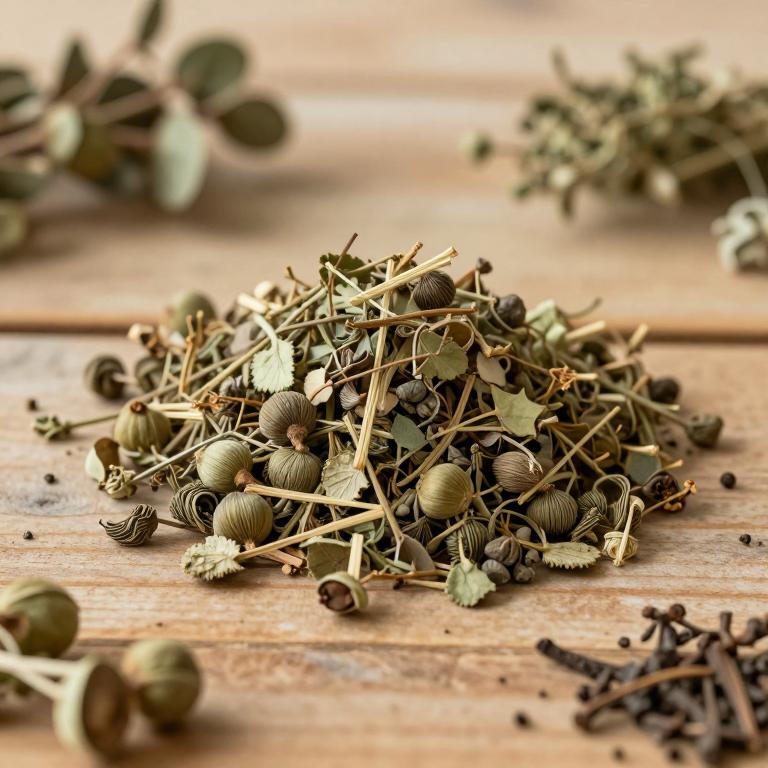
Names and Synonyms
Scientific Names
Accepted name
Capparis himalayensisSynonyms
- Capparis spinosa var. himalayensis
- Capparis spinosa subsp. himalayensis
Sources: Wikidata
Taxonomical Classification
This plant belongs to the kingdom Plantae within the phylum Streptophyta and the class Equisetopsida. It is further classified under the subclass Magnoliidae and the order Brassicales. Finally, it is a member of the family Capparaceae, falling under the genus Capparis.
| Rank | Classification |
|---|---|
| Kingdom | Plantae |
| Phylum | Streptophyta |
| Class | Equisetopsida |
| Subclass | Magnoliidae |
| Order | Brassicales |
| Family | Capparaceae |
| Genus | Capparis |
Sources: The World Checklist of Vascular Plants (WCVP)
Distribution
This plant is primarily found across the vast stretches of the Indian Subcontinent. Within this region, it is specifically documented to grow in the mountainous terrain of Nepal. Its distribution also extends into the diverse landscapes of Pakistan. Furthermore, the species is commonly located throughout the West Himalaya region. These specific locations highlight its preference for the high-altitude environments of South Asia.
| Region | Area |
|---|---|
| Indian Subcontinent | Nepal |
| Indian Subcontinent | Pakistan |
| Indian Subcontinent | West Himalaya |
Sources: The World Checklist of Vascular Plants (WCVP)
Chemicals
Capparis himalayensis has 9 reported phytochemicals identified across 0 scientific publications and several other databases. The most consistently reported chemicals include 6-Methoxyindoline-2,3-dione, Capparin A, Capparin B, Oroxylin A, Wogonin.
| Chemical | Supporting sources | Consensus |
|---|---|---|
| 6-Methoxyindoline-2,3-dione | 1 supporting sources | ★☆☆☆☆ |
| Capparin A | 1 supporting sources | ★☆☆☆☆ |
| Capparin B | 1 supporting sources | ★☆☆☆☆ |
| Oroxylin A | 1 supporting sources | ★☆☆☆☆ |
| Wogonin | 1 supporting sources | ★☆☆☆☆ |
| apigenin | 1 supporting sources | ★☆☆☆☆ |
| kaempferol | 1 supporting sources | ★☆☆☆☆ |
| luteolin | 1 supporting sources | ★☆☆☆☆ |
| quercetin | 1 supporting sources | ★☆☆☆☆ |
6-Methoxyindoline-2,3-dione
- Chemical & pharmaceutical bulletin
Capparin A
- Chemical & pharmaceutical bulletin
Capparin B
- Chemical & pharmaceutical bulletin
Oroxylin A
- Chemical & pharmaceutical bulletin
Wogonin
- Chemical & pharmaceutical bulletin
apigenin
- Chemical & pharmaceutical bulletin
kaempferol
- Chemical & pharmaceutical bulletin
luteolin
- Chemical & pharmaceutical bulletin
quercetin
- Chemical & pharmaceutical bulletin
Preparations
Capparis himalayensis has 1 reported preparations identified across 0 scientific publications and several other databases. The most consistently reported preparations include whole plant.
| Preparation | Supporting sources | Consensus |
|---|---|---|
| Whole plant | 1 supporting sources | ★☆☆☆☆ |
Whole plant
- Chemical & pharmaceutical bulletin