Capparis fascicularis
Capparis fascicularis · Accepted scientific name
Scientific literature: Very Sparse (2 studies) · ★☆☆☆☆
Capparis fascicularis, scientifically known as Capparis fasciolaris, is a resilient shrub native to the arid landscapes of Africa. Renowned for its medicinal properties, this plant is traditionally used to treat various ailments, including inflammation and digestive issues. Its unique botanical characteristics make it a subject of significant ethnobotanical interest.
- Family
- Capparaceae
- Native range
- Africa
- Parts used
- Leaf
- Common names
- Not available
- Scientific synonyms
- Not available
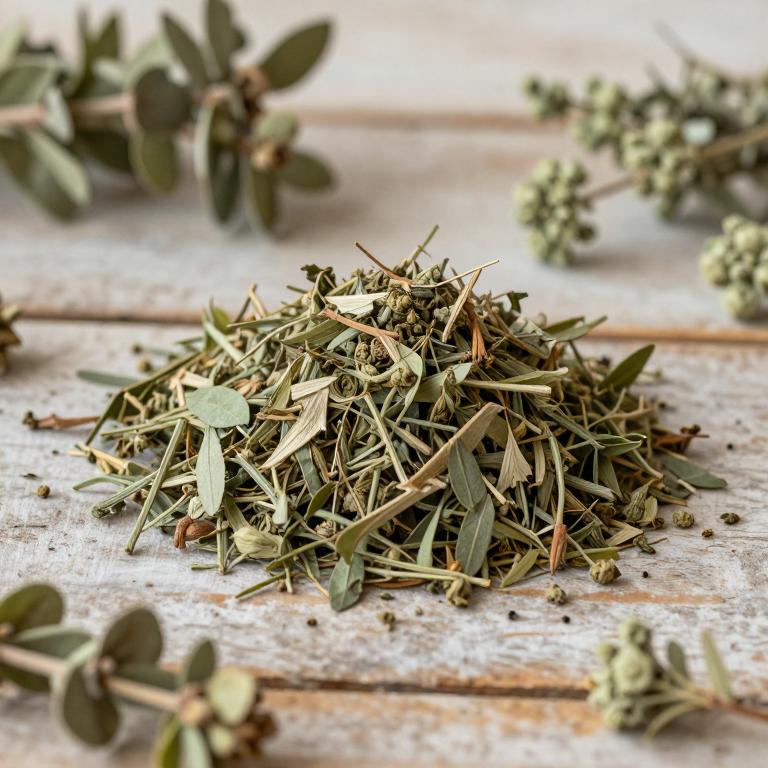
Names and Synonyms
Scientific Names
Accepted name
Capparis fascicularisSources: Wikidata, Catalogue of Life
Taxonomical Classification
This plant belongs to the kingdom Plantae and the phylum Streptophyta, falling under the class Equisetopsida and subclass Magnoliidae. It is classified within the order Brassicales and the family Capparaceae. Finally, its taxonomic identity is defined by the genus Capparis, specifically the species Capparis fascicularis.
| Rank | Classification |
|---|---|
| Kingdom | Plantae |
| Phylum | Streptophyta |
| Class | Equisetopsida |
| Subclass | Magnoliidae |
| Order | Brassicales |
| Family | Capparaceae |
| Genus | Capparis |
Sources: The World Checklist of Vascular Plants (WCVP)
Distribution
This plant, Capparis fascicularis, is primarily distributed across the West Tropical Africa region. Within this area, it can be found growing in the nation of Burkina. The species also has a documented presence in Gambia and Mali. Furthermore, its geographical range extends into Nigeria. Finally, the plant is recorded as inhabiting the territory of Niger.
| Region | Area |
|---|---|
| West Tropical Africa | Burkina |
| West Tropical Africa | Gambia |
| West Tropical Africa | Mali |
| West Tropical Africa | Nigeria |
| West Tropical Africa | Niger |
| West Tropical Africa | Senegal |
| West Tropical Africa | Sierra Leone |
| West-Central Tropical Africa | Burundi |
| West-Central Tropical Africa | Cameroon |
| West-Central Tropical Africa | Congo |
Sources: The World Checklist of Vascular Plants (WCVP)
Botanical Identification
Ecology
The ecology of Capparis fascicularis is characterized by its ability to thrive across a broad altitudinal gradient, ranging from low-lying areas at 5 m AMSL to higher elevations reaching a maximum of 1550 m AMSL. This species is predominantly found in diverse vegetation structures, specifically colonizing deciduous bushland, riverine thickets, and various forms of bushed- or wooded grassland. Its presence in these habitats suggests an adaptation to environments that provide a mix of seasonal moisture and structural complexity, allowing it to integrate into both riparian zones and more open, woody terrestrial ecosystems.
- Elevational range max:
- 1550 m AMSL
- Elevational range min:
- 5 m AMSL
- Habitat :
- deciduous bushland, riverine thickets, bushed- or wooded grassland
Life history
The life history of Capparis fascicularis is characterized by its status as a perennial organism, allowing it to persist in its environment through multiple growing seasons. In terms of its structural development and survival strategy, the species is classified as a phanerophyte, specifically exhibiting traits consistent with both phanerophyte and nanophanerophyte life forms. This growth habit indicates that its perennating buds are elevated above the soil surface, typically on woody stems or branches, which enables the plant to maintain its stature and reproductive capacity over an extended lifespan.
- Life form :
- phanerophyte
- Lifecycle :
- perennial
Morphology
The morphology of Capparis fascicularis is characterized by a woody growth form, primarily manifesting as a shrub. It functions as an obligatory climber, utilizing surrounding structures for support to achieve significant verticality, with a mean plant height of approximately 6 meters and a maximum recorded height of 6.096 meters. As a terrestrial species, it is neither aquatic nor an epiphyte, and it maintains an independent existence rather than acting as a parasite.
- Aquatic :
- terrestrial
- Climber :
- obligatory
- Epiphyte :
- terrestrial
- Growth form :
- shrub
- Parasite :
- independent
- Plant height max:
- 6.096074128 m
- Plant height mean:
- 6 m
- Woodiness :
- woody
Physiology
The physiology of Capparis fascicularis is characterized by a metabolic framework governed by the C3 photosynthetic pathway, which dictates its carbon fixation processes and water-use efficiency. As a C3 plant, it utilizes the enzyme Ribulose-1,5-bisphosphate carboxylase/oxygenase (RuBisCO) to directly fix atmospheric carbon dioxide into three-carbon compounds during the Calvin cycle. This physiological reliance on the C3 pathway implies that the plant's photosynthetic rate is highly sensitive to ambient temperature and light intensity, as it must balance the uptake of CO2 with the risk of photorespiration and transpirational water loss. Consequently, its physiological adaptation to its environment involves regulating stomatal conductance to maintain a balance between photosynthetic carbon gain and the preservation of internal water potential, a critical aspect of its survival in its specific ecological niche.
- Photosynthetic pathway :
- C3
Sources: Global Inventory of Floras and Traits (GIFT)
Plant Parts
Capparis fascicularis has 1 reported plant parts identified across 1 scientific publications and several other databases that are studied for medicinal purposes. The most consistently reported plant part include leaf.
| Plant part | Supporting sources | Consensus |
|---|---|---|
| Leaf | 1 supporting sources | ★☆☆☆☆ |
Leaf
- Natural product research
Activities
Capparis fascicularis has 1 reported activities identified across 1 scientific publications and several other databases. The most consistently reported activities include Antimicrobial.
| Activity | Supporting sources | Consensus |
|---|---|---|
| Antimicrobial | 1 supporting sources | ★☆☆☆☆ |
Antimicrobial
- Natural product research
Preparations
Capparis fascicularis has 1 reported preparations identified across 1 scientific publications and several other databases. The most consistently reported preparations include 80% aqueous methanol extract.
| Preparation | Supporting sources | Consensus |
|---|---|---|
| 80% aqueous methanol extract | 1 supporting sources | ★☆☆☆☆ |
80% aqueous methanol extract
- Natural product research