zigzag caperbush
Capparis erythrocarpos · Accepted scientific name
Scientific literature: Very Sparse (12 studies) · ★☆☆☆☆
Zigzag caperbush, scientifically known as Capparis erythrocarpos, is a resilient, sprawling shrub native to Southern Africa. Renowned for its striking red fruits and delicate white flowers, this plant holds significant ethnobotanical value. Various indigenous communities utilize its roots and leaves in traditional remedies to treat diverse medicinal ailments.
- Family
- Capparaceae
- Native range
- Africa
- Parts used
- Root · Leaf
- Common names
- Zigzag Caperbush
- Scientific synonyms
- Not available
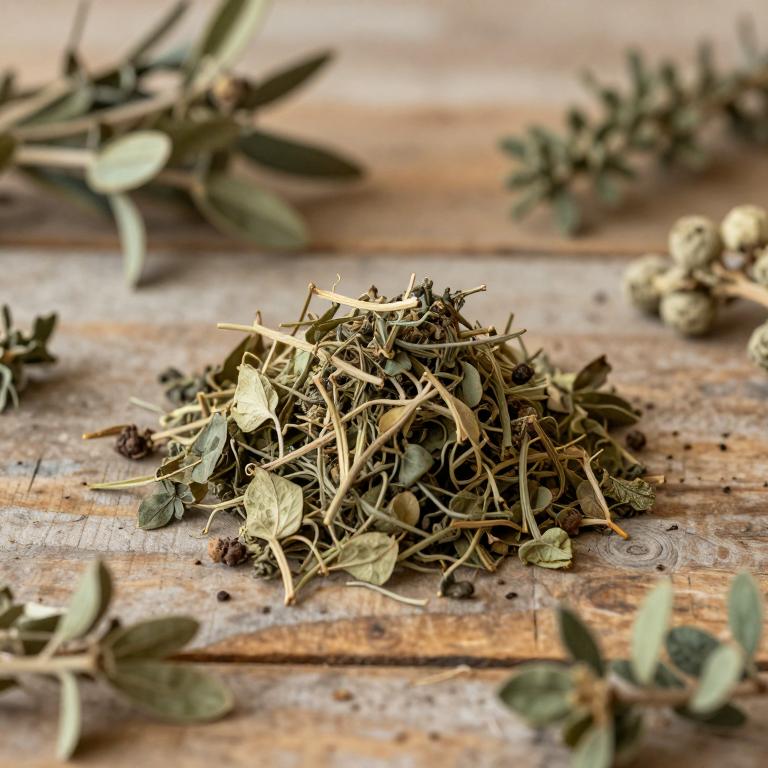
Names and Synonyms
Common Names
- zigzag caperbush
Scientific Names
Accepted name
Capparis erythrocarposSources: Wikidata, Catalogue of Life
Taxonomical Classification
This plant belongs to the kingdom Plantae and the phylum Streptophyta, situated within the class Equisetopsida and subclass Magnoliidae. It is classified under the order Brassicales and the family Capparaceae. Finally, it is identified by the genus Capparis, specifically as the species Capparis erythrocarpos.
| Rank | Classification |
|---|---|
| Kingdom | Plantae |
| Phylum | Streptophyta |
| Class | Equisetopsida |
| Subclass | Magnoliidae |
| Order | Brassicales |
| Family | Capparaceae |
| Genus | Capparis |
Sources: The World Checklist of Vascular Plants (WCVP)
Distribution
This plant exhibits a specific geographical distribution concentrated within the West Tropical Africa region. It can be found growing in the diverse landscapes of Benin and Burkina Faso. Additionally, the species is present across the territories of Ghana and Guinea-Bissau. Its range also extends into the country of Guinea, marking its presence in these neighboring nations. Collectively, these locations define the primary natural habitat for Capparis erythrocarpos.
| Region | Area |
|---|---|
| West Tropical Africa | Benin |
| West Tropical Africa | Burkina |
| West Tropical Africa | Ghana |
| West Tropical Africa | Guinea-Bissau |
| West Tropical Africa | Guinea |
| West Tropical Africa | Ivory Coast |
| West Tropical Africa | Liberia |
| West Tropical Africa | Nigeria |
| West Tropical Africa | Sierra Leone |
| West Tropical Africa | Togo |
Sources: The World Checklist of Vascular Plants (WCVP)
Botanical Identification
Ecology
The ecology of Capparis erythrocarpos is characterized by its preference for specific landscape mosaics, primarily occurring within bushed or wooded grasslands. It frequently establishes itself in riparian zones, often found growing along the margins of rivers where moisture availability is more consistent. This preference for transitional habitats between open grasslands and wooded areas allows the plant to thrive in environments that offer a balance of sunlight and seasonal water access, typically within semi-arid to subtropical ecosystems.
- Habitat :
- bushed or wooded grassland, often along rivers
Life history
The life history of Capparis erythrocarpos is characterized by its classification as a phanerophyte, specifically manifesting through the growth forms of both nanophanerophyte and phanerophyte. As a phanerophyte, the plant maintains its perennating buds high above the soil surface, protected by its woody structural development. Depending on its specific environmental niche and developmental stage, its life history may transition between the more compact, low-growing habits of a nanophanerophyte and the more substantial, taller structural forms of a standard phanerophyte. This life strategy allows the species to persist through seasonal changes by protecting its vital regenerative tissues on elevated branches, ensuring long-term survival and the ability to re-establish its canopy following periods of dormancy or environmental stress.
- Life form :
- phanerophyte
Morphology
The morphology of Capparis erythrocarpos is characterized by a woody structure that exhibits versatile growth forms, manifesting as both a shrub and a tree. This plant typically reaches a mean height of approximately 8 m and functions as an obligatory climber in the form of a liana. As a terrestrial species, it does not exhibit epiphytic behavior, such as being a holoepiphyte or hemiepiphyte, nor does it possess aquatic or semiaquatic adaptations. Furthermore, the plant is an independent organism, functioning without parasitic dependencies.
- Aquatic :
- terrestrial
- Climber :
- liana
- Climber :
- obligatory
- Epiphyte :
- terrestrial
- Growth form :
- tree
- Growth form :
- shrub
- Parasite :
- independent
- Plant height mean:
- 8 m
- Woodiness :
- woody
Physiology
The physiology of Capparis erythrocarpos is characterized by its specific metabolic adaptations to its environmental niche, most notably through its utilization of the C3 photosynthetic pathway. As a C3 plant, the carbon fixation process begins with the direct carboxylation of ribulose-1,5-bisphosphate (RuBP) by the enzyme RuBisCO, leading to the immediate formation of a three-carbon compound, 3-phosphoglycerate. This pathway dictates the plant's gas exchange dynamics and water-use efficiency, as the stomata must remain open for CO2 uptake, which inherently increases transpiration rates. The physiological regulation of its photosynthetic apparatus is closely linked to its ability to manage light interception and nutrient uptake to support its growth cycles. Furthermore, its physiological processes include complex hormonal signaling and osmotic adjustments that allow it to maintain cellular turgor and metabolic stability during periods of varying environmental stress.
- Photosynthetic pathway :
- C3
Sources: Global Inventory of Floras and Traits (GIFT)
Plant Parts
Capparis erythrocarpos has 3 reported plant parts identified across 4 scientific publications and several other databases that are studied for medicinal purposes. The most consistently reported plant part include root, leaf, stem.
| Plant part | Supporting sources | Consensus |
|---|---|---|
| Root | 2 supporting sources | ★☆☆☆☆ |
| Leaf | 1 supporting sources | ★☆☆☆☆ |
| Stem | 1 supporting sources | ★☆☆☆☆ |
Root
- Biochemistry research international
- Journal of ethnopharmacology
Leaf
- Journal of ethnopharmacology
Stem
- Journal of ethnopharmacology
Chemicals
Capparis erythrocarpos has 1 reported phytochemicals identified across 4 scientific publications and several other databases. The most consistently reported chemicals include Daucosterol.
| Chemical | Supporting sources | Consensus |
|---|---|---|
| Daucosterol | 1 supporting sources | ★☆☆☆☆ |
Daucosterol
- Biochemistry research international
Activities
Capparis erythrocarpos has 2 reported activities identified across 4 scientific publications and several other databases. The most consistently reported activities include Analgesic, Antiarthritic.
| Activity | Supporting sources | Consensus |
|---|---|---|
| Analgesic | 2 supporting sources | ★☆☆☆☆ |
| Antiarthritic | 2 supporting sources | ★☆☆☆☆ |
Analgesic
- Biochemistry research international
- Journal of ethnopharmacology
Antiarthritic
- Biochemistry research international
- Journal of ethnopharmacology
Conditions
Capparis erythrocarpos has 3 reported investigations on conditions identified across 4 scientific publications and several other databases. The most consistently reported conditions include analgesic, pain, rheumatoid arthritis.
| Condition | Supporting sources | Consensus |
|---|---|---|
| Analgesic | 1 supporting sources | ★☆☆☆☆ |
| Pain | 1 supporting sources | ★☆☆☆☆ |
| Rheumatoid arthritis | 1 supporting sources | ★☆☆☆☆ |
Analgesic
- Biochemistry research international
Pain
- Journal of ethnopharmacology
Rheumatoid arthritis
- Journal of ethnopharmacology
Preparations
Capparis erythrocarpos has 3 reported preparations identified across 4 scientific publications and several other databases. The most consistently reported preparations include leaf extract, root extracts, stem extracts.
| Preparation | Supporting sources | Consensus |
|---|---|---|
| Leaf extract | 1 supporting sources | ★☆☆☆☆ |
| Root extracts | 1 supporting sources | ★☆☆☆☆ |
| Stem extracts | 1 supporting sources | ★☆☆☆☆ |
Leaf extract
- Journal of ethnopharmacology
Root extracts
- Journal of ethnopharmacology
Stem extracts
- Journal of ethnopharmacology