Caper
Capparis cartilaginea · Accepted scientific name
Scientific literature: Very Sparse (6 studies) · ★☆☆☆☆
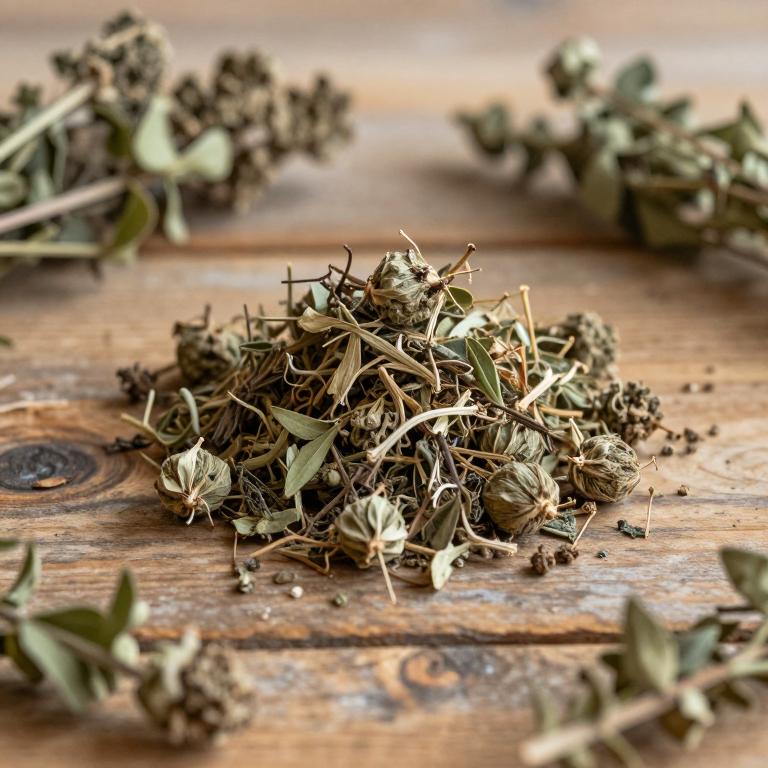
Caper, scientifically known as Capparis cartilaginea, is a resilient shrub native to arid regions. Renowned in traditional medicine, this plant offers significant therapeutic potential. Its various parts are utilized for their antioxidant and anti-inflammatory properties, providing natural remedies for diverse ailments and showcasing the remarkable medicinal richness of nature.
- Family
- Capparaceae
- Native range
- Africa
- Parts used
- Leaf
- Common names
- Caper · Cartilage Caper
- Scientific synonyms
- Capparis Spinosa Subsp. Cartilaginea · Capparis Spinosa Var. Pyracantha · 8 more
Names and Synonyms
Common Names
- Caper
- Cartilage Caper
Scientific Names
Accepted name
Capparis cartilagineaSynonyms
- Capparis spinosa subsp. cartilaginea
- Capparis spinosa var. pyracantha
- Capparis spinosa var. galeata
- Capparis exstipulata
- Capparis pyracantha
- Capparis galeata
- Capparis galeata var. lanceolata
- Capparis galeata var. montana
- Capparis inermis
- Capparis antanossarum
Sources: Wikidata, Catalogue of Life
Taxonomical Classification
This plant belongs to the kingdom Plantae within the phylum Streptophyta and is classified under the class Equisetopsida. As a member of the subclass Magnoliidae and the order Brassicales, it falls into the family Capparaceae. Specifically, it is identified under the genus Capparis as the species Capparis cartilaginea.
| Rank | Classification |
|---|---|
| Kingdom | Plantae |
| Phylum | Streptophyta |
| Class | Equisetopsida |
| Subclass | Magnoliidae |
| Order | Brassicales |
| Family | Capparaceae |
| Genus | Capparis |
Sources: The World Checklist of Vascular Plants (WCVP)
Distribution
This plant exhibits a specific geographical distribution concentrated across several regions of the African continent. In Northern Africa, it can be found growing within the territories of Egypt and Libya. Moving toward the Northeast Tropical Africa region, its presence extends into the country of Chad. The species also inhabits the landscapes of Djibouti and Eritrea. Collectively, these locations define the primary natural range for Capparis cartilaginea.
| Region | Area |
|---|---|
| Northern Africa | Egypt |
| Northern Africa | Libya |
| Northeast Tropical Africa | Chad |
| Northeast Tropical Africa | Djibouti |
| Northeast Tropical Africa | Eritrea |
| Northeast Tropical Africa | Ethiopia |
| Northeast Tropical Africa | Socotra |
| Northeast Tropical Africa | Somalia |
| Northeast Tropical Africa | Sudan-South Sudan |
| East Tropical Africa | Kenya |
Sources: The World Checklist of Vascular Plants (WCVP)
Botanical Identification
Ecology
The ecology of Capparis cartilaginea is characterized by its specialized ability to colonize rugged and varied terrain, frequently establishing itself directly on coral rock or amidst the remnants of old ruins. It thrives within dry bushland environments, demonstrating significant adaptability to semi-arid conditions where competition from denser vegetation may be limited. Furthermore, the species exhibits a strong affinity for riparian and lacustrine zones, often found growing along the margins of rivers, luggas, and lakes, where it can exploit the moisture availability provided by these water bodies despite its preference for drier bushland habitats.
- Habitat :
- on coral rock or on olad ruins, indry bushland, often along rivers, luggas and lakes
Life history
The life history of Capparis cartilaginea is characterized by a perennial lifecycle, allowing the plant to persist through multiple growing seasons and maintain a stable presence within its ecosystem. In terms of its structural life form, the species is classified as a phanerophyte, specifically exhibiting traits consistent with both phanerophyte and nanophanerophyte categories, which indicates that its perennating buds are located well above the ground on woody stems or branches. This growth strategy enables the plant to withstand various environmental stressors while maintaining a robust, long-lived physical structure.
- Life form :
- phanerophyte
- Lifecycle :
- perennial
Morphology
The morphology of Capparis cartilaginea is characterized by its growth form as a woody shrub, exhibiting a sturdy and permanent structure. This plant is terrestrial in its habitat, thriving in land-based environments rather than aquatic or semiaquatic settings. As a self-supporting species, it does not rely on other structures for elevation, maintaining its upright posture independently. Furthermore, it functions as an independent organism, showing no parasitic behavior toward host plants during its development.
- Aquatic :
- terrestrial
- Climber :
- self-supporting
- Growth form :
- shrub
- Parasite :
- independent
- Woodiness :
- woody
Physiology
The physiology of Capparis cartilaginea is characterized by a metabolic framework centered around the C3 photosynthetic pathway, which governs its carbon fixation processes and energy production. As a C3 plant, it utilizes the enzyme RuBisCO to catalyze the first step of photosynthesis, fixing atmospheric carbon dioxide directly into a three-carbon compound during the Calvin cycle. This metabolic strategy dictates its physiological responses to environmental stressors, particularly regarding water use efficiency and gas exchange. The plant's transpiration rates and stomatal conductance are intrinsically linked to its C3 pathway, influencing its ability to maintain turgor pressure and manage thermal regulation within arid or semi-arid habitats. Consequently, its physiological performance is highly dependent on ambient CO2 concentrations and temperature, which modulate the efficiency of its photosynthetic machinery and overall biomass accumulation.
- Photosynthetic pathway :
- C3
Reproduction
The reproduction of Capparis cartilaginea is characterized by the production of seeds that exhibit specific mass variations essential to its life cycle. The seed mass within this species demonstrates a measurable range of diversity, with a recorded minimum mass of 0.00315 g and a maximum mass of 0.00642 g. When analyzing the collective data of the seed population, the average seed mass is determined to be a mean of 0.00517 g. These quantitative traits reflect the biological investment in individual propagules, influencing the plant's dispersal capabilities and subsequent germination success.
- Seed mass max:
- 0.00642 g
- Seed mass mean:
- 0.00517 g
- Seed mass min:
- 0.00315 g
Sources: Global Inventory of Floras and Traits (GIFT)
Plant Parts
Capparis cartilaginea has 1 reported plant parts identified across 1 scientific publications and several other databases that are studied for medicinal purposes. The most consistently reported plant part include leaf.
| Plant part | Supporting sources | Consensus |
|---|---|---|
| Leaf | 1 supporting sources | ★☆☆☆☆ |
Leaf
- Frontiers in pharmacology
Chemicals
Capparis cartilaginea has 1 reported phytochemicals identified across 1 scientific publications and several other databases. The most consistently reported chemicals include Flavonoids.
| Chemical | Supporting sources | Consensus |
|---|---|---|
| Flavonoids | 1 supporting sources | ★☆☆☆☆ |
Flavonoids
- Frontiers in pharmacology
Activities
Capparis cartilaginea has 1 reported activities identified across 1 scientific publications and several other databases. The most consistently reported activities include Antioxidant.
| Activity | Supporting sources | Consensus |
|---|---|---|
| Antioxidant | 1 supporting sources | ★☆☆☆☆ |
Antioxidant
- Frontiers in pharmacology
Conditions
Capparis cartilaginea has 3 reported investigations on conditions identified across 1 scientific publications and several other databases. The most consistently reported conditions include arthritis, gout, rheumatism.
| Condition | Supporting sources | Consensus |
|---|---|---|
| Arthritis | 1 supporting sources | ★☆☆☆☆ |
| Gout | 1 supporting sources | ★☆☆☆☆ |
| Rheumatism | 1 supporting sources | ★☆☆☆☆ |
Arthritis
- Frontiers in pharmacology
Gout
- Frontiers in pharmacology
Rheumatism
- Frontiers in pharmacology