black-sesame
Cantinoa americana · Accepted scientific name
Scientific literature: Very Sparse (1 studies) · ★☆☆☆☆
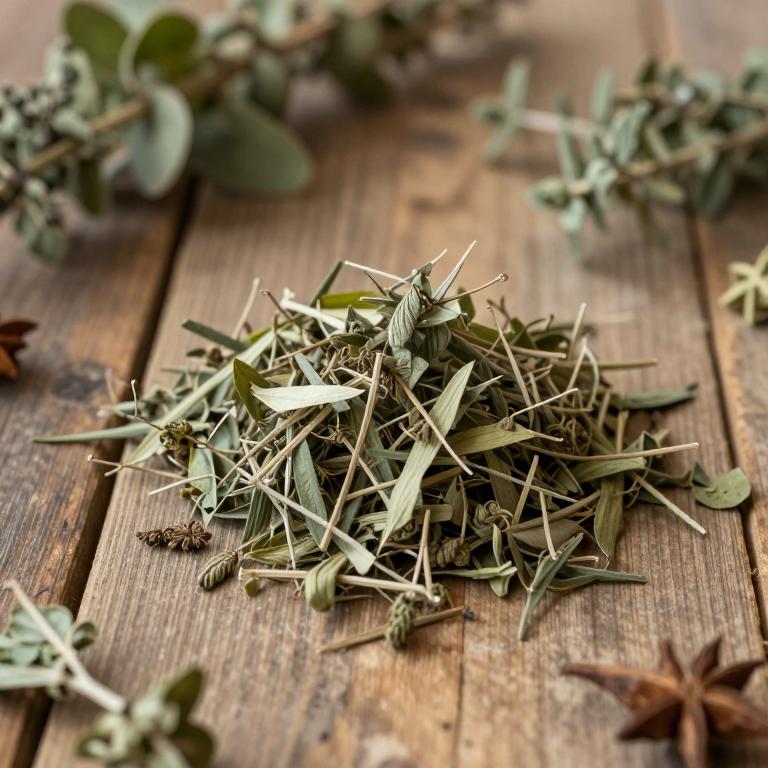
Black-sesame, scientifically known as Cantinoa americana, is a nutritious wild herbaceous plant native to South America. Often harvested in the Andean highlands, this resilient species is prized for its edible seeds and leaves. Rich in essential minerals and antioxidants, it serves as a traditional dietary staple and medicinal resource.
- Family
- Lamiaceae
- Native range
- Africa
- Parts used
- Not available
- Common names
- Black-Sesame · Black Sesame
- Scientific synonyms
- Mesosphaerum Menthodorum · Mesosphaerum Spicigerum · 13 more
Names and Synonyms
Common Names
- black-sesame
- black sesame
Scientific Names
Accepted name
Cantinoa americanaSynonyms
- Mesosphaerum menthodorum
- Mesosphaerum spicigerum
- Mesosphaerum gonocephalum
- Mesosphaerum lophanthus
- Hyptis spicigera
- Hyptis subverticillata
- Hyptis gonocephala
- Hyptis hispida
- Hyptis lophantha
- Hyptis madagascariensis
- Hyptis menthodora
- Hyptis pohliana
- Pycnanthemum elongatum
- Leucas microscypha
- Mesosphaerum subverticillatum
Sources: Wikidata, Catalogue of Life
Taxonomical Classification
This plant, Cantinoa americana, belongs to the kingdom Plantae and the phylum Streptophyta. Within the class Equisetopsida and subclass Magnoliidae, it is classified under the order Lamiales and the family Lamiaceae. Finally, its taxonomic identity is completed by its placement in the genus Cantinoa.
| Rank | Classification |
|---|---|
| Kingdom | Plantae |
| Phylum | Streptophyta |
| Class | Equisetopsida |
| Subclass | Magnoliidae |
| Order | Lamiales |
| Family | Lamiaceae |
| Genus | Cantinoa |
Sources: The World Checklist of Vascular Plants (WCVP)
Distribution
This plant, Cantinoa americana, exhibits a specific geographical distribution across several regions of West Tropical Africa. It can be found growing in the nation of Benin. The species is also documented within the borders of Burkina. Additionally, its presence extends to Gambia and Ghana. Finally, the plant's range includes the country of Guinea-Bissau.
| Region | Area |
|---|---|
| West Tropical Africa | Benin |
| West Tropical Africa | Burkina |
| West Tropical Africa | Gambia |
| West Tropical Africa | Ghana |
| West Tropical Africa | Guinea-Bissau |
| West Tropical Africa | Guinea |
| West Tropical Africa | Ivory Coast |
| West Tropical Africa | Mali |
| West Tropical Africa | Nigeria |
| West Tropical Africa | Niger |
Sources: The World Checklist of Vascular Plants (WCVP)
Botanical Identification
Ecology
The ecology of Cantinoa americana is characterized by its remarkable adaptability across a diverse array of ecosystems and significant altitudinal variations. This species exhibits a broad elevational range, occurring from sea level up to a maximum altitude of 2000 m AMSL. Its habitat preferences are highly varied, allowing it to thrive in environments ranging from anthropized areas (Área Antrópica) to specialized natural formations. It is commonly found in the Caatinga (strictu sensu), Cerrado (lato sensu), and various open landscapes such as Campo de Várzea and Campo Limpo. Furthermore, the plant occupies more complex forest structures, including Carrasco, Floresta Ciliar or Galeria, and Floresta Ombrófila (also known as Floresta Pluvial), demonstrating a high degree of ecological plasticity across different Brazilian biomes and moisture regimes.
- Elevational range max:
- 2000 m AMSL
- Elevational range min:
- 0 m AMSL
- Habitat :
- Área Antrópica, Caatinga (stricto sensu), Campo de Várzea, Campo Limpo, Carrasco, Cerrado (lato sensu), Floresta Ciliar ou Galeria, Floresta Ombrófila (= Floresta Pluvial)
Life history
The life history of Cantinoa americana is characterized by an annual lifecycle, completing its entire developmental sequence from germination to seed production within a single growing season. In terms of its structural growth strategy, the species is classified as a therophyte, meaning it survives the unfavorable seasons primarily through seeds, which remain dormant until conditions are suitable for rapid growth. Additionally, its growth habit is described as a chamaephyte, indicating that its perennating buds are situated close to the soil surface, allowing it to thrive in its specific ecological niche.
- Life form :
- chamaephyte
- Life form :
- therophyte
- Lifecycle :
- annual
Morphology
The morphology of Cantinoa americana is characterized by its growth form as a non-woody herb, specifically classified as a forb. This plant is a terrestrial species, maintaining an independent existence without being an epiphyte or a parasite. In terms of its structural habit, it is self-supporting rather than acting as a liana or vine. The plant reaches a height ranging from a minimum of 0.5 meters to a maximum of 2 meters, with an average height of approximately 1 meter.
- Aquatic :
- terrestrial
- Climber :
- self-supporting
- Epiphyte :
- terrestrial
- Growth form :
- herb
- Growth form :
- forb
- Parasite :
- independent
- Plant height max:
- 2 m
- Plant height mean:
- 1 m
- Plant height min:
- 0.5 m
- Woodiness :
- non-woody
Physiology
The physiology of Cantinoa americana is characterized by specialized metabolic processes adapted to its environmental niche, particularly regarding its nutrient acquisition strategies. A key aspect of its physiological profile involves its interaction with soil nutrients and its ability to facilitate chemical transformations within its root zone. Regarding its capacity for symbiotic relationships with diazotrophic bacteria, the plant is not a nitrogen fixer; it lacks the biological machinery required for the direct conversion of atmospheric nitrogen into ammonia, meaning it must rely on available soil nitrates or ammonium for its nitrogen requirements. This distinction in its nitrogen metabolism influences its resource allocation patterns and its dependence on the surrounding soil chemistry for growth and development.
- Nitrogen fixer :
- no
Reproduction
The reproduction of Cantinoa americana is characterized by the production of specialized seeds that exhibit specific morphological and mass-related traits. Based on quantitative data, the seeds produced by this species are remarkably small and lightweight, facilitating their dispersal. The mean seed mass is recorded at 0.000435 g, indicating a highly consistent production pattern across the population. The variation within the species is relatively narrow, with individual seed masses ranging from a minimum of 0.0003 g (3e-04 g) to a maximum of 0.0006 g (6e-04 g). These precise mass measurements suggest a reproductive strategy optimized for efficient seed development and potential distribution within its natural habitat.
- Seed mass max:
- 6e-04 g
- Seed mass mean:
- 0.000435 g
- Seed mass min:
- 3e-04 g
Sources: Global Inventory of Floras and Traits (GIFT)
Activities
Cantinoa americana has 1 reported activities identified across 0 scientific publications and several other databases. The most consistently reported activities include Anticonvulsant.
| Activity | Supporting sources | Consensus |
|---|---|---|
| Anticonvulsant | 1 supporting sources | ★☆☆☆☆ |
Anticonvulsant
- Epilepsy & behavior : E&B