Canarium resiniferum
Canarium resiniferum · Accepted scientific name
Scientific literature: Very Sparse (6 studies) · ★☆☆☆☆
Canarium resiniferum, scientifically known as Canarium resiniferum, is a remarkable tropical tree prized for its aromatic resin. Known as dammar, this substance holds significant medicinal value in traditional practices. Extracted from the bark, the resin offers potent antimicrobial and anti-inflammatory properties, making it a vital botanical resource.
- Family
- Burseraceae
- Native range
- Asia-Tropical
- Parts used
- Leaf
- Common names
- Not available
- Scientific synonyms
- Not available
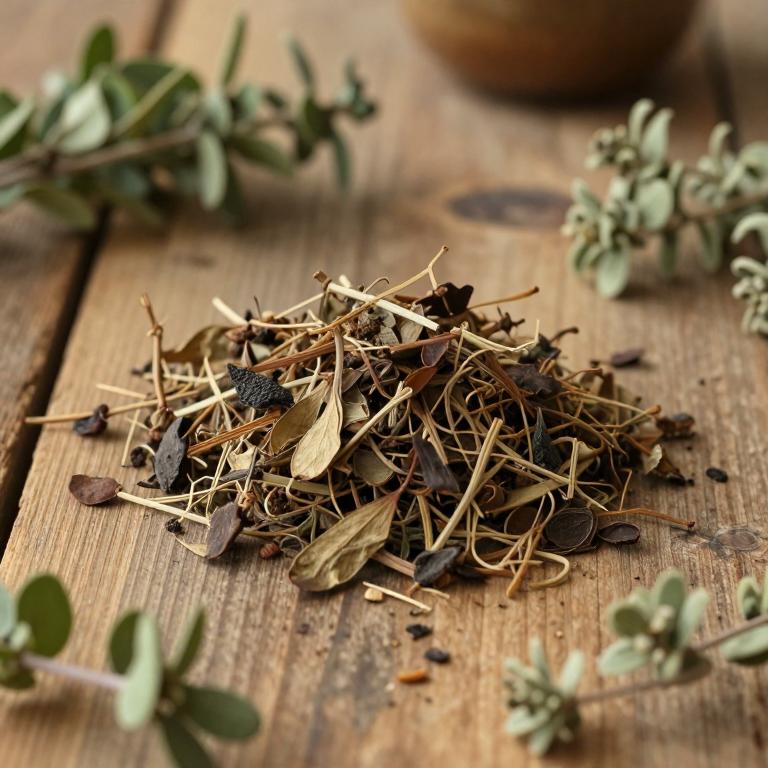
Names and Synonyms
Scientific Names
Accepted name
Canarium resiniferumSources: Wikidata, Catalogue of Life
Taxonomical Classification
This plant belongs to the kingdom Plantae and is classified under the phylum Streptophyta and the class Equisetopsida. Within the subclass Magnoliidae, it is placed in the order Sapindales and the family Burseraceae. Finally, it is categorized under the genus Canarium.
| Rank | Classification |
|---|---|
| Kingdom | Plantae |
| Phylum | Streptophyta |
| Class | Equisetopsida |
| Subclass | Magnoliidae |
| Order | Sapindales |
| Family | Burseraceae |
| Genus | Canarium |
Sources: The World Checklist of Vascular Plants (WCVP)
Distribution
This plant exhibits a specific geographical distribution within the Indian Subcontinent. It can be found growing in the region of Assam. Additionally, its presence extends across the borders into Bangladesh. These specific areas represent the primary habitats for the species in South Asia. Therefore, its range is concentrated within these two neighboring territories.
| Region | Area |
|---|---|
| Indian Subcontinent | Assam |
| Indian Subcontinent | Bangladesh |
Sources: The World Checklist of Vascular Plants (WCVP)
Botanical Identification
Morphology
The morphology of Canarium resiniferum is characterized by its distinct growth habit as a woody climber, manifesting as a robust liana or vine. In terms of its climbing mechanism, the plant is classified as a self-supporting climber, which indicates its ability to maintain structural integrity through its own stem development. Furthermore, its climbing nature is identified as self-supporting rather than being strictly obligatory or facultative, allowing it to navigate its environment through a self-sustaining structural framework.
- Climber :
- self-supporting
Reproduction
The reproduction of Canarium resiniferum is characterized by the development of specialized reproductive structures that facilitate the dispersal of its offspring. The plant produces fruits that exhibit a specific textural quality, categorized as being both dry and fleshy in nature. Within these fruits, the seeds serve as the primary unit of propagation, possessing a highly consistent size profile. Detailed measurements indicate that the seed volume remains constant throughout the population, with a minimum, maximum, and mean volume all recorded at exactly 5900 mm³. This uniformity in seed volume suggests a stable reproductive strategy optimized for the specific environmental conditions in which the species thrives.
- Fruit dryness :
- fleshy
- Seed volume max:
- 5900 mm³
Sources: Global Inventory of Floras and Traits (GIFT)
Plant Parts
Canarium resiniferum has 1 reported plant parts identified across 1 scientific publications and several other databases that are studied for medicinal purposes. The most consistently reported plant part include leaf.
| Plant part | Supporting sources | Consensus |
|---|---|---|
| Leaf | 1 supporting sources | ★☆☆☆☆ |
Leaf
- Journal of traditional and complementary medicine
Chemicals
Canarium resiniferum has 1 reported phytochemicals identified across 1 scientific publications and several other databases. The most consistently reported chemicals include Flavonoid.
| Chemical | Supporting sources | Consensus |
|---|---|---|
| Flavonoid | 1 supporting sources | ★☆☆☆☆ |
Flavonoid
- Journal of traditional and complementary medicine
Activities
Canarium resiniferum has 3 reported activities identified across 1 scientific publications and several other databases. The most consistently reported activities include Antidepressant, Antioxidant, Anxiolytic.
| Activity | Supporting sources | Consensus |
|---|---|---|
| Antidepressant | 1 supporting sources | ★☆☆☆☆ |
| Antioxidant | 1 supporting sources | ★☆☆☆☆ |
| Anxiolytic | 1 supporting sources | ★☆☆☆☆ |
Antidepressant
- Journal of traditional and complementary medicine
Antioxidant
- Journal of traditional and complementary medicine
Anxiolytic
- Journal of traditional and complementary medicine
Conditions
Canarium resiniferum has 1 reported investigations on conditions identified across 1 scientific publications and several other databases. The most consistently reported conditions include anxiety.
| Condition | Supporting sources | Consensus |
|---|---|---|
| Anxiety | 1 supporting sources | ★☆☆☆☆ |
Anxiety
- Journal of traditional and complementary medicine