Camptosema rubicundum
Camptosema rubicundum · Accepted scientific name
Scientific literature: Sparse (74 studies) · ★★☆☆☆
, scientifically known as Camptosema rubicundum, is a remarkable medicinal plant native to specific tropical regions. Renowned for its potent bioactive compounds, it has long been utilized in traditional healing practices. This botanical treasure offers significant therapeutic potential, particularly in addressing inflammation and supporting various restorative health processes.
- Family
- Not available
- Native range
- Southern America
- Parts used
- Not available
- Common names
- Not available
- Scientific synonyms
- Not available
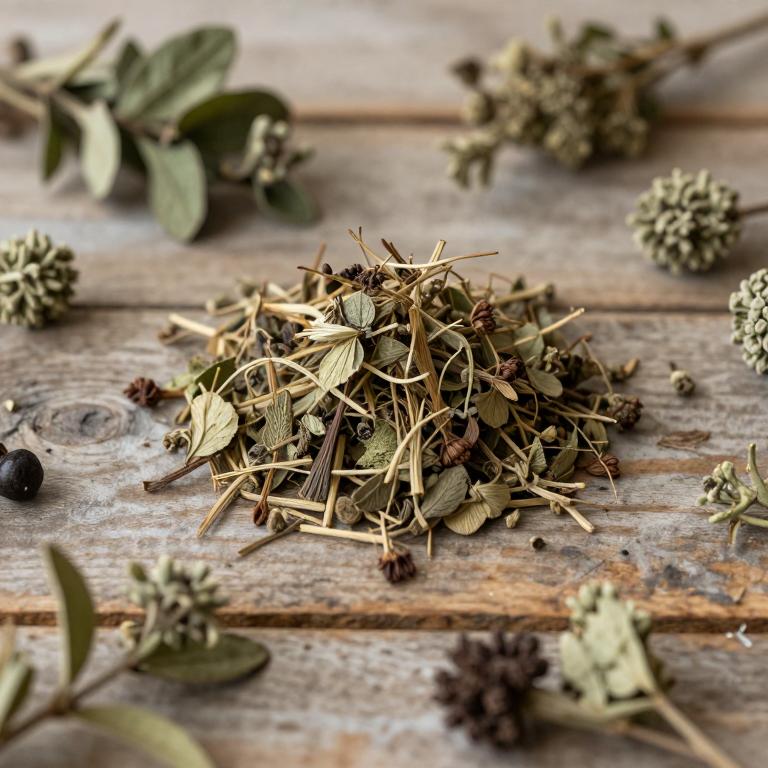
Names and Synonyms
Scientific Names
Accepted name
Camptosema rubicundumDistribution
This plant exhibits a broad geographical distribution across several regions of South America. In Western South America, it can be found specifically within the borders of Bolivia. Its presence in Brazil is noted in both the West-Central and Southern regions of the country. Moving toward the southern part of the continent, the species inhabits the Northeast portion of Argentina. Finally, the distribution extends into the territory of Paraguay within Southern South America.
| Region | Area |
|---|---|
| Western South America | Bolivia |
| Brazil | Brazil West-Central |
| Brazil | Brazil South |
| Southern South America | Argentina Northeast |
| Southern South America | Paraguay |
| Southern South America | Uruguay |
Sources: The World Checklist of Vascular Plants (WCVP)
Botanical Identification
Ecology
The ecology of Camptosema rubicundum is characterized by its preference for specific riparian environments, primarily thriving within the Floresta Ciliar (riparian forest) or Galeria (gallery forest) habitats. These ecosystems provide the necessary moisture and shaded conditions essential for its growth. In terms of altitudinal distribution, the species occupies a broad vertical range, beginning at sea level (0 m AMSL) and extending up to a maximum elevation of 500 m AMSL.
- Elevational range max:
- 500 m AMSL
- Elevational range min:
- 0 m AMSL
- Habitat :
- Floresta Ciliar ou Galeria
Life history
The life history of Camptosema rubicundum is characterized by its status as a perennial species, allowing the plant to persist through multiple growing seasons. As a long-lived organism, it establishes a robust presence within its ecological niche, often characterized by a slow to moderate rate of development compared to annuals. Throughout its life cycle, the plant undergoes seasonal vegetative growth and reproductive phases, relying on its established root systems to survive periods of dormancy or environmental stress. This perennial nature ensures that the plant can accumulate biomass over several years, eventually contributing to the population through repeated flowering and seed production cycles.
- Lifecycle :
- perennial
Morphology
The morphology of Camptosema rubicundum is characterized by a woody growth form, specifically categorized as a shrub. It functions as an independent organism, showing no parasitic tendencies, and maintains a terrestrial lifestyle, existing neither as an aquatic nor a semiaquatic plant. Furthermore, it is strictly terrestrial in its ecological positioning, lacking any epiphytic tendencies such as being a holoepiphyte, hemiepiphyte, or facultative epiphyte. Instead of exhibiting climbing behaviors, it is a self-supporting shrub rather than an obligatory or facultative climber.
- Aquatic :
- terrestrial
- Climber :
- obligatory
- Epiphyte :
- terrestrial
- Growth form :
- shrub
- Parasite :
- independent
- Woodiness :
- woody
Physiology
The physiology of Camptosema rubricundum is characterized by a C3 photosynthetic pathway, a metabolic strategy common among many woody dicotyledonous species that involves the direct fixation of atmospheric carbon dioxide by the enzyme RuBisCO within the mesophyll cells. This process occurs through the Calvin cycle, where CO2 is incorporated into three-carbon organic compounds, necessitating a steady supply of water to maintain stomatal conductance for gas exchange. As a C3 plant, its metabolic efficiency is highly dependent on environmental temperature and light intensity, as the plant must manage the potential for photorespiration when stomatal closure occurs under heat or water stress. The physiological regulation of its carbon assimilation is tightly linked to its transpiration rates and nutrient uptake, ensuring that the metabolic demands of its growth and secondary metabolite production are met through efficient resource partitioning within its tissues.
- Photosynthetic pathway :
- C3
Reproduction
The reproduction of Camptosema rubicundum is characterized by the production of seeds that exhibit a highly consistent physical profile. Based on quantitative data, the seed mass is uniform across the observed population, with a mean seed mass of 0.1335 g. This consistency is reflected in the minimum and maximum recorded values, which both stand at exactly 0.1335 g, indicating a lack of variance in the weight of the individual seeds produced during the reproductive cycle.
- Seed mass mean:
- 0.1335 g
Sources: Global Inventory of Floras and Traits (GIFT)
Chemicals
Camptosema rubicundum has 2 reported phytochemicals identified across 0 scientific publications and several other databases. The most consistently reported chemicals include genistein, hydroxygenistein.
| Chemical | Supporting sources | Consensus |
|---|---|---|
| genistein | 1 supporting sources | ★☆☆☆☆ |
| hydroxygenistein | 1 supporting sources | ★☆☆☆☆ |
genistein
- Dr. Duke
hydroxygenistein
- Dr. Duke
Activities
Camptosema rubicundum has 72 reported activities identified across 0 scientific publications and several other databases. The most consistently reported activities include Abortifacient, Aldose-Reductase-Inhibitor, Alpha-Reductase-Inhibitor, Antiaggregant, Antiangiogenic.
| Activity | Supporting sources | Consensus |
|---|---|---|
| Abortifacient | 1 supporting sources | ★☆☆☆☆ |
| Aldose-Reductase-Inhibitor | 1 supporting sources | ★☆☆☆☆ |
| Alpha-Reductase-Inhibitor | 1 supporting sources | ★☆☆☆☆ |
| Antiaggregant | 1 supporting sources | ★☆☆☆☆ |
| Antiangiogenic | 1 supporting sources | ★☆☆☆☆ |
| Antiatherosclerotic | 1 supporting sources | ★☆☆☆☆ |
| Anticancer (Breast) | 1 supporting sources | ★☆☆☆☆ |
| Anticarcinomic (Breast) | 1 supporting sources | ★☆☆☆☆ |
| Anticlimacteric | 1 supporting sources | ★☆☆☆☆ |
| Antiendoccytotic | 1 supporting sources | ★☆☆☆☆ |
Abortifacient
- Dr. Duke
Aldose-Reductase-Inhibitor
- Dr. Duke
Alpha-Reductase-Inhibitor
- Dr. Duke
Antiaggregant
- Dr. Duke
Antiangiogenic
- Dr. Duke
Antiatherosclerotic
- Dr. Duke
Anticancer (Breast)
- Dr. Duke
Anticarcinomic (Breast)
- Dr. Duke
Anticlimacteric
- Dr. Duke
Antiendoccytotic
- Dr. Duke