Camphora parthenoxylon
Camphora parthenoxylon · Accepted scientific name
Scientific literature: Very Sparse (11 studies) · ★☆☆☆☆
, scientifically known as Camphora parthenoxylon, is a significant medicinal plant deeply rooted in traditional healing practices. Often referred to as Camphor tree, it is prized for its aromatic properties and therapeutic potential. Used widely in herbal medicine, it offers various bioactive compounds essential for treating diverse health ailments.
- Family
- Lauraceae
- Native range
- Asia-Temperate
- Parts used
- Fruit
- Common names
- Not available
- Scientific synonyms
- Parthenoxylon Pruinosum · Sassafras Parthenoxylon · 23 more
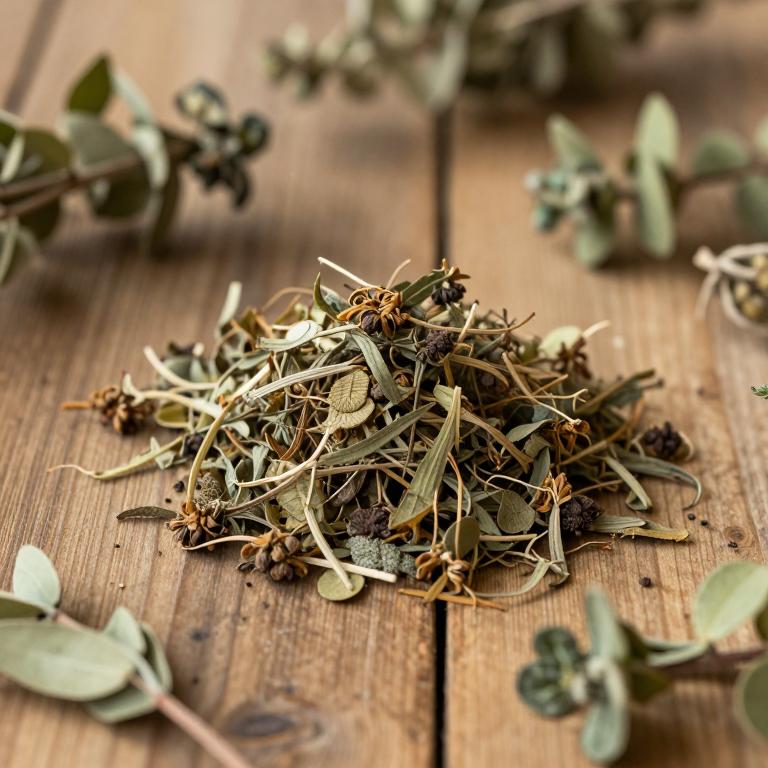
Names and Synonyms
Scientific Names
Accepted name
Camphora parthenoxylonSynonyms
- Parthenoxylon pruinosum
- Sassafras parthenoxylon
- Cinnamomum parthenoxylon
- Parthenoxylon porrectum
- Camphora porrecta
- Cinnamomum porrectum
- Sassafras loureiroi
- Persea pseudosassafras
- Phoebe latifolia
- Parthenoxylon pseudosassafras
- Laurus parthenoxylon
- Laurus pseudosassafras
- Laurus porrecta
- Laurus chinensis
- Cinnamomum neesianum
- Cinnamomum barbatoaxillatum
- Cinnamomum inodorum
- Cinnamomum inunctum
- Camphora chinensis
- Cinnamomum pseudosassafras
- Cinnamomum penninervium
- Camphora inodora
- Cinnamomum malaccense
- Camphora inuncta
- Camphora pseudosassafras
Sources: Wikidata, Catalogue of Life
Taxonomical Classification
This plant belongs to the kingdom Plantae within the phylum Streptophyta and the class Equisetopsida. It is further classified under the subclass Magnoliidae and the order Laurales, falling into the family Lauraceae. Finally, the medicinal species is identified by the genus Cinnamomum (often associated with the specific epithet parthenoxylon).
| Rank | Classification |
|---|---|
| Kingdom | Plantae |
| Phylum | Streptophyta |
| Class | Equisetopsida |
| Subclass | Magnoliidae |
| Order | Laurales |
| Family | Lauraceae |
| Genus | Camphora |
Sources: The World Checklist of Vascular Plants (WCVP)
Distribution
This plant exhibits a broad geographical distribution across several key regions in Asia. Within China, it can be found spanning from the South-Central provinces to the Southeast territories. Additionally, its presence extends to the tropical island of Hainan. Moving into the Indian Subcontinent, the species is documented in the region of Assam. Finally, its range reaches the high-altitude areas of the East Himalaya.
| Region | Area |
|---|---|
| China | China South-Central |
| China | Hainan |
| China | China Southeast |
| Indian Subcontinent | Assam |
| Indian Subcontinent | East Himalaya |
| Indian Subcontinent | Nepal |
| Indo-China | Cambodia |
| Indo-China | Laos |
| Indo-China | Myanmar |
| Indo-China | Thailand |
Sources: The World Checklist of Vascular Plants (WCVP)
Plant Parts
Camphora parthenoxylon has 1 reported plant parts identified across 1 scientific publications and several other databases that are studied for medicinal purposes. The most consistently reported plant part include fruit.
| Plant part | Supporting sources | Consensus |
|---|---|---|
| Fruit | 1 supporting sources | ★☆☆☆☆ |
Fruit
- Chemical & pharmaceutical bulletin
Chemicals
Camphora parthenoxylon has 4 reported phytochemicals identified across 1 scientific publications and several other databases. The most consistently reported chemicals include 8-hydroxy-4,7,7-trimethyl-1,6-dioxaspiro[4.4]non-3-en-2-one, Cubebin, Hinokinin, Lignans.
| Chemical | Supporting sources | Consensus |
|---|---|---|
| 8-hydroxy-4,7,7-trimethyl-1,6-dioxaspiro[4.4]non-3-en-2-one | 1 supporting sources | ★☆☆☆☆ |
| Cubebin | 1 supporting sources | ★☆☆☆☆ |
| Hinokinin | 1 supporting sources | ★☆☆☆☆ |
| Lignans | 1 supporting sources | ★☆☆☆☆ |
8-hydroxy-4,7,7-trimethyl-1,6-dioxaspiro[4.4]non-3-en-2-one
- Chemical & pharmaceutical bulletin
Cubebin
- Bioorganic & medicinal chemistry letters
Hinokinin
- Bioorganic & medicinal chemistry letters
Lignans
- Bioorganic & medicinal chemistry letters
Activities
Camphora parthenoxylon has 3 reported activities identified across 1 scientific publications and several other databases. The most consistently reported activities include Antioxidant, Febrifuge, Tonic.
| Activity | Supporting sources | Consensus |
|---|---|---|
| Antioxidant | 1 supporting sources | ★☆☆☆☆ |
| Febrifuge | 1 supporting sources | ★☆☆☆☆ |
| Tonic | 1 supporting sources | ★☆☆☆☆ |
Antioxidant
- Phytomedicine : international journal of phytotherapy and phytopharmacology
Febrifuge
- Journal of the Medical Association of Thailand = Chotmaihet thangphaet
Tonic
- Journal of the Medical Association of Thailand = Chotmaihet thangphaet
Preparations
Camphora parthenoxylon has 4 reported preparations identified across 1 scientific publications and several other databases. The most consistently reported preparations include ethanolic extracts, methanolic extract, methanolic extracts, polyphenolic oligomer-rich extract.
| Preparation | Supporting sources | Consensus |
|---|---|---|
| Ethanolic extracts | 1 supporting sources | ★☆☆☆☆ |
| Methanolic extract | 1 supporting sources | ★☆☆☆☆ |
| Methanolic extracts | 1 supporting sources | ★☆☆☆☆ |
| Polyphenolic oligomer-rich extract | 1 supporting sources | ★☆☆☆☆ |
Ethanolic extracts
- Journal of the Medical Association of Thailand = Chotmaihet thangphaet
Methanolic extract
- Chemical & pharmaceutical bulletin
Methanolic extracts
- Journal of microbiology, immunology, and infection = Wei mian yu gan ran za zhi
Polyphenolic oligomer-rich extract
- Phytomedicine : international journal of phytotherapy and phytopharmacology