Camphora officinarum
Camphora officinarum · Accepted scientific name
Scientific literature: Very Extensive (617 studies) · ★★★★★
, scientifically known as Camphora officiinarum, is a highly valued medicinal plant prized for its aromatic camphor content. Renowned for its cooling and antiseptic properties, it is widely used in traditional medicine to treat respiratory ailments, skin irritations, and inflammation, offering significant therapeutic benefits through its potent essential oils.
- Family
- Lauraceae
- Native range
- Africa
- Parts used
- Seed · Leaf
- Common names
- Not available
- Scientific synonyms
- Persea Camphora · Camphorina Camphora · 2 more
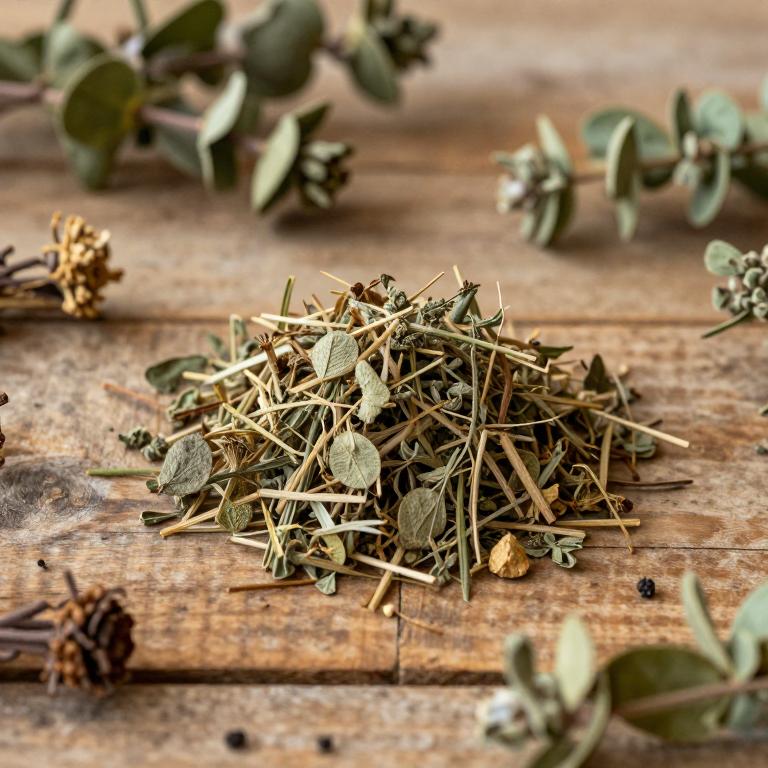
Names and Synonyms
Scientific Names
Accepted name
Camphora officinarumSynonyms
- Persea camphora
- Camphorina camphora
- Cinnamomum camphora
- Laurus camphora
Sources: Wikidata, Catalogue of Life
Taxonomical Classification
This plant belongs to the kingdom Plantae and the phylum Streptophyta, falling under the class Equisetopsida and subclass Magnoliidae. It is classified within the order Laurales and the family Lauraceae. Finally, its specific taxonomic designation is within the genus Cinnamomum (often associated with Camphora), though per your classification, it resides in the genus Camphora.
| Rank | Classification |
|---|---|
| Kingdom | Plantae |
| Phylum | Streptophyta |
| Class | Equisetopsida |
| Subclass | Magnoliidae |
| Order | Laurales |
| Family | Lauraceae |
| Genus | Camphora |
Sources: The World Checklist of Vascular Plants (WCVP)
Distribution
This plant exhibits a diverse geographical distribution across several distinct tropical regions. In West Tropical Africa, its presence has been documented specifically within Guinea. Its range also extends to West-Central Tropical Africa, where it can be found around the Gulf of Guinea Islands. Furthermore, the species is distributed throughout the Western Indian Ocean. Within this ocean region, it inhabits the islands of Mauritius, Réunion, and the Seychelles.
| Region | Area |
|---|---|
| West Tropical Africa | Guinea |
| West-Central Tropical Africa | Gulf of Guinea Is. |
| Western Indian Ocean | Mauritius |
| Western Indian Ocean | Réunion |
| Western Indian Ocean | Seychelles |
| China | China South-Central |
| China | Hainan |
| China | China Southeast |
| Eastern Asia | Japan |
| Eastern Asia | Korea |
Sources: The World Checklist of Vascular Plants (WCVP)
Plant Parts
Camphora officinarum has 4 reported plant parts identified across 11 scientific publications and several other databases that are studied for medicinal purposes. The most consistently reported plant part include seed, leaf, stem, fruit.
| Plant part | Supporting sources | Consensus |
|---|---|---|
| Seed | 5 supporting sources | ★★★☆☆ |
| Leaf | 3 supporting sources | ★★☆☆☆ |
| Stem | 2 supporting sources | ★☆☆☆☆ |
| Fruit | 1 supporting sources | ★☆☆☆☆ |
Seed
- Food chemistry
- Lipids
- Foods (Basel, Switzerland)
- Food research international (Ottawa, Ont.)
- Food & function
Leaf
- International journal of molecular sciences
- Phytomedicine : international journal of phytotherapy and phytopharmacology
- Natural product communications
Stem
- FEMS microbiology letters
- International journal of molecular sciences
Fruit
- International journal of molecular sciences
Chemicals
Camphora officinarum has 130 reported phytochemicals identified across 11 scientific publications and several other databases. The most consistently reported chemicals include Borneol, 1,8-Cineole, Linalool, camphor, ALPHA-PINENE.
| Chemical | Supporting sources | Consensus |
|---|---|---|
| Borneol | 4 supporting sources | ★★☆☆☆ |
| 1,8-Cineole | 3 supporting sources | ★★☆☆☆ |
| Linalool | 3 supporting sources | ★★☆☆☆ |
| camphor | 3 supporting sources | ★★☆☆☆ |
| ALPHA-PINENE | 2 supporting sources | ★☆☆☆☆ |
| LIMONENE | 2 supporting sources | ★☆☆☆☆ |
| MYRCENE | 2 supporting sources | ★☆☆☆☆ |
| NEROLIDOL | 2 supporting sources | ★☆☆☆☆ |
| lauric acid | 2 supporting sources | ★☆☆☆☆ |
| oil | 2 supporting sources | ★☆☆☆☆ |
Borneol
- Dr. Duke
- Zhongguo Zhong yao za zhi = Zhongguo zhongyao zazhi = China journal of Chinese materia medica
- Oxidative medicine and cellular longevity
- Plant physiology and biochemistry : PPB
1,8-Cineole
- Dr. Duke
- Chemistry & biodiversity
- International journal of molecular sciences
Linalool
- Oxidative medicine and cellular longevity
- Plant physiology and biochemistry : PPB
- International journal of molecular sciences
camphor
- Dr. Duke
- Molecules (Basel, Switzerland)
- Oxidative medicine and cellular longevity
ALPHA-PINENE
- Dr. Duke
- Oxidative medicine and cellular longevity
LIMONENE
- Dr. Duke
- Oxidative medicine and cellular longevity
MYRCENE
- Dr. Duke
- Chemistry & biodiversity
NEROLIDOL
- Dr. Duke
- Oxidative medicine and cellular longevity
lauric acid
- Dr. Duke
- Foods (Basel, Switzerland)
oil
- Food chemistry
- Foods (Basel, Switzerland)
Activities
Camphora officinarum has 433 reported activities identified across 11 scientific publications and several other databases. The most consistently reported activities include Antioxidant, Antibacterial, Antiinflammatory, Analgesic, Anticancer.
| Activity | Supporting sources | Consensus |
|---|---|---|
| Antioxidant | 4 supporting sources | ★★☆☆☆ |
| Antibacterial | 3 supporting sources | ★★☆☆☆ |
| Antiinflammatory | 3 supporting sources | ★★☆☆☆ |
| Analgesic | 2 supporting sources | ★☆☆☆☆ |
| Anticancer | 2 supporting sources | ★☆☆☆☆ |
| Antinociceptive | 2 supporting sources | ★☆☆☆☆ |
| Antitussive | 2 supporting sources | ★☆☆☆☆ |
| Antiviral | 2 supporting sources | ★☆☆☆☆ |
| Anxiolytic | 2 supporting sources | ★☆☆☆☆ |
| Hypoglycemic | 2 supporting sources | ★☆☆☆☆ |
Antioxidant
- Dr. Duke
- Foods (Basel, Switzerland)
- Phytomedicine : international journal of phytotherapy and phytopharmacology
- Journal of agricultural and food chemistry
Antibacterial
- Dr. Duke
- Molecules (Basel, Switzerland)
- Oxidative medicine and cellular longevity
Antiinflammatory
- Dr. Duke
- Phytotherapy research : PTR
- Zhongguo Zhong yao za zhi = Zhongguo zhongyao zazhi = China journal of Chinese materia medica
Analgesic
- Dr. Duke
- Oxidative medicine and cellular longevity
Anticancer
- Dr. Duke
- Molecules (Basel, Switzerland)
Antinociceptive
- Dr. Duke
- Molecules (Basel, Switzerland)
Antitussive
- Dr. Duke
- Molecules (Basel, Switzerland)
Antiviral
- Dr. Duke
- Molecules (Basel, Switzerland)
Anxiolytic
- Dr. Duke
- Oxidative medicine and cellular longevity
Hypoglycemic
- Dr. Duke
- Phytomedicine : international journal of phytotherapy and phytopharmacology
Preparations
Camphora officinarum has 17 reported preparations identified across 11 scientific publications and several other databases. The most consistently reported preparations include essential oils, steam distillate, CCSKO, Cinnamomum camphora Seed Kernel Oil, Cinnamomum camphora seed kernel oil.
| Preparation | Supporting sources | Consensus |
|---|---|---|
| Essential oils | 3 supporting sources | ★★☆☆☆ |
| Steam distillate | 2 supporting sources | ★☆☆☆☆ |
| Ccsko | 1 supporting sources | ★☆☆☆☆ |
| Cinnamomum camphora seed kernel oil | 1 supporting sources | ★☆☆☆☆ |
| Cinnamomum camphora seed kernel oil | 1 supporting sources | ★☆☆☆☆ |
| Cinnamomum camphora seed kernel oil (ccsko) | 1 supporting sources | ★☆☆☆☆ |
| Essential oils | 1 supporting sources | ★☆☆☆☆ |
| Borneol chemotype naphtha | 1 supporting sources | ★☆☆☆☆ |
| Camphor chemotype naphtha | 1 supporting sources | ★☆☆☆☆ |
| Essential oil | 1 supporting sources | ★☆☆☆☆ |
Essential oils
- Chemistry & biodiversity
- Molecules (Basel, Switzerland)
- International journal of molecular sciences
Steam distillate
- Veterinary parasitology
- Journal of the American Mosquito Control Association
Ccsko
- Foods (Basel, Switzerland)
Cinnamomum camphora seed kernel oil
- Foods (Basel, Switzerland)
Cinnamomum camphora seed kernel oil
- Lipids
Cinnamomum camphora seed kernel oil (ccsko)
- AMB Express
Essential oils
- Mutation research
Borneol chemotype naphtha
- Zhongguo Zhong yao za zhi = Zhongguo zhongyao zazhi = China journal of Chinese materia medica
Camphor chemotype naphtha
- Zhongguo Zhong yao za zhi = Zhongguo zhongyao zazhi = China journal of Chinese materia medica
Essential oil
- Molecules (Basel, Switzerland)