beach evening primrose
Camissoniopsis cheiranthifolia · Accepted scientific name
Scientific literature: Very Sparse (6 studies) · ★☆☆☆☆
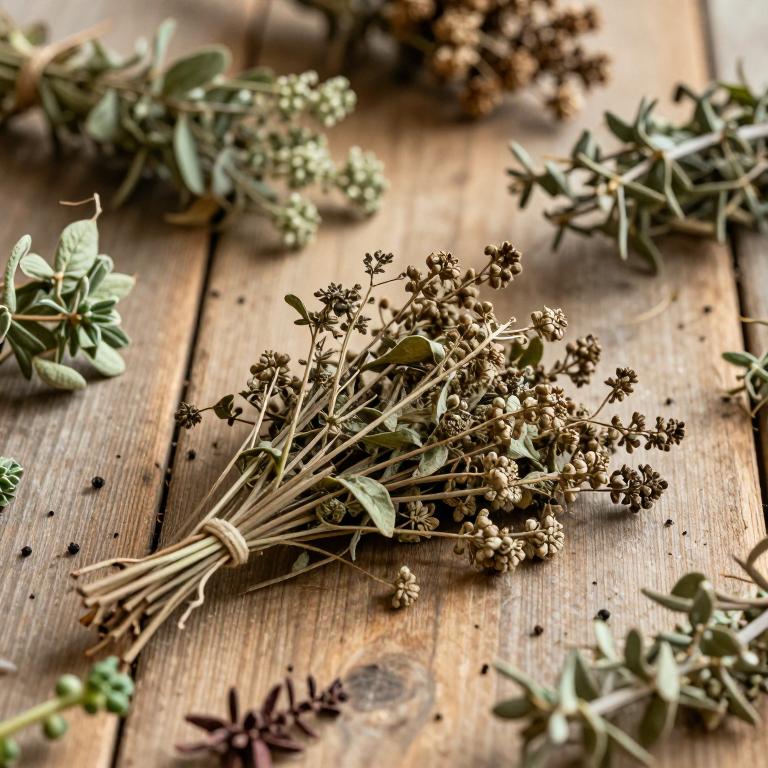
Beach evening primrose, scientifically known as Camissoniopesia cheiranthiifolia, is a resilient herbaceous plant native to specific coastal and arid regions. Renowned for its delicate, trumpet-shaped blooms and unique foliage, this species holds significant ethnobotanical value, offering potential therapeutic benefits through its specialized phytochemical properties in traditional medicinal practices.
Names and Synonyms
Common Names
- beach evening primrose
- beach evening-primrose
- beach suncup
- Beach suncup (Beach evening primrose)
Scientific Names
Accepted name
Camissoniopsis cheiranthifoliaSynonyms
- Holostigma cheiranthifolium
- Sphaerostigma cheiranthifolium
- Agassizia cheiranthifolia
- Camissonia cheiranthifolia
- Oenothera cheiranthifolia
Regional and Traditional Names
Spanish:
- Flor de primavera de la playa
Sources: Wikidata, Catalogue of Life
Taxonomical Classification
This plant belongs to the kingdom Plantae and is classified under the phylum Streptophyta within the class Equisetopsida. It falls under the subclass Magnoliidae and the order Myrtales, specifically within the family Onagraceae. Finally, it is categorized under the genus Camissoniopsis.
| Rank | Classification |
|---|---|
| Kingdom | Plantae |
| Phylum | Streptophyta |
| Class | Equisetopsida |
| Subclass | Magnoliidae |
| Order | Myrtales |
| Family | Onagraceae |
| Genus | Camissoniopsis |
Sources: The World Checklist of Vascular Plants (WCVP)
Distribution
This plant exhibits a specific geographical range spanning across parts of North America. In the northwestern United States, its presence is documented within the state of Oregon. Moving southward, the species is also found throughout the southwestern United States, specifically in California. The distribution continues into Mexico, where it inhabits the northwestern regions of the country. Consequently, its habitat follows a distinct pattern from the Pacific Northwest down through Mexico.
| Region | Area |
|---|---|
| Northwestern U.S.A. | Oregon |
| Southwestern U.S.A. | California |
| Mexico | Mexico Northwest |
Sources: The World Checklist of Vascular Plants (WCVP)
Botanical Identification
Life history
The life history of Camissoniopsis cheiranthiifolia is characterized by its status as a perennial organism, allowing it to persist through multiple growing seasons. As a perennial species, it maintains a continuous presence in its habitat, often developing robust structural components that enable it to survive seasonal fluctuations and regenerate year after year. This life cycle strategy facilitates long-term survival and consistent reproductive potential within its ecological niche, distinguishing its developmental pattern from strictly annual or biennial species.
- Lifecycle :
- perennial
Morphology
The morphology of Camissoniopsis cheiranthifolia is characterized by a growth form categorized as both a herb and a forb, exhibiting a non-woody structure throughout its vegetative development. As a terrestrial plant, it does not function as an epiphyte nor does it inhabit aquatic or semiaquatic environments. The species maintains an independent existence, lacking any parasitic tendencies, and its structural habit is described as self-supporting, as it does not function as an obligatory or facultative climber, liana, or vine.
- Aquatic :
- terrestrial
- Climber :
- self-supporting
- Epiphyte :
- terrestrial
- Growth form :
- herb
- Growth form :
- forb
- Parasite :
- independent
- Woodiness :
- non-woody
Physiology
The physiology of Camissoniopis cheiranthiifolia is characterized by a C3 photosynthetic pathway, which dictates its carbon fixation processes and metabolic efficiency. In this pathway, the initial fixation of atmospheric carbon dioxide is mediated by the enzyme RuBisCO, leading to the direct formation of a three-carbon compound, 3-phosphoglycerate, within the mesophyll cells. This metabolic strategy implies that the plant relies on standard stomatal conductance to facilitate gas exchange, balancing the intake of CO2 with the loss of water vapor through transpiration. Consequently, its physiological performance and carbon assimilation rates are closely tied to environmental factors such as light intensity, temperature, and water availability, which influence the efficiency of the Calvin cycle and the overall energy budget of the organism.
- Photosynthetic pathway :
- C3
Reproduction
The reproduction of Camissoniopis cheiranthiifolia is characterized by the production of minute seeds that exhibit specific variations in mass. Based on quantitative data, the seed mass of this species is exceptionally small, with a recorded mean value of 0.00018725 g. The distribution of these seed weights shows a narrow range of variability, with the minimum measured seed mass being 0.000138 g and the maximum seed mass reaching 0.000211 g. This lightweight seed profile suggests a reproductive strategy likely optimized for efficient dispersal, ensuring the propagation of the species through its environment.
- Seed mass max:
- 0.000211 g
- Seed mass mean:
- 0.00018725 g
- Seed mass min:
- 0.000138 g
Sources: Global Inventory of Floras and Traits (GIFT)
Chemicals
Camissoniopsis cheiranthifolia has 5 reported phytochemicals identified across 0 scientific publications and several other databases. The most consistently reported chemicals include Arjunolic acid, Asiatic acid, Cheiranthic acid, Myricetin 3-O-glucuronide, quercetin 3-O-glucuronide.
| Chemical | Supporting sources | Consensus |
|---|---|---|
| Arjunolic acid | 1 supporting sources | ★☆☆☆☆ |
| Asiatic acid | 1 supporting sources | ★☆☆☆☆ |
| Cheiranthic acid | 1 supporting sources | ★☆☆☆☆ |
| Myricetin 3-O-glucuronide | 1 supporting sources | ★☆☆☆☆ |
| quercetin 3-O-glucuronide | 1 supporting sources | ★☆☆☆☆ |
Arjunolic acid
- Chemical & pharmaceutical bulletin
Asiatic acid
- Chemical & pharmaceutical bulletin
Cheiranthic acid
- Chemical & pharmaceutical bulletin
Myricetin 3-O-glucuronide
- Chemical & pharmaceutical bulletin
quercetin 3-O-glucuronide
- Chemical & pharmaceutical bulletin
Preparations
Camissoniopsis cheiranthifolia has 1 reported preparations identified across 0 scientific publications and several other databases. The most consistently reported preparations include MeOH extract of whole plants.
| Preparation | Supporting sources | Consensus |
|---|---|---|
| Meoh extract of whole plants | 1 supporting sources | ★☆☆☆☆ |
Meoh extract of whole plants
- Chemical & pharmaceutical bulletin