Camellia sinensis sinensis
Camellia sinensis var. sinensis · Accepted scientific name
Scientific literature: Very Sparse (5 studies) · ★☆☆☆☆
Camellia sinensis sinensis, scientifically known as Camellia sinensis var. sinensis, is the fundamental plant source for all true teas. Renowned for its diverse antioxidant properties, this evergreen shrub is cultivated globally. Beyond its aromatic infusions, it offers significant medicinal benefits, including improved metabolic health and enhanced cognitive focus.
- Family
- Theaceae
- Native range
- Africa
- Parts used
- Not available
- Common names
- China Tea
- Scientific synonyms
- Theaphylla Viridis · Theaphylla Cantoniensis · 45 more
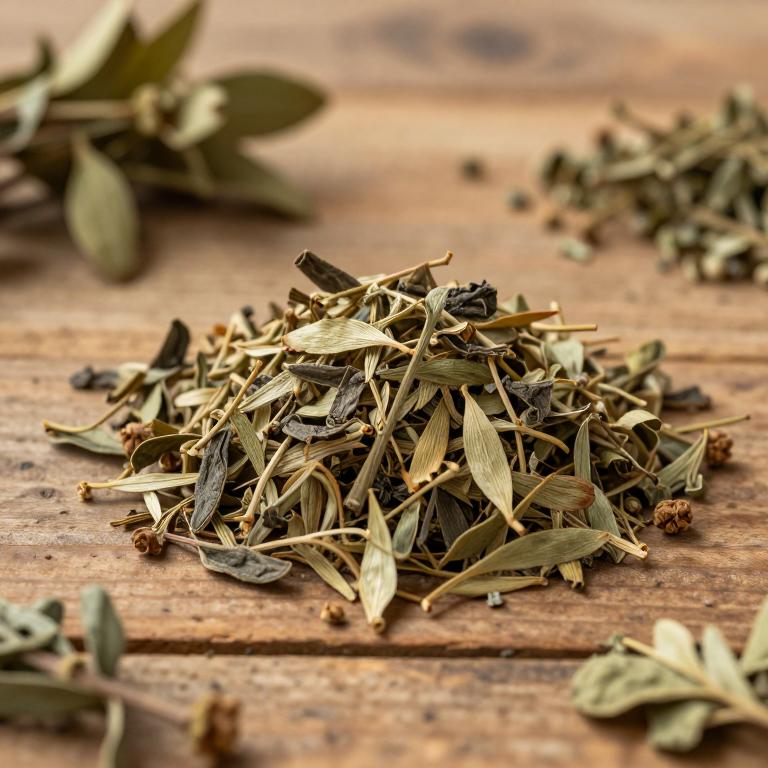
Names and Synonyms
Common Names
- China tea
Scientific Names
Accepted name
Camellia sinensis var. sinensisSynonyms
- Theaphylla viridis
- Theaphylla cantoniensis
- Thea macrophylla
- Camellia sinensis f. formosensis
- Camellia sinensis f. parvifolia
- Camellia viridis
- Camellia formosensis
- Thea sinensis var. cantoniensis
- Camellia thea var. stricta
- Camellia thea var. viridis
- Thea sasanqua var. oleosa
- Camellia oleosa
- Camellia sinensis f. rosea
- Camellia bohea
- Thea sinensis var. bohea
- Thea sinensis var. parvifolia
- Thea sinensis var. rosea
- Thea viridis variegata
- Thea sinensis var. rugosa
- Thea bohea var. laxa
- Thea sinensis var. viridis
- Thea sinensis var. pubescens
- Camellia sinensis var. waldenae
- Camellia sinensis f. macrophylla
- Camellia theifera var. macrophylla
- Thea viridis var. bohea
- Camellia thea var. bohea
- Thea bohea
- Thea grandifolia
- Theaphylla laxa
- Thea sinensis var. stricta
- Thea sinensis var. diffusa
- Thea sinensis var. macrophylla
- Thea laxa
- Camellia waldenae
- Camellia arborescens
- Camellia longlingensis
- Thea bohea var. stricta
- Thea formosensis
- Thea viridis
- Theaphylla anamensis
- Thea latifolia
- Thea parvifolia
- Thea olearia
- Thea oleosa
- Thea cantoniensis
- Thea stricta
Sources: Wikidata, Catalogue of Life
Taxonomical Classification
This plant belongs to the kingdom Plantae and the phylum Streptophyta, falling under the class Equisetopsida and subclass Magnoliidae. Within the order Ericales, it is classified under the family Theaceae. Finally, it is identified by the genus Camellia, specifically as the variety sinensis.
| Rank | Classification |
|---|---|
| Kingdom | Plantae |
| Phylum | Streptophyta |
| Class | Equisetopsida |
| Subclass | Magnoliidae |
| Order | Ericales |
| Family | Theaceae |
| Genus | Camellia |
Sources: The World Checklist of Vascular Plants (WCVP)
Distribution
This plant exhibits a diverse geographical distribution that spans several distinct regions across the African continent and its surrounding islands. In West Tropical Africa, its presence is noted specifically within the borders of Guinea. Its range extends into West-Central Tropical Africa, where it can be found around the Gulf of Guinea Islands. Furthermore, the species is located in Northeast Tropical Africa within the country of Ethiopia. Finally, its distribution reaches the Western Indian Ocean, specifically encompassing the islands of Mauritius and Réunion.
| Region | Area |
|---|---|
| West Tropical Africa | Guinea |
| West-Central Tropical Africa | Gulf of Guinea Is. |
| Northeast Tropical Africa | Ethiopia |
| Western Indian Ocean | Mauritius |
| Western Indian Ocean | Réunion |
| Western Indian Ocean | Seychelles |
| Western Asia | Türkiye |
| China | China South-Central |
| China | China North-Central |
| China | China Southeast |
Sources: The World Checklist of Vascular Plants (WCVP)
Chemicals
Camellia sinensis var. sinensis has 4 reported phytochemicals identified across 0 scientific publications and several other databases. The most consistently reported chemicals include Anthocyanins, Carotenoids, Chlorophylls, Flavonoid.
| Chemical | Supporting sources | Consensus |
|---|---|---|
| Anthocyanins | 1 supporting sources | ★☆☆☆☆ |
| Carotenoids | 1 supporting sources | ★☆☆☆☆ |
| Chlorophylls | 1 supporting sources | ★☆☆☆☆ |
| Flavonoid | 1 supporting sources | ★☆☆☆☆ |
Anthocyanins
- Frontiers in plant science
Carotenoids
- Frontiers in plant science
Chlorophylls
- Frontiers in plant science
Flavonoid
- Frontiers in plant science