Camellia sinensis var. assamica
Camellia sinensis var. assamica · Accepted scientific name
Scientific literature: Very Sparse (21 studies) · ★☆☆☆☆
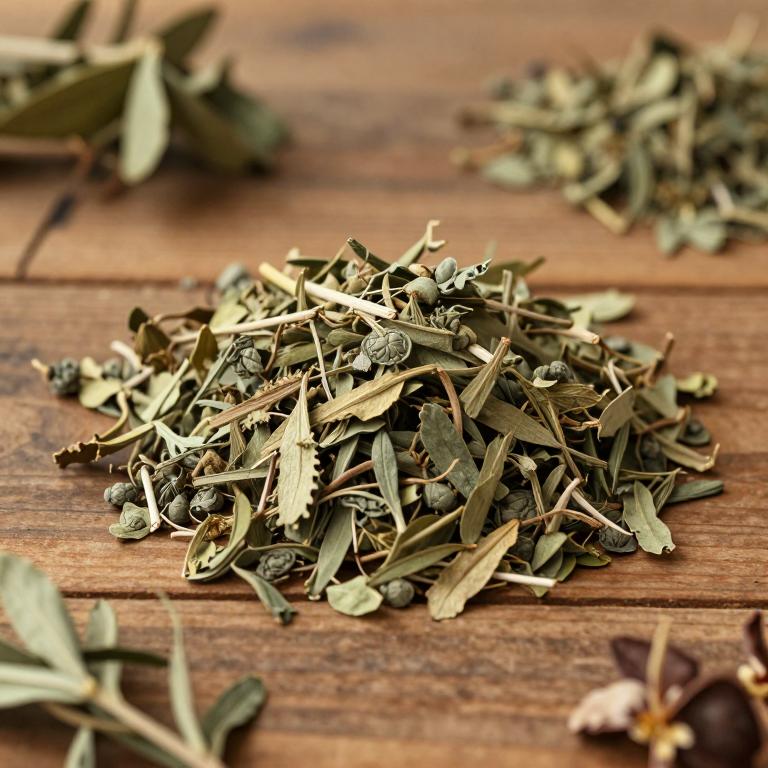
Scientifically known as Camellia sinensis var. assamica, is a robust evergreen shrub native to the Assam region of India. Renowned for its large leaves, this variety serves as the primary source of strong, malty black teas. Beyond its culinary use, it offers significant antioxidant properties and various therapeutic benefits.
- Family
- Theaceae
- Native range
- Asia-Temperate
- Parts used
- Seed
- Common names
- Not available
- Scientific synonyms
- Camellia Sinensis Var. Lasiocalyx · Camellia Kucha · 17 more
Names and Synonyms
Scientific Names
Accepted name
Camellia sinensis var. assamicaSynonyms
- Camellia sinensis var. lasiocalyx
- Camellia kucha
- Camellia thea var. lasiocalyx
- Thea assamica
- Camellia assamica subsp. lasiocalyx
- Thea cochinchinensis
- Camellia tenuistipa
- Camellia theifera
- Camellia sinensis var. kucha
- Camellia multisepala
- Camellia polyneura
- Camellia assamica
- Camellia assamica var. kucha
- Camellia assamica var. polyneura
- Thea viridis var. assamica
- Camellia theifera var. assamica
- Camellia thea var. assamica
- Thea sinensis var. assamica
- Camellia sinensis var. dulcamara
Sources: Wikidata, Catalogue of Life
Taxonomical Classification
This plant belongs to the kingdom Plantae and the phylum Streptophyta, falling under the class Equisetopsida and subclass Magnoliidae. Within the order Ericales and the family Theaceae, it is classified under the genus Camellia. Specifically, it is identified as the variety assamica within the species Camellia sinensis.
| Rank | Classification |
|---|---|
| Kingdom | Plantae |
| Phylum | Streptophyta |
| Class | Equisetopsida |
| Subclass | Magnoliidae |
| Order | Ericales |
| Family | Theaceae |
| Genus | Camellia |
Sources: The World Checklist of Vascular Plants (WCVP)
Distribution
This plant exhibits a wide geographical distribution across several key regions in Asia. In China, its presence is noted in the South-Central, Southeast, and Hainan areas. Moving towards the Indian Subcontinent, the species is prominently found in Assam. Additionally, it is distributed within the borders of Bangladesh. Together, these locations define the primary natural habitat for this specific variety.
| Region | Area |
|---|---|
| China | China South-Central |
| China | Hainan |
| China | China Southeast |
| Indian Subcontinent | Assam |
| Indian Subcontinent | Bangladesh |
| Indian Subcontinent | East Himalaya |
| Indian Subcontinent | Nepal |
| Indo-China | Laos |
| Indo-China | Myanmar |
| Indo-China | Thailand |
Sources: The World Checklist of Vascular Plants (WCVP)
Plant Parts
Camellia sinensis var. assamica has 1 reported plant parts identified across 1 scientific publications and several other databases that are studied for medicinal purposes. The most consistently reported plant part include seed.
| Plant part | Supporting sources | Consensus |
|---|---|---|
| Seed | 1 supporting sources | ★☆☆☆☆ |
Seed
- Zhongguo Zhong yao za zhi = Zhongguo zhongyao zazhi = China journal of Chinese materia medica
Chemicals
Camellia sinensis var. assamica has 14 reported phytochemicals identified across 1 scientific publications and several other databases. The most consistently reported chemicals include Anthocyanins, Flavonoid, catechins, 22-O-Angeloyl theasapogenol A, 22-O-Angeloyl theasapogenol B.
| Chemical | Supporting sources | Consensus |
|---|---|---|
| Anthocyanins | 2 supporting sources | ★☆☆☆☆ |
| Flavonoid | 2 supporting sources | ★☆☆☆☆ |
| catechins | 2 supporting sources | ★☆☆☆☆ |
| 22-O-Angeloyl theasapogenol A | 1 supporting sources | ★☆☆☆☆ |
| 22-O-Angeloyl theasapogenol B | 1 supporting sources | ★☆☆☆☆ |
| 22-O-Angeloyl theasapogenol E | 1 supporting sources | ★☆☆☆☆ |
| Carotenoids | 1 supporting sources | ★☆☆☆☆ |
| Chlorophylls | 1 supporting sources | ★☆☆☆☆ |
| EGCG | 1 supporting sources | ★☆☆☆☆ |
| Epicatechin (EC) | 1 supporting sources | ★☆☆☆☆ |
Anthocyanins
- Frontiers in plant science
- G3 (Bethesda, Md.)
Flavonoid
- Frontiers in plant science
- G3 (Bethesda, Md.)
catechins
- G3 (Bethesda, Md.)
- Scientific reports
22-O-Angeloyl theasapogenol A
- Zhongguo Zhong yao za zhi = Zhongguo zhongyao zazhi = China journal of Chinese materia medica
22-O-Angeloyl theasapogenol B
- Zhongguo Zhong yao za zhi = Zhongguo zhongyao zazhi = China journal of Chinese materia medica
22-O-Angeloyl theasapogenol E
- Zhongguo Zhong yao za zhi = Zhongguo zhongyao zazhi = China journal of Chinese materia medica
Carotenoids
- Frontiers in plant science
Chlorophylls
- Frontiers in plant science
EGCG
- Scientific reports
Epicatechin (EC)
- Antioxidants (Basel, Switzerland)
Activities
Camellia sinensis var. assamica has 1 reported activities identified across 1 scientific publications and several other databases. The most consistently reported activities include Antioxidant.
| Activity | Supporting sources | Consensus |
|---|---|---|
| Antioxidant | 1 supporting sources | ★☆☆☆☆ |
Antioxidant
- Antioxidants (Basel, Switzerland)
Conditions
Camellia sinensis var. assamica has 1 reported investigations on conditions identified across 1 scientific publications and several other databases. The most consistently reported conditions include angioedema.
| Condition | Supporting sources | Consensus |
|---|---|---|
| Angioedema | 1 supporting sources | ★☆☆☆☆ |
Angioedema
- Molecules (Basel, Switzerland)
Preparations
Camellia sinensis var. assamica has 2 reported preparations identified across 1 scientific publications and several other databases. The most consistently reported preparations include ethanol extract, n-butanol extract.
| Preparation | Supporting sources | Consensus |
|---|---|---|
| Ethanol extract | 1 supporting sources | ★☆☆☆☆ |
| N-butanol extract | 1 supporting sources | ★☆☆☆☆ |
Ethanol extract
- Zhongguo Zhong yao za zhi = Zhongguo zhongyao zazhi = China journal of Chinese materia medica
N-butanol extract
- Zhongguo Zhong yao za zhi = Zhongguo zhongyao zazhi = China journal of Chinese materia medica