Camellia luteoflora
Camellia luteoflora · Accepted scientific name
Scientific literature: Very Sparse (29 studies) · ★☆☆☆☆
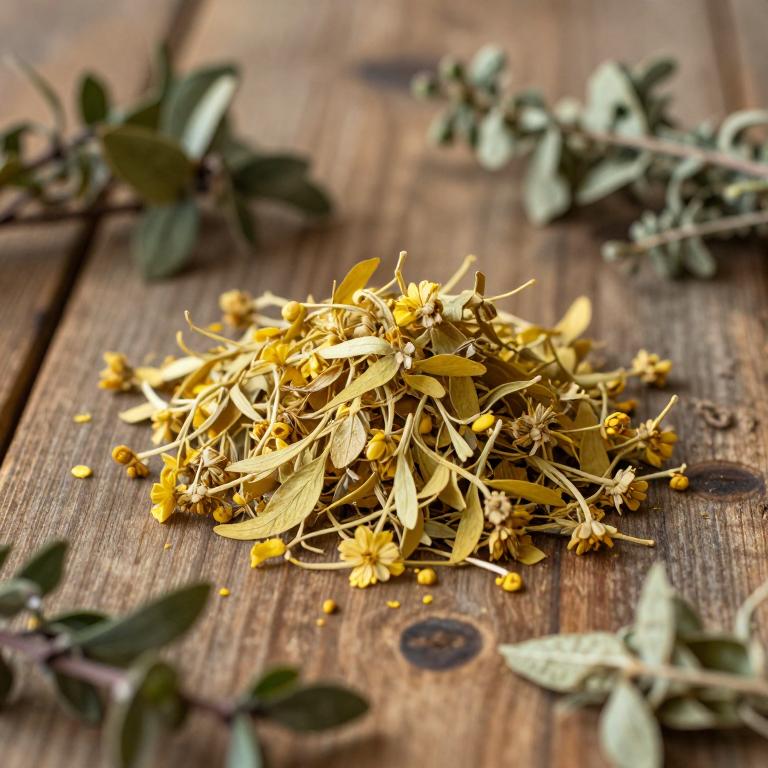
Camellia luteoflora, scientifically known as Camellia luteoflora, is a rare medicinal shrub valued for its unique yellow blossoms. Renowned in traditional healing, it possesses potent antioxidant and anti-inflammatory properties. Researchers are currently exploring its bioactive compounds to develop natural treatments for various skin ailments and systemic wellness.
- Family
- Theaceae
- Native range
- Asia-Temperate
- Parts used
- Flower · Fruit
- Common names
- Not available
- Scientific synonyms
- Not available
Names and Synonyms
Scientific Names
Accepted name
Camellia luteofloraSources: Wikidata
Taxonomical Classification
This plant belongs to the kingdom Plantae and the phylum Streptophyta, specifically falling under the class Equisetopsida. Within the subclass Magnoliidae and order Ericales, it is classified under the family Theaceae. It is further identified by its genus, Camellia.
| Rank | Classification |
|---|---|
| Kingdom | Plantae |
| Phylum | Streptophyta |
| Class | Equisetopsida |
| Subclass | Magnoliidae |
| Order | Ericales |
| Family | Theaceae |
| Genus | Camellia |
Sources: The World Checklist of Vascular Plants (WCVP)
Distribution
This plant is native to a specific region within the East Asian landscape. Its geographical distribution is primarily concentrated in the South-Central part of China. Within this territory, it thrives in the unique environmental conditions provided by the local climate. Because of this limited range, the species is considered endemic to these particular provinces. Understanding this localized habitat is essential for the conservation of the species.
| Region | Area |
|---|---|
| China | China South-Central |
Sources: The World Checklist of Vascular Plants (WCVP)
Plant Parts
Camellia luteoflora has 5 reported plant parts identified across 5 scientific publications and several other databases that are studied for medicinal purposes. The most consistently reported plant part include flower, fruit, leaf, root, stem.
| Plant part | Supporting sources | Consensus |
|---|---|---|
| Flower | 1 supporting sources | ★☆☆☆☆ |
| Fruit | 1 supporting sources | ★☆☆☆☆ |
| Leaf | 1 supporting sources | ★☆☆☆☆ |
| Root | 1 supporting sources | ★☆☆☆☆ |
| Stem | 1 supporting sources | ★☆☆☆☆ |
Flower
- Molecules (Basel, Switzerland)
Fruit
- Molecules (Basel, Switzerland)
Leaf
- Molecules (Basel, Switzerland)
Root
- Molecules (Basel, Switzerland)
Stem
- Molecules (Basel, Switzerland)
Chemicals
Camellia luteoflora has 24 reported phytochemicals identified across 5 scientific publications and several other databases. The most consistently reported chemicals include (-)-Catechin gallate, Coumarins, D-(-)-Quinic acid, D-Arabitol, D-gluconic acid.
| Chemical | Supporting sources | Consensus |
|---|---|---|
| (-)-Catechin gallate | 1 supporting sources | ★☆☆☆☆ |
| Coumarins | 1 supporting sources | ★☆☆☆☆ |
| D-(-)-Quinic acid | 1 supporting sources | ★☆☆☆☆ |
| D-Arabitol | 1 supporting sources | ★☆☆☆☆ |
| D-gluconic acid | 1 supporting sources | ★☆☆☆☆ |
| Flavonoids | 1 supporting sources | ★☆☆☆☆ |
| L-Glucose | 1 supporting sources | ★☆☆☆☆ |
| Lignans | 1 supporting sources | ★☆☆☆☆ |
| Lucidone | 1 supporting sources | ★☆☆☆☆ |
| OLEANOLIC ACID | 1 supporting sources | ★☆☆☆☆ |
(-)-Catechin gallate
- Molecules (Basel, Switzerland)
Coumarins
- Molecules (Basel, Switzerland)
D-(-)-Quinic acid
- Molecules (Basel, Switzerland)
D-Arabitol
- Molecules (Basel, Switzerland)
D-gluconic acid
- Molecules (Basel, Switzerland)
Flavonoids
- Molecules (Basel, Switzerland)
L-Glucose
- Molecules (Basel, Switzerland)
Lignans
- Molecules (Basel, Switzerland)
Lucidone
- Molecules (Basel, Switzerland)
OLEANOLIC ACID
- Molecules (Basel, Switzerland)