Camellia drupifera
Camellia drupifera · Accepted scientific name
Scientific literature: Very Sparse (8 studies) · ★☆☆☆☆
Camellia drupifera, scientifically known as Camellia drupifera, is a remarkable medicinal plant valued for its diverse therapeutic properties. Native to specific subtropical regions, it is frequently utilized in traditional medicine to address various ailments, offering significant antioxidant benefits and contributing to holistic wellness through its unique bioactive compounds.
- Family
- Theaceae
- Native range
- Asia-Temperate
- Parts used
- Fruit
- Common names
- Not available
- Scientific synonyms
- Drupifera Oleosa · Thea Sasanqua Var. Loureiroi · 4 more
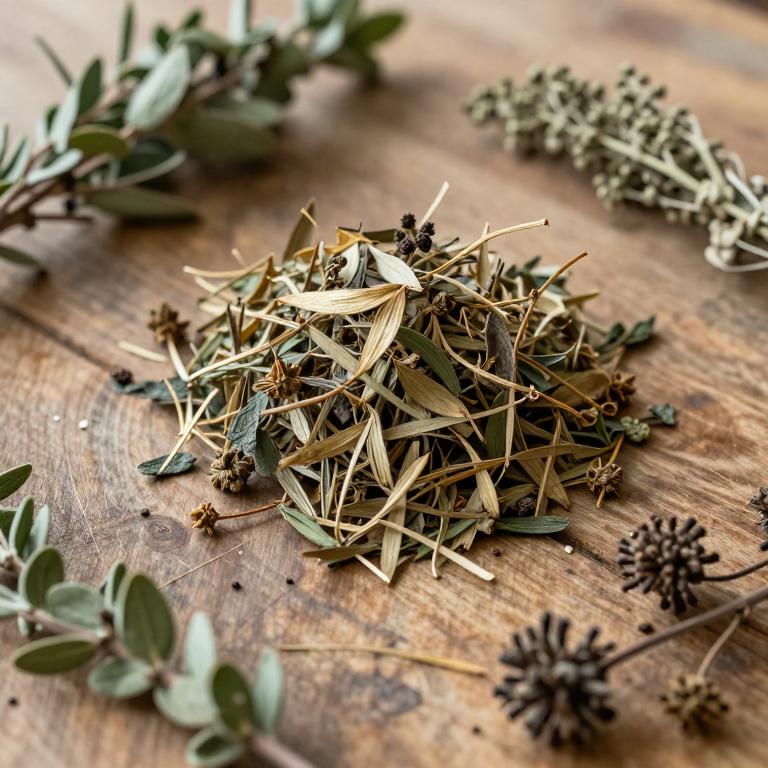
Names and Synonyms
Scientific Names
Accepted name
Camellia drupiferaSynonyms
- Drupifera oleosa
- Thea sasanqua var. loureiroi
- Mesua bracteata
- Thea drupifera
- Camellia gauchowensis
- Camellia vietnamensis
Sources: Wikidata, Catalogue of Life
Taxonomical Classification
This plant belongs to the kingdom Plantae and the phylum Streptophyta, falling under the class Equisetopsida and subclass Magnoliidae. Within the order Ericales, it is classified under the family Theaceae and the genus Camellia.
| Rank | Classification |
|---|---|
| Kingdom | Plantae |
| Phylum | Streptophyta |
| Class | Equisetopsida |
| Subclass | Magnoliidae |
| Order | Ericales |
| Family | Theaceae |
| Genus | Camellia |
Sources: The World Checklist of Vascular Plants (WCVP)
Distribution
This plant exhibits a diverse geographical distribution across several specific regions in Asia. Within China, it can be found growing in Hainan as well as throughout China Southeast. Its range extends into the Indo-China peninsula, where it is native to various landscapes. Specifically, the species is documented in the countries of Laos and Myanmar. Finally, its presence is also firmly established within the borders of Vietnam.
| Region | Area |
|---|---|
| China | Hainan |
| China | China Southeast |
| Indo-China | Laos |
| Indo-China | Myanmar |
| Indo-China | Vietnam |
Sources: The World Checklist of Vascular Plants (WCVP)
Botanical Identification
Life history
The life history of Camellia drupifera is characterized by its status as a perennial species, meaning it maintains its presence in the ecosystem over many years rather than completing a single reproductive cycle. Throughout its lifespan, the plant exhibits an evergreen habit, consistently retaining its foliage and maintaining a green canopy regardless of the season. This combination of a long-lived life cycle and continuous leaf retention allows the plant to sustain physiological processes and provide structural stability within its natural habitat over extended periods.
- Deciduousness :
- evergreen
- Lifecycle :
- perennial
Morphology
The morphology of Camellia drupifera is characterized by a woody growth form, primarily manifesting as a shrub. This species is a terrestrial plant that functions independently, showing no parasitic or epiphytic tendencies. In terms of its physical stature, it is a self-supporting organism that reaches a mean plant height of approximately 7 meters.
- Aquatic :
- terrestrial
- Climber :
- self-supporting
- Epiphyte :
- terrestrial
- Growth form :
- shrub
- Parasite :
- independent
- Plant height mean:
- 7 m
- Woodiness :
- woody
Physiology
The physiology of Camellia drupifera is characterized by complex metabolic processes adapted to its specific ecological niche, involving intricate photosynthetic pathways and nutrient uptake mechanisms. As a woody perennial, its metabolic rate is heavily influenced by seasonal variations and environmental stressors, affecting its growth patterns and secondary metabolite production. Regarding its nutrient cycling capabilities, the plant does not function as a nitrogen fixer; it lacks the symbiotic relationship with diazotrophic bacteria, such as Rhizobium, required to convert atmospheric nitrogen into bioavailable forms. Consequently, its physiological reliance on soil nitrogen is absolute, necessitating the active transport of nitrates and ammonium through its root system to support protein synthesis and cellular development. This absence of nitrogen fixation means that its physiological vigor and biomass accumulation are directly contingent upon the nitrogen availability within the substrate.
- Nitrogen fixer :
- no
Sources: Global Inventory of Floras and Traits (GIFT)
Plant Parts
Camellia drupifera has 1 reported plant parts identified across 1 scientific publications and several other databases that are studied for medicinal purposes. The most consistently reported plant part include fruit.
| Plant part | Supporting sources | Consensus |
|---|---|---|
| Fruit | 1 supporting sources | ★☆☆☆☆ |
Fruit
- Plants (Basel, Switzerland)
Chemicals
Camellia drupifera has 7 reported phytochemicals identified across 1 scientific publications and several other databases. The most consistently reported chemicals include ABA, GA3, IAA, Tea Saponin, fructose.
| Chemical | Supporting sources | Consensus |
|---|---|---|
| ABA | 1 supporting sources | ★☆☆☆☆ |
| GA3 | 1 supporting sources | ★☆☆☆☆ |
| IAA | 1 supporting sources | ★☆☆☆☆ |
| Tea Saponin | 1 supporting sources | ★☆☆☆☆ |
| fructose | 1 supporting sources | ★☆☆☆☆ |
| squalene | 1 supporting sources | ★☆☆☆☆ |
| sucrose | 1 supporting sources | ★☆☆☆☆ |
ABA
- Plants (Basel, Switzerland)
GA3
- Plants (Basel, Switzerland)
IAA
- Plants (Basel, Switzerland)
Tea Saponin
- Protein expression and purification
fructose
- Plants (Basel, Switzerland)
squalene
- Protein expression and purification
sucrose
- Plants (Basel, Switzerland)