Calycophyllum spruceanum
Calycophyllum spruceanum · Accepted scientific name
Scientific literature: Very Sparse (16 studies) · ★☆☆☆☆
, scientifically known as Calycophyllum spruceanum, is a significant medicinal plant native to tropical rainforests. Renowned for its diverse pharmacological properties, it is traditionally used to treat various ailments. Recent studies highlight its potential bioactive compounds, offering promising insights into its role in developing new therapeutic treatments and natural remedies.
- Family
- Rubiaceae
- Native range
- Southern America
- Parts used
- Not available
- Common names
- Not available
- Scientific synonyms
- Eukylista Spruceana · Calycophyllum Spruceanum F. Brasiliensis · 1 more
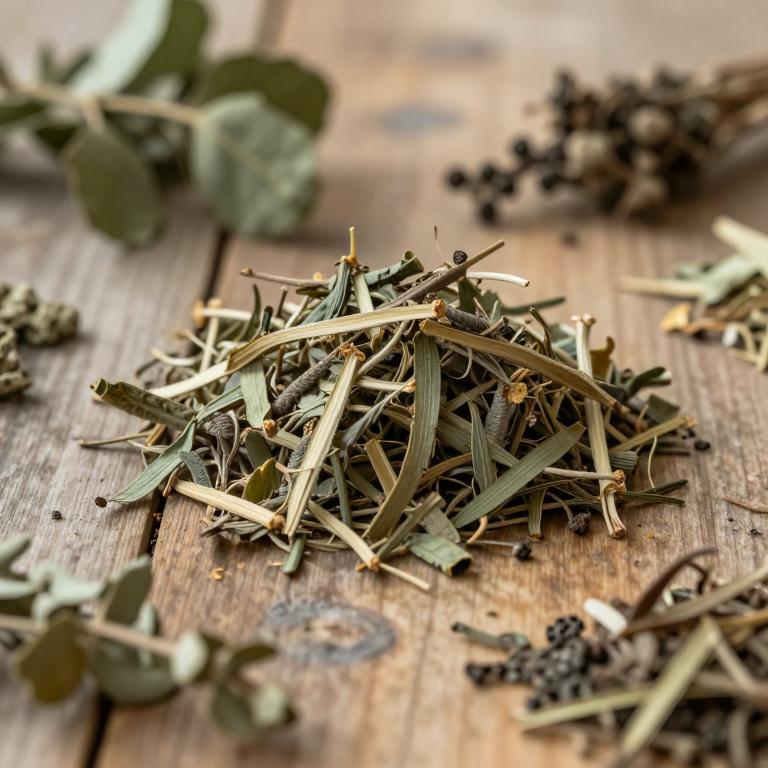
Names and Synonyms
Scientific Names
Accepted name
Calycophyllum spruceanumSynonyms
- Eukylista spruceana
- Calycophyllum spruceanum f. brasiliensis
- Calycophyllum spruceanum f. peruvianum
Sources: Wikidata, Catalogue of Life
Taxonomical Classification
This plant belongs to the kingdom Plantae and the phylum Streptophyta, falling under the class Equisetopsida and subclass Magnoliidae. It is classified within the order Gentianales and the family Rubiaceae. Finally, its specific taxonomic designation is within the genus Calycophyllum.
| Rank | Classification |
|---|---|
| Kingdom | Plantae |
| Phylum | Streptophyta |
| Class | Equisetopsida |
| Subclass | Magnoliidae |
| Order | Gentianales |
| Family | Rubiaceae |
| Genus | Calycophyllum |
Sources: The World Checklist of Vascular Plants (WCVP)
Distribution
This plant exhibits a notable geographical range that spans across both the Caribbean and Western South America. Within the Caribbean region, its presence is specifically documented in Trinidad and Tobago. Moving to the South American continent, the species is widely distributed throughout the western territories. It can be found growing in the diverse landscapes of Colombia, Ecuador, and Peru. Additionally, its range extends further into the western reaches of the continent to include Bolivia.
| Region | Area |
|---|---|
| Caribbean | Trinidad-Tobago |
| Western South America | Bolivia |
| Western South America | Colombia |
| Western South America | Ecuador |
| Western South America | Peru |
| Brazil | Brazil West-Central |
| Brazil | Brazil Northeast |
| Brazil | Brazil Southeast |
| Brazil | Brazil North |
Sources: The World Checklist of Vascular Plants (WCVP)
Botanical Identification
Ecology
The ecology of Calycophyllum spruceanum is characterized by its preference for diverse tropical forest ecosystems, specifically occurring within Floresta de Igapó, Floresta de Terra Firme, and Floresta Estacional Perenifólia. This species occupies a specific altitudinal niche, thriving at elevations ranging from a minimum of 100 m AMSL to a maximum of 380 m AMSL.
- Elevational range max:
- 380 m AMSL
- Elevational range min:
- 100 m AMSL
- Habitat :
- Floresta de Igapó, Floresta de Terra Firme, Floresta Estacional Perenifólia
Life history
The life history of Calycophyllum spruceanum is characterized by its status as a perennial organism, allowing it to persist in its environment through multiple growing seasons. As a phanerophyte, the plant maintains its photosynthetic organs on elevated stems or branches that remain above the ground level, a structural strategy common to many woody species. Furthermore, it exhibits an evergreen deciduousness, meaning it retains its foliage throughout the year rather than shedding all its leaves seasonally, ensuring continuous metabolic activity and survival within its ecological niche.
- Deciduousness :
- evergreen
- Life form :
- phanerophyte
- Lifecycle :
- perennial
Morphology
The morphology of Calycollium spruceanum is characterized by its stature as a large, woody tree, reaching an average height of 27.5 m and potentially attaining a maximum height of 30 m. This species exhibits a self-supporting growth habit, functioning as an independent organism rather than a parasite or a climbing liana. It is categorized as a terrestrial plant, lacking aquatic or semiaquatic tendencies, and it does not function as an epiphyte. Its structural composition is distinctly woody, supporting its significant vertical development within its natural habitat.
- Aquatic :
- terrestrial
- Climber :
- self-supporting
- Epiphyte :
- terrestrial
- Growth form :
- tree
- Parasite :
- independent
- Plant height max:
- 30 m
- Plant height mean:
- 27.5 m
- Woodiness :
- woody
Physiology
The physiology of Calycophyllum spruceanum is characterized by its specific metabolic and nutritional processes. It utilizes the C3 photosynthetic pathway for carbon fixation, relying on the enzyme RuBisCO to incorporate carbon dioxide into organic compounds during the Calvin cycle. In terms of nutrient acquisition, the plant does not function as a nitrogen fixer, meaning it lacks the symbiotic relationship with diazotrophic bacteria required to convert atmospheric nitrogen into a usable form and must instead rely on the uptake of nitrates or ammonium from the soil.
- Nitrogen fixer :
- no
- Photosynthetic pathway :
- C3
Reproduction
Reproduction in Calycophyllum spruceanum involves complex mechanisms for seed dissemination and propagation. The dispersal syndrome of this species is characterized by a combination of strategies, exhibiting traits that are both anemochorous and zoochorous, alongside elements of autochory. This multi-modal approach to dispersal ensures that seeds are spread through wind movement, animal transport, and self-ejection mechanisms, allowing the plant to colonize diverse microhabitats within its environment.
- Dispersal syndrome :
- anemochorous
Sources: Global Inventory of Floras and Traits (GIFT)
Chemicals
Calycophyllum spruceanum has 4 reported phytochemicals identified across 0 scientific publications and several other databases. The most consistently reported chemicals include 5-Hydroxy-6-methoxycoumarin 7-glucoside, Cyanidin, Gardenoside, TAXIFOLIN.
| Chemical | Supporting sources | Consensus |
|---|---|---|
| 5-Hydroxy-6-methoxycoumarin 7-glucoside | 1 supporting sources | ★☆☆☆☆ |
| Cyanidin | 1 supporting sources | ★☆☆☆☆ |
| Gardenoside | 1 supporting sources | ★☆☆☆☆ |
| TAXIFOLIN | 1 supporting sources | ★☆☆☆☆ |
5-Hydroxy-6-methoxycoumarin 7-glucoside
- Molecules (Basel, Switzerland)
Cyanidin
- Molecules (Basel, Switzerland)
Gardenoside
- Molecules (Basel, Switzerland)
TAXIFOLIN
- Molecules (Basel, Switzerland)
Activities
Calycophyllum spruceanum has 6 reported activities identified across 0 scientific publications and several other databases. The most consistently reported activities include Antimicrobial, Antioxidant, Contraceptive, Emollient, Free-Radical Scavenging.
| Activity | Supporting sources | Consensus |
|---|---|---|
| Antimicrobial | 1 supporting sources | ★☆☆☆☆ |
| Antioxidant | 1 supporting sources | ★☆☆☆☆ |
| Contraceptive | 1 supporting sources | ★☆☆☆☆ |
| Emollient | 1 supporting sources | ★☆☆☆☆ |
| Free-Radical Scavenging | 1 supporting sources | ★☆☆☆☆ |
| Stimulant | 1 supporting sources | ★☆☆☆☆ |
Antimicrobial
- Molecules (Basel, Switzerland)
Antioxidant
- Molecules (Basel, Switzerland)
Contraceptive
- Molecules (Basel, Switzerland)
Emollient
- Molecules (Basel, Switzerland)
Free-Radical Scavenging
- BMC complementary and alternative medicine
Stimulant
- Molecules (Basel, Switzerland)
Conditions
Calycophyllum spruceanum has 5 reported investigations on conditions identified across 0 scientific publications and several other databases. The most consistently reported conditions include antioxidant, contraceptive, emollient, inflammation, wound healing.
| Condition | Supporting sources | Consensus |
|---|---|---|
| Antioxidant | 1 supporting sources | ★☆☆☆☆ |
| Contraceptive | 1 supporting sources | ★☆☆☆☆ |
| Emollient | 1 supporting sources | ★☆☆☆☆ |
| Inflammation | 1 supporting sources | ★☆☆☆☆ |
| Wound healing | 1 supporting sources | ★☆☆☆☆ |
Antioxidant
- Molecules (Basel, Switzerland)
Contraceptive
- Molecules (Basel, Switzerland)
Emollient
- Molecules (Basel, Switzerland)
Inflammation
- BMC complementary and alternative medicine
Wound healing
- Molecules (Basel, Switzerland)
Preparations
Calycophyllum spruceanum has 1 reported preparations identified across 0 scientific publications and several other databases. The most consistently reported preparations include ethanol extracts.
| Preparation | Supporting sources | Consensus |
|---|---|---|
| Ethanol extracts | 1 supporting sources | ★☆☆☆☆ |
Ethanol extracts
- BMC complementary and alternative medicine