pink touriga
Calophyllum tomentosum · Accepted scientific name
Scientific literature: Very Sparse (25 studies) · ★☆☆☆☆
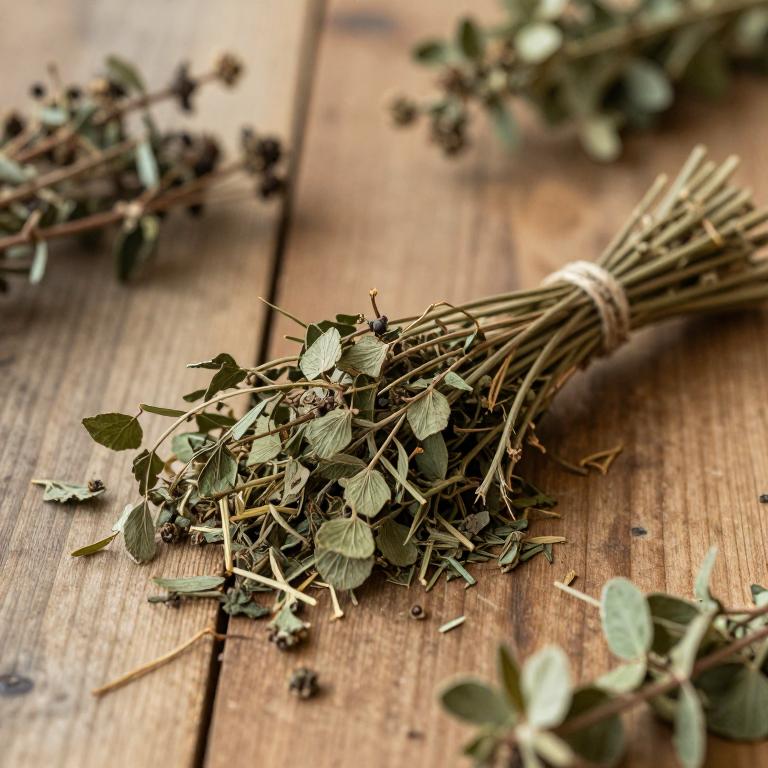
Pink touriga, scientifically known as Calophyllum tomentosum, is a remarkable medicinal plant celebrated for its diverse therapeutic properties. Renowned for its lush foliage and vibrant blooms, this species offers significant bioactive compounds used in traditional healing to treat inflammation, skin ailments, and various infections, making it a botanical treasure.
- Family
- Calophyllaceae
- Native range
- Asia-Tropical
- Parts used
- Leaf
- Common names
- Pink Touriga
- Scientific synonyms
- Not available
Names and Synonyms
Common Names
- pink touriga
Scientific Names
Accepted name
Calophyllum tomentosumSources: Wikidata, Catalogue of Life
Taxonomical Classification
This plant belongs to the kingdom Plantae and is classified under the phylum Streptophyta within the class Equisetopsida. As a member of the subclass Magnoliidae and the order Malpighiales, it is further categorized into the family Calophyllaceae. Finally, it is identified by the genus Calophyllum.
| Rank | Classification |
|---|---|
| Kingdom | Plantae |
| Phylum | Streptophyta |
| Class | Equisetopsida |
| Subclass | Magnoliidae |
| Order | Malpighiales |
| Family | Calophyllaceae |
| Genus | Calophyllum |
Sources: The World Checklist of Vascular Plants (WCVP)
Distribution
This plant possesses a very limited and specific geographical range within the natural world. It is primarily documented as being native to the Indian Subcontinent. Within this vast region, its presence is specifically concentrated in the island nation of Sri Lanka. Due to this restricted habitat, the species is considered to have a highly localized distribution. Consequently, understanding its unique environment in Sri Lanka is essential for its conservation.
| Region | Area |
|---|---|
| Indian Subcontinent | Sri Lanka |
Sources: The World Checklist of Vascular Plants (WCVP)
Botanical Identification
Life history
The life history of Calophyllum tomentosum is characterized by its nature as a perennial organism, allowing it to persist and maintain its presence in its ecosystem over many years. Throughout its existence, the plant maintains an evergreen habit, ensuring that its foliage remains functional and intact across different seasons rather than shedding its leaves in a deciduous cycle. This combination of a long-lived lifecycle and constant foliage allows the species to establish a stable physiological presence within its habitat.
- Deciduousness :
- evergreen
- Lifecycle :
- perennial
Morphology
The morphology of Calophyllum tomeñosum is characterized by its robust growth form, as it develops as a large, woody tree. This species exhibits significant stature, reaching a mean plant height of approximately 25 m. In terms of its structural habit, it is classified as a self-supporting tree, maintaining its own upright posture without the need for climbing structures.
- Climber :
- self-supporting
- Growth form :
- tree
- Plant height mean:
- 25 m
- Woodiness :
- woody
Physiology
The physiology of Calophyllum tomeutosum is characterized by a C3 photosynthetic pathway, which dictates its carbon fixation process and metabolic efficiency under typical environmental conditions. As a plant utilizing the C3 pathway, it relies on the enzyme Rubisco for initial carbon assimilation during the Calvin cycle, making its gas exchange processes highly sensitive to ambient temperature and moisture availability. Furthermore, this species does not function as a nitrogen fixer, meaning it lacks the specialized symbiotic relationship with nitrogen-fixing bacteria required to convert atmospheric nitrogen into a usable form, and instead relies on the uptake of nitrates and ammonium from the soil to satisfy its nutritional requirements for growth and development.
- Nitrogen fixer :
- no
- Photosynthetic pathway :
- C3
Sources: Global Inventory of Floras and Traits (GIFT)
Plant Parts
Calophyllum tomentosum has 1 reported plant parts identified across 1 scientific publications and several other databases that are studied for medicinal purposes. The most consistently reported plant part include leaf.
| Plant part | Supporting sources | Consensus |
|---|---|---|
| Leaf | 1 supporting sources | ★☆☆☆☆ |
Leaf
- Chemistry & biodiversity
Chemicals
Calophyllum tomentosum has 5 reported phytochemicals identified across 1 scientific publications and several other databases. The most consistently reported chemicals include Amentoflavone, Coumarins, Steroids, Terpenoids, betulinic acid.
| Chemical | Supporting sources | Consensus |
|---|---|---|
| Amentoflavone | 1 supporting sources | ★☆☆☆☆ |
| Coumarins | 1 supporting sources | ★☆☆☆☆ |
| Steroids | 1 supporting sources | ★☆☆☆☆ |
| Terpenoids | 1 supporting sources | ★☆☆☆☆ |
| betulinic acid | 1 supporting sources | ★☆☆☆☆ |
Amentoflavone
- Chemistry & biodiversity
Coumarins
- Chemistry & biodiversity
Steroids
- Chemistry & biodiversity
Terpenoids
- Chemistry & biodiversity
betulinic acid
- Dr. Duke
Activities
Calophyllum tomentosum has 18 reported activities identified across 1 scientific publications and several other databases. The most consistently reported activities include Anthelmintic, AntiHIV, Antibacterial, Anticancer, Anticarcinomic.
| Activity | Supporting sources | Consensus |
|---|---|---|
| Anthelmintic | 1 supporting sources | ★☆☆☆☆ |
| AntiHIV | 1 supporting sources | ★☆☆☆☆ |
| Antibacterial | 1 supporting sources | ★☆☆☆☆ |
| Anticancer | 1 supporting sources | ★☆☆☆☆ |
| Anticarcinomic | 1 supporting sources | ★☆☆☆☆ |
| Antiedemic | 1 supporting sources | ★☆☆☆☆ |
| Antiinflammatory | 1 supporting sources | ★☆☆☆☆ |
| Antileukemic | 1 supporting sources | ★☆☆☆☆ |
| Antimalarial | 1 supporting sources | ★☆☆☆☆ |
| Antimelanomic | 1 supporting sources | ★☆☆☆☆ |
Anthelmintic
- Dr. Duke
AntiHIV
- Dr. Duke
Antibacterial
- Dr. Duke
Anticancer
- Dr. Duke
Anticarcinomic
- Dr. Duke
Antiedemic
- Dr. Duke
Antiinflammatory
- Dr. Duke
Antileukemic
- Dr. Duke
Antimalarial
- Dr. Duke
Antimelanomic
- Dr. Duke
Conditions
Calophyllum tomentosum has 1 reported investigations on conditions identified across 1 scientific publications and several other databases. The most consistently reported conditions include Plasmodium falciparum.
| Condition | Supporting sources | Consensus |
|---|---|---|
| Plasmodium falciparum | 1 supporting sources | ★☆☆☆☆ |
Plasmodium falciparum
- Chemistry & biodiversity
Preparations
Calophyllum tomentosum has 3 reported preparations identified across 1 scientific publications and several other databases. The most consistently reported preparations include 'Punnaga', 'Surapunnaga', 'Tamoil'.
| Preparation | Supporting sources | Consensus |
|---|---|---|
| 'punnaga' | 1 supporting sources | ★☆☆☆☆ |
| 'surapunnaga' | 1 supporting sources | ★☆☆☆☆ |
| 'tamoil' | 1 supporting sources | ★☆☆☆☆ |
'punnaga'
- Chemistry & biodiversity
'surapunnaga'
- Chemistry & biodiversity
'tamoil'
- Chemistry & biodiversity