Jacareuba
Calophyllum brasiliense · Accepted scientific name
Scientific literature: Sparse (88 studies) · ★★☆☆☆
Jacareuba, scientifically known as Calophyllum brasiliense, is a versatile tropical tree valued for its robust timber and profound medicinal properties. Native to Neotropical regions, its leaves and bark contain bioactive compounds with significant anti-inflammatory, antimicrobial, and antioxidant activities, offering promising potential for traditional healing and modern pharmacological research.
- Family
- Calophyllaceae
- Native range
- Northern America
- Parts used
- Root · Leaf
- Common names
- Jacareuba · Brazil Beauty-Leaf
- Scientific synonyms
- Not available
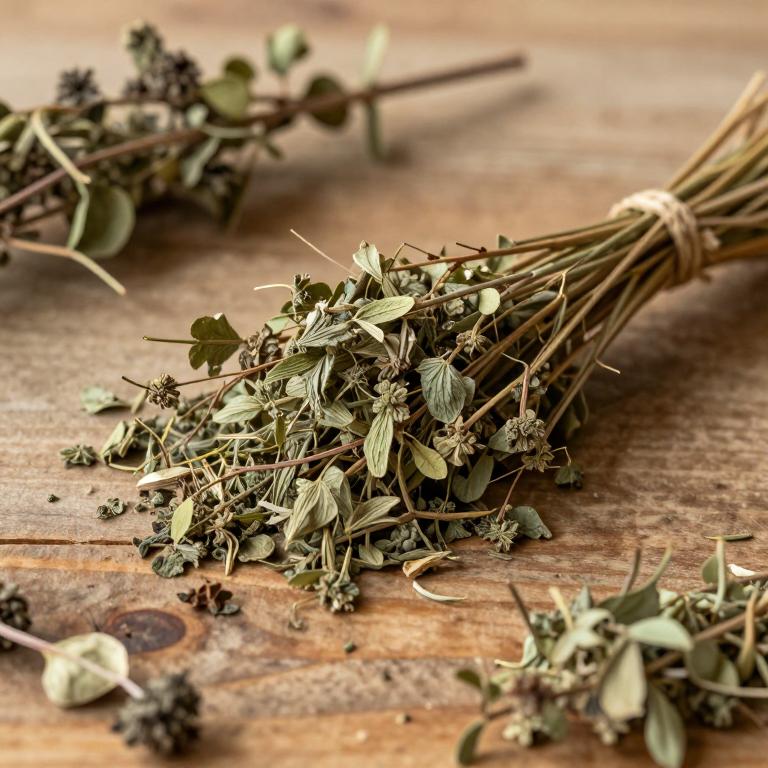
Names and Synonyms
Common Names
- Jacareuba
- Brazil Beauty-Leaf
Scientific Names
Accepted name
Calophyllum brasilienseRegional and Traditional Names
Spanish:
- Guanandi
- Jacareúba
- Lanti
- Lantim
- Olandi
- Olandim
- Bonita hoja brasileña
- Calophyllum brasiliensis
- Calophyllum lucidum
- Jacareuba
- Bonita hoja brasilena
- María
- María colorado
- Marío
- alfaro
- bella María
- cachicamo
- cedro María
- lagarto caspi
- palo María
- palo azufre
- árbol María
- Arary
- Bari
- Barí
- Brasil
- Santa María
French:
- Calophylle du Brésil
- Calophyllum lucidum
Sources: Wikidata, Catalogue of Life
Taxonomical Classification
This plant belongs to the kingdom Plantae and is classified under the phylum Streptophyta and the class Equisetopsida. Within the subclass Magnoliidae, it is positioned in the order Malpighiales and the family Calophyllaceae. Finally, it is identified under the genus Calophyllum.
| Rank | Classification |
|---|---|
| Kingdom | Plantae |
| Phylum | Streptophyta |
| Class | Equisetopsida |
| Subclass | Magnoliidae |
| Order | Malpighiales |
| Family | Calophyllaceae |
| Genus | Calophyllum |
Sources: The World Checklist of Vascular Plants (WCVP)
Distribution
This plant exhibits a broad distribution across several key regions within Mexico. In the northern and western reaches, it can be found throughout Mexico Southwest. Its presence extends eastward to cover Mexico Gulf and continues through the central parts of Mexico Central. Furthermore, the species is well-established in the tropical areas of Mexico Southeast. Finally, its geographical range expands southward into Central America, specifically within Belize.
| Region | Area |
|---|---|
| Mexico | Mexico Central |
| Mexico | Mexico Gulf |
| Mexico | Mexico Southwest |
| Mexico | Mexico Southeast |
| Central America | Belize |
| Central America | Costa Rica |
| Central America | El Salvador |
| Central America | Guatemala |
| Central America | Honduras |
| Central America | Nicaragua |
Sources: The World Checklist of Vascular Plants (WCVP)
Botanical Identification
Ecology
The ecology of Calophyllum brasiliense is characterized by its remarkable adaptability to diverse forest ecosystems and a wide altitudinal distribution. It thrives in a variety of distinct habitats, ranging from seasonally flooded environments like Floresta de Várzea and Floresta de Igapó to more stable settings such as Floresta de Terra Firme, Floresta Ombrófila (pluvial forests), and Floresta Estacional Semidecidual. Additionally, this species is found in specialized landscapes including Campinarana, Restinga, Palmeiral, and riparian corridors known as Floresta Ciliar or Galeria. Its vertical distribution is equally broad, allowing it to colonize environments from sea level (0 m AMSL) up to high-altitude reaches of 2300 m AMSL.
- Elevational range max:
- 2300 m AMSL
- Elevational range min:
- 0 m AMSL
- Habitat :
- Campinarana, Floresta Ciliar ou Galeria, Floresta de Igapó, Floresta de Terra Firme, Floresta de Várzea, Floresta Estacional Semidecidual, Floresta Ombrófila (= Floresta Pluvial), Palmeiral, Restinga
Life history
The life history of Calophyllum brasiliense is characterized by its status as a perennial plant, ensuring its long-term presence within its ecological niche. As a phanerophyte, its reproductive buds are elevated on aerial shoots well above the ground, a structural adaptation that defines its life form. This species maintains an evergreen deciduousness, retaining its foliage throughout the year to facilitate continuous photosynthetic activity, which supports its enduring growth cycle.
- Deciduousness :
- evergreen
- Life form :
- phanerophyte
- Lifecycle :
- perennial
Morphology
The morphology of Calophyllum brasiliense is characterized by its robust, woody growth form, functioning as a substantial tree that reaches an average height of 25 m, with a maximum potential height of 30 m. As a self-supporting species, it does not exhibit climbing behavior such as lianas or vines, nor does it function as a parasite, maintaining an independent lifestyle. The plant is strictly terrestrial in its ecological habit, lacking aquatic or semiaquatic adaptations, and it does not exhibit epiphytic qualities, remaining grounded rather than growing as a holoepiphyte or hemiepiphyte.
- Aquatic :
- terrestrial
- Climber :
- self-supporting
- Epiphyte :
- terrestrial
- Growth form :
- tree
- Parasite :
- independent
- Plant height max:
- 30 m
- Plant height mean:
- 25 m
- Woodiness :
- woody
Physiology
The physiology of Calophyllum brasiliense is characterized by a C3 photosynthetic pathway, which dictates its carbon fixation processes and metabolic efficiency. In terms of leaf structural investment, the species exhibits a leaf dry matter content (LDMC) of 388.9 mg/g, a value that remains consistent across its recorded mean, minimum, and maximum measurements. Furthermore, this plant does not function as a nitrogen fixer, meaning it lacks the symbiotic relationships or physiological mechanisms required to convert atmospheric nitrogen into a usable form, relying instead on soil-available nitrogen sources for its nutritional requirements.
- Leaf dry matter content (LDMC) mean:
- 388.9 mg/g
- Nitrogen fixer :
- no
- Photosynthetic pathway :
- C3
Reproduction
The reproduction of Calophyllum brasiliense is characterized by a biotic pollination syndrome, relying primarily on insects to facilitate the transfer of pollen. Following successful pollination, the plant produces seeds that exhibit significant morphological variation. These seeds possess a mean length of 18 mm, with individual measurements ranging from a minimum of 15 mm to a maximum of 30 mm. In terms of mass, the seeds show a wide distributional spectrum, with a mean mass of approximately 3.95 g; however, individual seed weight can vary drastically, from a minimum of 0.51 g to a maximum of as much as 15.97 g. Once mature, the dispersal of these seeds follows a zoochorous syndrome, meaning they are distributed via animals, which plays a crucial role in the species' ability to colonize new habitats.
- Dispersal syndrome :
- zoochorous
- Pollination syndrome :
- insect
- Pollination syndrome :
- biotic
- Seed length max:
- 30 mm
- Seed length mean:
- 18 mm
- Seed length min:
- 15 mm
- Seed mass max:
- 15.97 g
- Seed mass mean:
- 3.953917143 g
- Seed mass min:
- 0.51 g
Sources: Global Inventory of Floras and Traits (GIFT)
Plant Parts
Calophyllum brasiliense has 5 reported plant parts identified across 17 scientific publications and several other databases that are studied for medicinal purposes. The most consistently reported plant part include root, leaf, stem, flower, fruit.
| Plant part | Supporting sources | Consensus |
|---|---|---|
| Root | 5 supporting sources | ★★★☆☆ |
| Leaf | 4 supporting sources | ★★☆☆☆ |
| Stem | 4 supporting sources | ★★☆☆☆ |
| Flower | 2 supporting sources | ★☆☆☆☆ |
| Fruit | 2 supporting sources | ★☆☆☆☆ |
Root
- BMC plant biology
- Die Pharmazie
- Acta poloniae pharmaceutica
- Zeitschrift fur Naturforschung. C, Journal of biosciences
- Journal of ethnopharmacology
Leaf
- BMC plant biology
- Zeitschrift fur Naturforschung. C, Journal of biosciences
- Current pharmaceutical biotechnology
- Therapie
Stem
- Journal of ethnopharmacology
- BMC plant biology
- Zeitschrift fur Naturforschung. C, Journal of biosciences
- Journal of natural products
Flower
- Die Pharmazie
- Zeitschrift fur Naturforschung. C, Journal of biosciences
Fruit
- Die Pharmazie
- Zeitschrift fur Naturforschung. C, Journal of biosciences
Chemicals
Calophyllum brasiliense has 15 reported phytochemicals identified across 17 scientific publications and several other databases. The most consistently reported chemicals include Coumarins, 1,5-Dihydroxyxanthone, Amentoflavone, Friedelin, Gallic acid.
| Chemical | Supporting sources | Consensus |
|---|---|---|
| Coumarins | 3 supporting sources | ★★☆☆☆ |
| 1,5-Dihydroxyxanthone | 2 supporting sources | ★☆☆☆☆ |
| Amentoflavone | 2 supporting sources | ★☆☆☆☆ |
| Friedelin | 2 supporting sources | ★☆☆☆☆ |
| Gallic acid | 2 supporting sources | ★☆☆☆☆ |
| protocatechuic acid | 2 supporting sources | ★☆☆☆☆ |
| Brasiliensic acid | 1 supporting sources | ★☆☆☆☆ |
| Epicatechin | 1 supporting sources | ★☆☆☆☆ |
| Hyperin (Hyperoside) | 1 supporting sources | ★☆☆☆☆ |
| Jacareubin | 1 supporting sources | ★☆☆☆☆ |
Coumarins
- The Journal of pharmacy and pharmacology
- Journal of natural products
- Phytomedicine : international journal of phytotherapy and phytopharmacology
1,5-Dihydroxyxanthone
- Die Pharmazie
- Zeitschrift fur Naturforschung. C, Journal of biosciences
Amentoflavone
- Current pharmaceutical biotechnology
- Therapie
Friedelin
- Die Pharmazie
- Zeitschrift fur Naturforschung. C, Journal of biosciences
Gallic acid
- Zeitschrift fur Naturforschung. C, Journal of biosciences
- Therapie
protocatechuic acid
- Zeitschrift fur Naturforschung. C, Journal of biosciences
- Therapie
Brasiliensic acid
- Zeitschrift fur Naturforschung. C, Journal of biosciences
Epicatechin
- Zeitschrift fur Naturforschung. C, Journal of biosciences
Hyperin (Hyperoside)
- Therapie
Jacareubin
- Journal of ethnopharmacology
Activities
Calophyllum brasiliense has 5 reported activities identified across 17 scientific publications and several other databases. The most consistently reported activities include Antinociceptive, Antiproliferative, Antisecretory, Cytotoxic, Gastroprotective.
| Activity | Supporting sources | Consensus |
|---|---|---|
| Antinociceptive | 2 supporting sources | ★☆☆☆☆ |
| Antiproliferative | 1 supporting sources | ★☆☆☆☆ |
| Antisecretory | 1 supporting sources | ★☆☆☆☆ |
| Cytotoxic | 1 supporting sources | ★☆☆☆☆ |
| Gastroprotective | 1 supporting sources | ★☆☆☆☆ |
Antinociceptive
- Chemistry & biodiversity
- Die Pharmazie
Antiproliferative
- The Journal of pharmacy and pharmacology
Antisecretory
- Chemistry & biodiversity
Cytotoxic
- The Journal of pharmacy and pharmacology
Gastroprotective
- Journal of ethnopharmacology
Conditions
Calophyllum brasiliense has 14 reported investigations on conditions identified across 17 scientific publications and several other databases. The most consistently reported conditions include cancer, Bacillus cereus, Helicobacter pylori, Mycobacterium tuberculosis, Plasmodium falciparum.
| Condition | Supporting sources | Consensus |
|---|---|---|
| Cancer | 2 supporting sources | ★☆☆☆☆ |
| Bacillus cereus | 1 supporting sources | ★☆☆☆☆ |
| Helicobacter pylori | 1 supporting sources | ★☆☆☆☆ |
| Mycobacterium tuberculosis | 1 supporting sources | ★☆☆☆☆ |
| Plasmodium falciparum | 1 supporting sources | ★☆☆☆☆ |
| Staphylococcus aureus | 1 supporting sources | ★☆☆☆☆ |
| Staphylococcus epidermidis | 1 supporting sources | ★☆☆☆☆ |
| Antihypertensive | 1 supporting sources | ★☆☆☆☆ |
| Colon cancer | 1 supporting sources | ★☆☆☆☆ |
| Diuretics | 1 supporting sources | ★☆☆☆☆ |
Cancer
- The Journal of pharmacy and pharmacology
- Journal of natural products
Bacillus cereus
- Journal of natural products
Helicobacter pylori
- Journal of ethnopharmacology
Mycobacterium tuberculosis
- Current pharmaceutical biotechnology
Plasmodium falciparum
- Journal of ethnopharmacology
Staphylococcus aureus
- Journal of ethnopharmacology
Staphylococcus epidermidis
- Journal of natural products
Antihypertensive
- Fitoterapia
Colon cancer
- Fitoterapia
Diuretics
- Fitoterapia
Preparations
Calophyllum brasiliense has 9 reported preparations identified across 17 scientific publications and several other databases. The most consistently reported preparations include Crude methanolic extracts (CME), ME, SFE-CO2, Soxhlet, extracts.
| Preparation | Supporting sources | Consensus |
|---|---|---|
| Crude methanolic extracts (cme) | 1 supporting sources | ★☆☆☆☆ |
| Me | 1 supporting sources | ★☆☆☆☆ |
| Sfe-co2 | 1 supporting sources | ★☆☆☆☆ |
| Soxhlet | 1 supporting sources | ★☆☆☆☆ |
| Extracts | 1 supporting sources | ★☆☆☆☆ |
| Maceration | 1 supporting sources | ★☆☆☆☆ |
| Methanol extracts of calophyllum brasiliense (roots) | 1 supporting sources | ★☆☆☆☆ |
| Methanolic extracts (me) | 1 supporting sources | ★☆☆☆☆ |
| Stem bark | 1 supporting sources | ★☆☆☆☆ |
Crude methanolic extracts (cme)
- Zeitschrift fur Naturforschung. C, Journal of biosciences
Me
- Journal of pharmacy & pharmaceutical sciences : a publication of the Canadian Society for Pharmaceutical Sciences, Societe canadienne des sciences pharmaceutiques
Sfe-co2
- Current pharmaceutical biotechnology
Soxhlet
- Current pharmaceutical biotechnology
Extracts
- Fitoterapia
Maceration
- Current pharmaceutical biotechnology
Methanol extracts of calophyllum brasiliense (roots)
- Acta poloniae pharmaceutica
Methanolic extracts (me)
- Journal of pharmacy & pharmaceutical sciences : a publication of the Canadian Society for Pharmaceutical Sciences, Societe canadienne des sciences pharmaceutiques
Stem bark
- Journal of natural products