Callitris calcarata
Callitris endlicheri · Accepted scientific name
Scientific literature: Very Sparse (8 studies) · ★☆☆☆☆
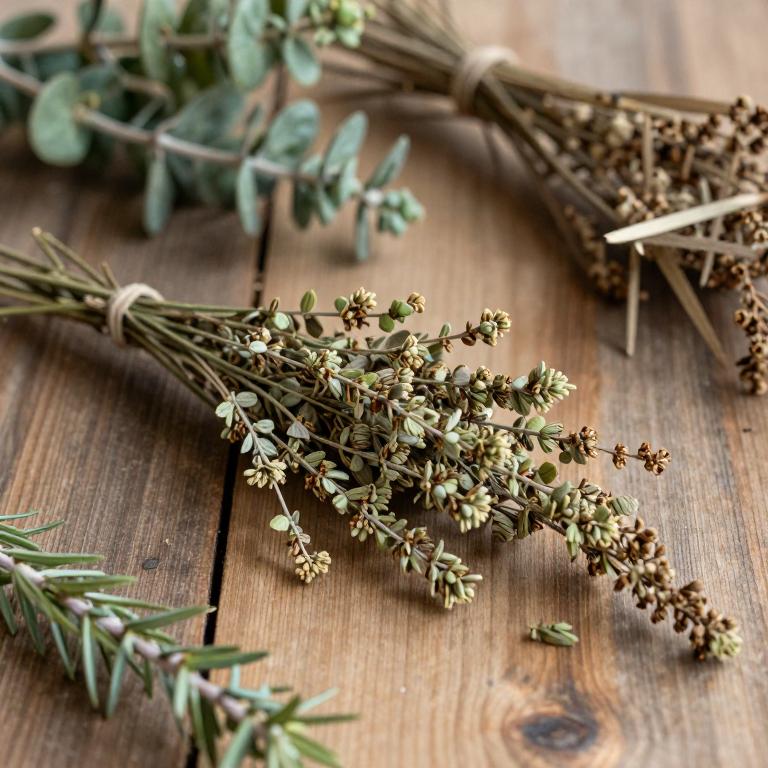
Callitris calcarata, scientifically known as Callitris endlicheri, is a distinctive coniferous species valued for its aromatic qualities and medicinal potential. Found in specific regional ecosystems, this plant is traditionally recognized for its unique biochemical properties, offering significant interest in ethnobotany and the development of natural therapeutic applications.
Names and Synonyms
Common Names
- Black Cypress-pine
- Black Pine
- Mountain Pine
- Murray Pine
- Red Cypress
- Red Cypress-pine
- Red Pine
- Scrub Pine
- Murray-pine
- black callitris
- black-cypress
- black-pine
- mountain-pine
- northern cypress-pine
- red-cypress
- red-pine
- scrub-pine
Scientific Names
Accepted name
Callitris endlicheriSynonyms
- Frenela endlicheri
- Frenela endlicheri var. mucronata
- Frenela gunnii var. mucronata
Regional and Traditional Names
German:
- Rote Schmuckzypresse
- Frenela endlicheri
French:
- Cyprès noir d'Australie
Sources: Wikidata, Catalogue of Life
Taxonomical Classification
This plant belongs to the kingdom Plantae and the phylum Streptophyta, situated within the class Equisetopsida and subclass Pinidae. Following the order Pinales, it is classified under the family Cupressaceae. Finally, it is identified by its specific genus, Callitris.
| Rank | Classification |
|---|---|
| Kingdom | Plantae |
| Phylum | Streptophyta |
| Class | Equisetopsida |
| Subclass | Pinidae |
| Order | Pinales |
| Family | Cupressaceae |
| Genus | Callitris |
Sources: The World Checklist of Vascular Plants (WCVP)
Distribution
This plant exhibits a diverse geographical distribution across several distinct oceanic and continental regions. It can be found in the Middle Atlantic Ocean, specifically on the island of St. Helena. In the southern hemisphere, its range extends across various parts of Australia, including New South Wales, Queensland, and Victoria. Additionally, the species is located within the North-Central Pacific, notably in Hawaii. These scattered locations highlight the plant's ability to thrive in different island and coastal environments.
| Region | Area |
|---|---|
| Middle Atlantic Ocean | St.Helena |
| Australia | New South Wales |
| Australia | Queensland |
| Australia | Victoria |
| North-Central Pacific | Hawaii |
Sources: The World Checklist of Vascular Plants (WCVP)
Botanical Identification
Life history
The life history of Callitris endlicheri is characterized by its status as a perennial species, allowing it to maintain its biological functions and structural presence across multiple growing seasons. As a phanerophyte, the plant maintains its photosynthetic organs on elevated branches well above the ground level, a growth habit that distinguishes it from lower-growing life forms. Specifically, its classification as a phanerophyte (both in terms of its primary life form and its developmental structure) ensures that its buds and vegetative structures are protected during unfavorable seasonal conditions, facilitating a long-term survival strategy within its natural ecosystem.
- Life form :
- phanerophyte
- Lifecycle :
- perennial
Morphology
The morphology of Callitris endlicheri is characterized by its growth form as a woody tree, exhibiting a robust and self-supporting structure. As an independent organism, it does not function as a parasite or an epiphyte, maintaining a strictly terrestrial existence rather than occupying aquatic or semiaquatic niches. Its architecture is defined by permanent woodiness, distinguishing it from herbaceous or non-woody species, and it lacks any climbing habits such as lianas or vines, remaining a structurally stable and self-supporting tree.
- Aquatic :
- terrestrial
- Climber :
- self-supporting
- Epiphyte :
- terrestrial
- Growth form :
- tree
- Parasite :
- independent
- Woodiness :
- woody
Physiology
The physiology of Callitris endlicheri is characterized by a specialized metabolic and morphological framework adapted to its environment. The plant utilizes the C3 photosynthetic pathway, a fundamental carbon fixation process where CO2 is initially incorporated into a three-carbon compound during the Calvin cycle. This metabolic strategy governs its energy production and gas exchange patterns. Morphologically, the leaf structure is highly reduced and needle-like, with leaf lengths typically ranging from a minimum of 0.2 cm to a maximum of 0.4 cm. These diminutive dimensions contribute to the plant's overall physiological efficiency in managing transpiration and moisture retention.
- Leaf length max:
- 0.4 cm
- Leaf length min:
- 0.2 cm
- Photosynthetic pathway :
- C3
Reproduction
The reproduction of Callitris endlicheri is characterized by the production of specialized seeds that exhibit specific mass variations essential for its dispersal and germination processes. The seed mass within this species is relatively small, with a calculated mean mass of 0.007275714 g. Throughout the reproductive cycle, the individual seeds demonstrate a range of weights, reaching a maximum mass of 0.00906 g and a minimum mass of 0.00622 g. These metrics reflect the biological investment in seed production, ensuring that the offspring possess the necessary density and nutrient reserves for successful establishment in its natural habitat.
- Seed mass max:
- 0.00906 g
- Seed mass mean:
- 0.007275714 g
- Seed mass min:
- 0.00622 g
Sources: Global Inventory of Floras and Traits (GIFT)
Chemicals
Callitris endlicheri has 3 reported phytochemicals identified across 0 scientific publications and several other databases. The most consistently reported chemicals include Ferruginol, PISIFERAL, PISIFEROL.
| Chemical | Supporting sources | Consensus |
|---|---|---|
| Ferruginol | 1 supporting sources | ★☆☆☆☆ |
| PISIFERAL | 1 supporting sources | ★☆☆☆☆ |
| PISIFEROL | 1 supporting sources | ★☆☆☆☆ |
Ferruginol
- Journal of ethnopharmacology
PISIFERAL
- Journal of ethnopharmacology
PISIFEROL
- Journal of ethnopharmacology
Conditions
Callitris endlicheri has 4 reported investigations on conditions identified across 0 scientific publications and several other databases. The most consistently reported conditions include Bacillus subtilis, Candida albicans, Pseudomonas aeruginosa, Staphylococcus aureus.
| Condition | Supporting sources | Consensus |
|---|---|---|
| Bacillus subtilis | 1 supporting sources | ★☆☆☆☆ |
| Candida albicans | 1 supporting sources | ★☆☆☆☆ |
| Pseudomonas aeruginosa | 1 supporting sources | ★☆☆☆☆ |
| Staphylococcus aureus | 1 supporting sources | ★☆☆☆☆ |
Bacillus subtilis
- Journal of ethnopharmacology
Candida albicans
- Journal of ethnopharmacology
Pseudomonas aeruginosa
- Journal of ethnopharmacology
Staphylococcus aureus
- Journal of ethnopharmacology
Preparations
Callitris endlicheri has 3 reported preparations identified across 0 scientific publications and several other databases. The most consistently reported preparations include essential oil, smoke, solvent extracts.
| Preparation | Supporting sources | Consensus |
|---|---|---|
| Essential oil | 1 supporting sources | ★☆☆☆☆ |
| Smoke | 1 supporting sources | ★☆☆☆☆ |
| Solvent extracts | 1 supporting sources | ★☆☆☆☆ |
Essential oil
- Journal of ethnopharmacology
Smoke
- Journal of ethnopharmacology
Solvent extracts
- Journal of ethnopharmacology