Callitriche stagnalis
Callitriche stagnalis · Accepted scientific name
Scientific literature: Very Sparse (20 studies) · ★☆☆☆☆
Callitriche stagnalis, scientifically known as Callitriche stagnalis, is a unique aquatic plant often found in freshwater habitats. Renowned for its distinct morphology and ecological role, this species is studied for its potential medicinal properties. Understanding its biological characteristics is essential for exploring its therapeutic applications in traditional medicine.
- Family
- Not available
- Native range
- Europe
- Parts used
- Not available
- Common names
- Not available
- Scientific synonyms
- Not available
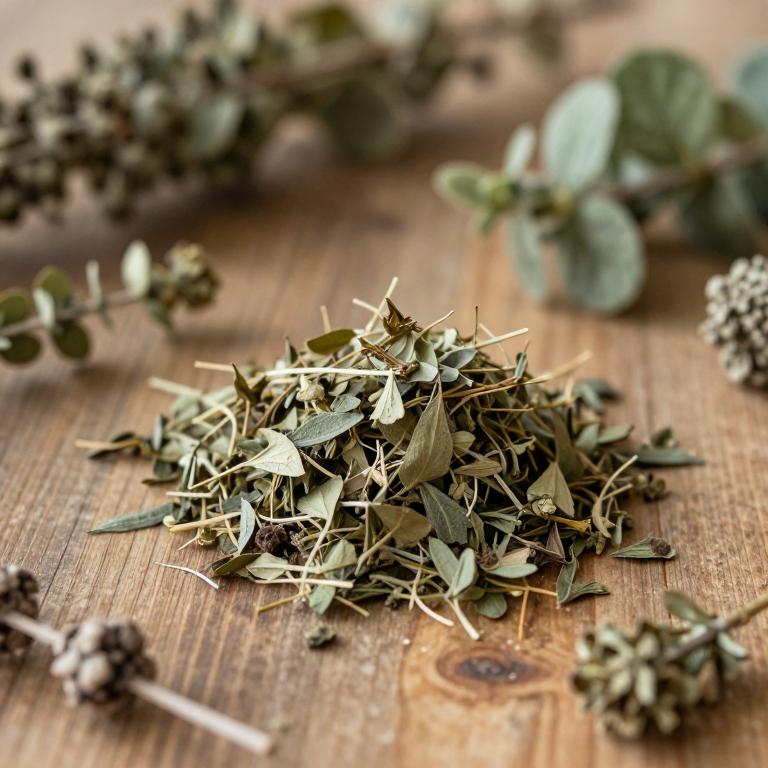
Names and Synonyms
Scientific Names
Accepted name
Callitriche stagnalisDistribution
This plant, known as Callitriche stagnalis, exhibits a specific distribution across several regions of Northern Europe. It can be found growing within the borders of Denmark and Finland. Additionally, the species is documented in the coastal and inland areas of Great Britain. Its presence also extends to the island of Iceland. Finally, the plant is distributed throughout the landscape of Ireland.
| Region | Area |
|---|---|
| Northern Europe | Denmark |
| Northern Europe | Finland |
| Northern Europe | Great Britain |
| Northern Europe | Iceland |
| Northern Europe | Ireland |
| Northern Europe | Norway |
| Northern Europe | Svalbard |
| Northern Europe | Sweden |
| Middle Europe | Austria |
| Middle Europe | Belgium |
Sources: The World Checklist of Vascular Plants (WCVP)
Botanical Identification
Ecology
The ecology of Callitriche stagnalis is characterized by a remarkably broad altitudinal distribution, spanning from lowlands at 10 m AMSL to extreme high-altitude environments reaching a maximum of 4200 m AMSL, with a mean elevation of approximately 3025 m AMSL. This species thrives within diverse ecological settings, specifically occupying habitats such as Campo de Altitude and Floresta Ombrófila Mista. Its ability to persist across such a vast elevational gradient suggests significant adaptability to varying thermal regimes and atmospheric pressures, ranging from tropical lowland conditions to the harsh, high-altitude climates of montane grasslands and mixed ombrophilous forests.
- Elevational range max:
- 4200 m AMSL
- Elevational range mean:
- 3025 m AMSL
- Elevational range min:
- 10 m AMSL
- Habitat :
- Campo de Altitude, Floresta Ombrófila Mista
Life history
The life history of Callitriche stagnalis is characterized by an annual lifecycle, completing its entire developmental process from germination to seed production within a single growing season. As a plant adapted to specific aquatic or semi-aquatic niches, it exhibits a life form classified as both a cryptophyte and a chamaephyte, reflecting its specialized survival strategies in its habitat. Furthermore, the plant maintains an evergreen deciduousness, retaining its functional foliage throughout its active period until the conclusion of its seasonal cycle.
- Deciduousness :
- evergreen
- Life form :
- chamaephyte
- Life form :
- cryptophyte
- Lifecycle :
- annual
Morphology
The morphology of Callitriche stagnalis is characterized by its growth form as a non-woody herb and forb. It is an aquatic plant that functions as a self-supporting organism rather than a climber or a vine, and it exists as an independent species without parasitic behavior. The plant is terrestrial in its epiphytic classification and maintains a relatively low stature, with a plant height ranging from a minimum of 0.05 m to a maximum of 1.2 m, though the mean height is approximately 0.25 m. Additionally, the shoot length can reach a maximum of 50 cm.
- Aquatic :
- aquatic
- Climber :
- self-supporting
- Epiphyte :
- terrestrial
- Growth form :
- herb
- Growth form :
- forb
- Parasite :
- independent
- Plant height max:
- 1.2 m
- Plant height mean:
- 0.25 m
- Plant height min:
- 0.05 m
- Shoot length max:
- 50 cm
- Woodiness :
- non-woody
Physiology
The physiology of Callitriche stagnalis is characterized by a C3 photosynthetic pathway, reflecting its metabolic strategy for carbon fixation. The plant exhibits a non-carnivorous nutritional profile and does not function as a nitrogen fixer. Morphologically, the leaves are arranged in a rosette pattern and possess an elliptic form. The leaf dimensions show significant variability, with a mean length of 0.75 cm (ranging from a minimum of 0.2 cm to a maximum of 2.5 cm) and a mean width of 0.3 cm (ranging from 0.1 cm to 0.8 cm). These dimensions contribute to a mean leaf size of 0.15417 cm², while the Specific Leaf Area (SLA) averages 322.23 cm²/g, indicating the structural relationship between its leaf surface area and its dry mass.
- Carnivory :
- non-carnivorous
- Leaf arrangement :
- rosette
- Leaf form :
- elliptic
- Leaf length max:
- 2.5 cm
- Leaf length mean:
- 0.75 cm
- Leaf length min:
- 0.2 cm
- Leaf size mean:
- 0.15417 cm²
- Leaf width max:
- 0.8 cm
- Leaf width mean:
- 0.3 cm
- Leaf width min:
- 0.1 cm
- Nitrogen fixer :
- no
- Photosynthetic pathway :
- C3
- Specific Leaf Area (SLA) mean:
- 322.23 cm²/g
Reproduction
The reproduction of Callitriche stagnalis is characterized by a sexual process through bisexual flowers, with asexual reproduction being entirely absent. The flowering period typically commences in April and concludes in July, though it can be variable. Pollination is achieved via an abiotic syndrome, specifically utilizing water as the primary medium. Following successful pollination, the plant produces brown fruits that vary in size, with a mean length of 0.175 cm (ranging from 0.15 to 0.2 cm) and a mean width of 0.2 cm (ranging from 0.12 to 0.2 cm). Each fruit is prolific, containing between 101 and 1000 seeds. These seeds are minute, possessing a consistent mean length of 1.5 mm and a mean mass of approximately 6.533 x 10⁻⁵ g (with a range between 6 x 10⁻⁵ g and 6.533 x 10⁻⁵ g). Self-fertilization is noted to be absent in this species. Regarding dispersal, the plant employs an unspecialized strategy, while also exhibiting epizoochorous tendencies to spread its seeds.
- Dispersal syndrome :
- unspecialized
- Dispersal syndrome :
- epizoochorous
- Flowering time :
- Apr
- Flowering time :
- Jul
- Fruit colour :
- brown
- Fruit length max:
- 0.15 cm
- Fruit length mean:
- 0.175 cm
- Fruit width max:
- 0.2 cm
- Fruit width min:
- 0.12 cm
- Pollination syndrome :
- water
- Pollination syndrome :
- abiotic
- Reproduction asexual :
- absent
- Reproduction sexual :
- bisexual
- Seed length mean:
- 1.5 mm
- Seed mass max:
- 6e-05 g
- Seed mass mean:
- 6.53333333333333e-05 g
- Seeds_per_fruit :
- 101-1000
- Self fertilization :
- absent
Sources: Global Inventory of Floras and Traits (GIFT)
Chemicals
Callitriche stagnalis has 1 reported phytochemicals identified across 0 scientific publications and several other databases. The most consistently reported chemicals include Aucubin.
| Chemical | Supporting sources | Consensus |
|---|---|---|
| Aucubin | 1 supporting sources | ★☆☆☆☆ |
Aucubin
- Dr. Duke
Activities
Callitriche stagnalis has 19 reported activities identified across 0 scientific publications and several other databases. The most consistently reported activities include Antibacterial, Antidote (Amanitin), Antiedemic, Antiinflammatory, Antileukemic.
| Activity | Supporting sources | Consensus |
|---|---|---|
| Antibacterial | 1 supporting sources | ★☆☆☆☆ |
| Antidote (Amanitin) | 1 supporting sources | ★☆☆☆☆ |
| Antiedemic | 1 supporting sources | ★☆☆☆☆ |
| Antiinflammatory | 1 supporting sources | ★☆☆☆☆ |
| Antileukemic | 1 supporting sources | ★☆☆☆☆ |
| Antioxidant | 1 supporting sources | ★☆☆☆☆ |
| Antiprolactin | 1 supporting sources | ★☆☆☆☆ |
| Antistaphylococcic | 1 supporting sources | ★☆☆☆☆ |
| Candidicide | 1 supporting sources | ★☆☆☆☆ |
| Cathartic | 1 supporting sources | ★☆☆☆☆ |
Antibacterial
- Dr. Duke
Antidote (Amanitin)
- Dr. Duke
Antiedemic
- Dr. Duke
Antiinflammatory
- Dr. Duke
Antileukemic
- Dr. Duke
Antioxidant
- Dr. Duke
Antiprolactin
- Dr. Duke
Antistaphylococcic
- Dr. Duke
Candidicide
- Dr. Duke
Cathartic
- Dr. Duke