beauty-berry
Callicarpa · Accepted scientific name
Scientific literature: Very Sparse (16 studies) · ★☆☆☆☆
Beauty-berry, scientifically known as Callicarpa, is a versatile shrub celebrated for its striking, vibrant purple fruit clusters. Beyond its ornamental appeal, this plant holds significant medicinal value in traditional practices, often utilized for its anti-inflammatory and antimicrobial properties to support skin health and alleviate various minor ailments naturally.
- Family
- Lamiaceae
- Native range
- Africa
- Parts used
- Not available
- Common names
- Beauty-Berry · Beautyberries
- Scientific synonyms
- Amictonis · Sphondylococcum · 5 more
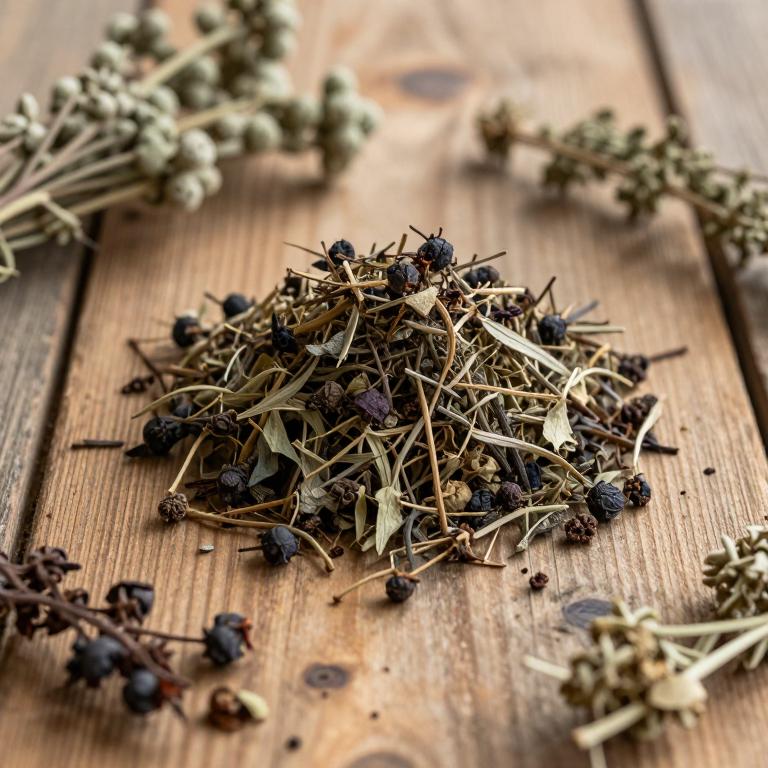
Names and Synonyms
Common Names
- beauty-berry
- Beautyberries
Scientific Names
Accepted name
CallicarpaSynonyms
- Amictonis
- Sphondylococcum
- Aganon
- Spondylococcos
- Illa
- Porphyra
- Mamanira
Regional and Traditional Names
Spanish:
- Spondylococcos
- Sphondylococcum
- Rodschiedia
- Amictonis
- Beautyberry
- Aganon
- Tomex
- Geunsia
- Burchardia
French:
- Callicarpe
- Callicarpes
Sources: Wikidata, Catalogue of Life
Taxonomical Classification
This plant belongs to the kingdom Plantae and the phylum Streptophyta, falling under the class Equisetopsida and subclass Magnoliidae. Within the order Lamiales and the family Lamiaceae, it is classified under the genus Callicarpa.
| Rank | Classification |
|---|---|
| Kingdom | Plantae |
| Phylum | Streptophyta |
| Class | Equisetopsida |
| Subclass | Magnoliidae |
| Order | Lamiales |
| Family | Lamiaceae |
| Genus | Callicarpa |
Sources: The World Checklist of Vascular Plants (WCVP)
Distribution
This plant exhibits a diverse geographical distribution spanning across significant regions of Asia and the Indian Ocean. Within China, its presence is noted in the South-Central areas, the island of Hainan, and the northern region of Manchuria. Beyond the Asian continent, the species extends into the Western Indian Ocean. Specifically, it can be found growing in the diverse ecosystems of Madagascar. Additionally, its range includes the island of Réunion, completing its broad environmental footprint.
| Region | Area |
|---|---|
| Western Indian Ocean | Madagascar |
| Western Indian Ocean | Réunion |
| China | China South-Central |
| China | Hainan |
| China | Manchuria |
| China | China North-Central |
| China | China Southeast |
| China | Tibet |
| Eastern Asia | Japan |
| Eastern Asia | Korea |
Sources: The World Checklist of Vascular Plants (WCVP)
Chemicals
Callicarpa has 3 reported phytochemicals identified across 0 scientific publications and several other databases. The most consistently reported chemicals include Flavonoids, Terpenoids, triterpenoids.
| Chemical | Supporting sources | Consensus |
|---|---|---|
| Flavonoids | 1 supporting sources | ★☆☆☆☆ |
| Terpenoids | 1 supporting sources | ★☆☆☆☆ |
| triterpenoids | 1 supporting sources | ★☆☆☆☆ |
Flavonoids
- Journal of ethnopharmacology
Terpenoids
- Journal of ethnopharmacology
triterpenoids
- Journal of ethnopharmacology
Activities
Callicarpa has 6 reported activities identified across 0 scientific publications and several other databases. The most consistently reported activities include Analgesic, Antimicrobial, Antioxidant, Antitubercular, Hemostatic.
| Activity | Supporting sources | Consensus |
|---|---|---|
| Analgesic | 1 supporting sources | ★☆☆☆☆ |
| Antimicrobial | 1 supporting sources | ★☆☆☆☆ |
| Antioxidant | 1 supporting sources | ★☆☆☆☆ |
| Antitubercular | 1 supporting sources | ★☆☆☆☆ |
| Hemostatic | 1 supporting sources | ★☆☆☆☆ |
| Neuroprotective | 1 supporting sources | ★☆☆☆☆ |
Analgesic
- Journal of ethnopharmacology
Antimicrobial
- Journal of ethnopharmacology
Antioxidant
- Journal of ethnopharmacology
Antitubercular
- Journal of ethnopharmacology
Hemostatic
- Journal of ethnopharmacology
Neuroprotective
- Journal of ethnopharmacology
Conditions
Callicarpa has 6 reported investigations on conditions identified across 0 scientific publications and several other databases. The most consistently reported conditions include acne vulgaris, hematemesis, hematuria, inflammation, rheumatism.
| Condition | Supporting sources | Consensus |
|---|---|---|
| Acne vulgaris | 1 supporting sources | ★☆☆☆☆ |
| Hematemesis | 1 supporting sources | ★☆☆☆☆ |
| Hematuria | 1 supporting sources | ★☆☆☆☆ |
| Inflammation | 1 supporting sources | ★☆☆☆☆ |
| Rheumatism | 1 supporting sources | ★☆☆☆☆ |
| Scrofula | 1 supporting sources | ★☆☆☆☆ |
Acne vulgaris
- Journal of ethnopharmacology
Hematemesis
- Journal of ethnopharmacology
Hematuria
- Journal of ethnopharmacology
Inflammation
- Journal of ethnopharmacology
Rheumatism
- Journal of ethnopharmacology
Scrofula
- Journal of ethnopharmacology