Asian beautyberry
Callicarpa dolichophylla · Accepted scientific name
Scientific literature: Very Sparse (8 studies) · ★☆☆☆☆
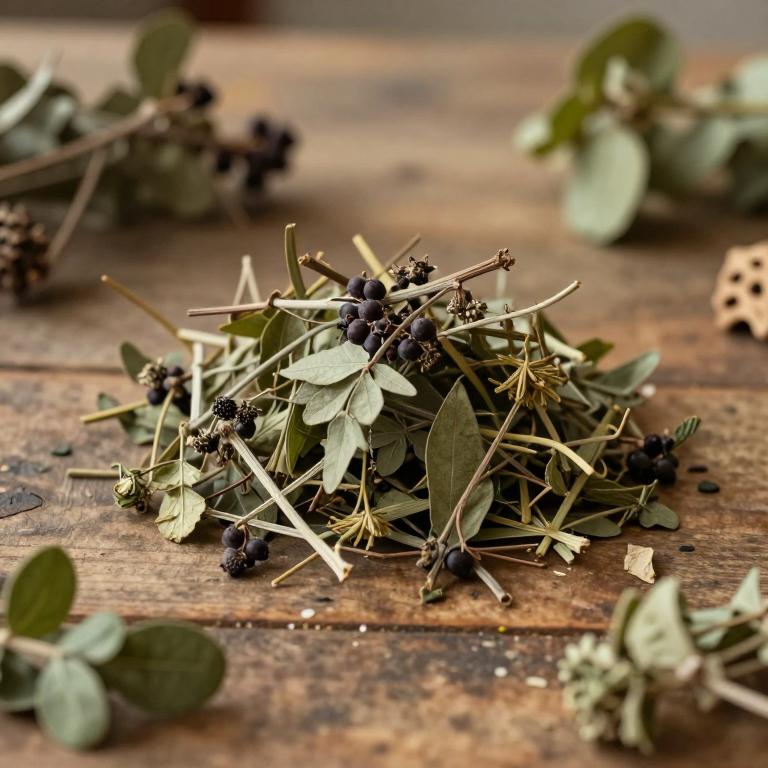
Asian beautyberry, scientifically known as Callicarpa dolichophyllia, is a distinctive medicinal shrub native to various Asian regions. Renowned for its vibrant berries and elongated leaves, this plant holds significant ethnobotanical value. It is traditionally utilized in herbal remedies to address diverse ailments, showcasing its profound importance in natural medicine.
- Family
- Lamiaceae
- Native range
- Asia-Temperate
- Parts used
- Leaf
- Common names
- Asian Beautyberry
- Scientific synonyms
- Callicarpa Longifolia Var. Longissima · Callicarpa Longissima F. Subglabra · 2 more
Names and Synonyms
Common Names
- Asian beautyberry
Scientific Names
Accepted name
Callicarpa dolichophyllaSynonyms
- Callicarpa longifolia var. longissima
- Callicarpa longissima f. subglabra
- Callicarpa takakumensis
- Callicarpa longissima
Sources: Wikidata, Catalogue of Life
Taxonomical Classification
This plant belongs to the kingdom Plantae and is classified under the phylum Streptophyta within the class Equisetopsida. As a member of the subclass Magnoliidae and the order Lamiales, it falls under the family Lamiaceae. Finally, it is categorized within the genus Callicarpa.
| Rank | Classification |
|---|---|
| Kingdom | Plantae |
| Phylum | Streptophyta |
| Class | Equisetopsida |
| Subclass | Magnoliidae |
| Order | Lamiales |
| Family | Lamiaceae |
| Genus | Callicarpa |
Sources: The World Checklist of Vascular Plants (WCVP)
Distribution
This plant exhibits a wide geographical range across several key regions in East Asia. Within China, its distribution spans the South-Central, Southeast, and Hainan areas. Moving further east, the species is also documented as occurring in Japan. Additionally, its presence extends to the Nansei-shotō islands. Together, these locations define the specific ecological footprint of Callicarpa dolichophyllas.
| Region | Area |
|---|---|
| China | China South-Central |
| China | Hainan |
| China | China Southeast |
| Eastern Asia | Japan |
| Eastern Asia | Nansei-shoto |
| Eastern Asia | Taiwan |
| Indo-China | Vietnam |
| Malesia | Philippines |
Sources: The World Checklist of Vascular Plants (WCVP)
Botanical Identification
Life history
The life history of Callicarpa dolichophyllia is characterized by its structural classification as a phanerophyte, indicating that its perennating buds are located on aerial branches well above the soil surface, allowing it to maintain a robust woody stature throughout its lifecycle. Within this framework, the species exhibits a life form categorized as a nanophanerophyte, signifying that while it maintains a perennial woody structure, it typically develops as a relatively small shrub rather than a large tree. This growth habit allows the plant to thrive in its specific ecological niche, utilizing its elevated branching system to optimize light interception and reproductive success. Through its perennial existence, the plant undergoes seasonal cycles of vegetative growth and flowering, relying on its woody architecture to survive unfavorable periods and emerge successfully in subsequent growing seasons.
- Life form :
- nanophanerophyte
- Life form :
- phanerophyte
Morphology
The morphology of Callicarpa dolichophylla is characterized by its distinct growth form as a woody tree. Unlike climbing species, it is a self-supporting plant that does not function as a climber, whether in an obligatory or facultative capacity. It is an independent organism, showing no parasitic behavior, and maintains a terrestrial existence rather than acting as an epiphyte. The structural integrity of the plant is defined by its woody nature, which supports its upright, tree-like habit.
- Climber :
- self-supporting
- Epiphyte :
- terrestrial
- Growth form :
- tree
- Parasite :
- independent
- Woodiness :
- woody
Sources: Global Inventory of Floras and Traits (GIFT)
Plant Parts
Callicarpa dolichophylla has 1 reported plant parts identified across 1 scientific publications and several other databases that are studied for medicinal purposes. The most consistently reported plant part include leaf.
| Plant part | Supporting sources | Consensus |
|---|---|---|
| Leaf | 1 supporting sources | ★☆☆☆☆ |
Leaf
- Journal of natural medicines
Chemicals
Callicarpa dolichophylla has 3 reported phytochemicals identified across 1 scientific publications and several other databases. The most consistently reported chemicals include carnosol, Carnosic acid, Rosmanol.
| Chemical | Supporting sources | Consensus |
|---|---|---|
| carnosol | 3 supporting sources | ★★☆☆☆ |
| Carnosic acid | 2 supporting sources | ★☆☆☆☆ |
| Rosmanol | 1 supporting sources | ★☆☆☆☆ |
carnosol
- Molecules (Basel, Switzerland)
- Transplantation proceedings
- Journal of natural medicines
Carnosic acid
- Transplantation proceedings
- Journal of natural medicines
Rosmanol
- Molecules (Basel, Switzerland)
Preparations
Callicarpa dolichophylla has 2 reported preparations identified across 1 scientific publications and several other databases. The most consistently reported preparations include ethanolic extract of the leaves of Callicarpa longissima, extract.
| Preparation | Supporting sources | Consensus |
|---|---|---|
| Ethanolic extract of the leaves of callicarpa longissima | 1 supporting sources | ★☆☆☆☆ |
| Extract | 1 supporting sources | ★☆☆☆☆ |
Ethanolic extract of the leaves of callicarpa longissima
- Journal of natural medicines
Extract
- Transplantation proceedings