American beautyberry
Callicarpa americana · Accepted scientific name
Scientific literature: Very Extensive (249 studies) · ★★★★★
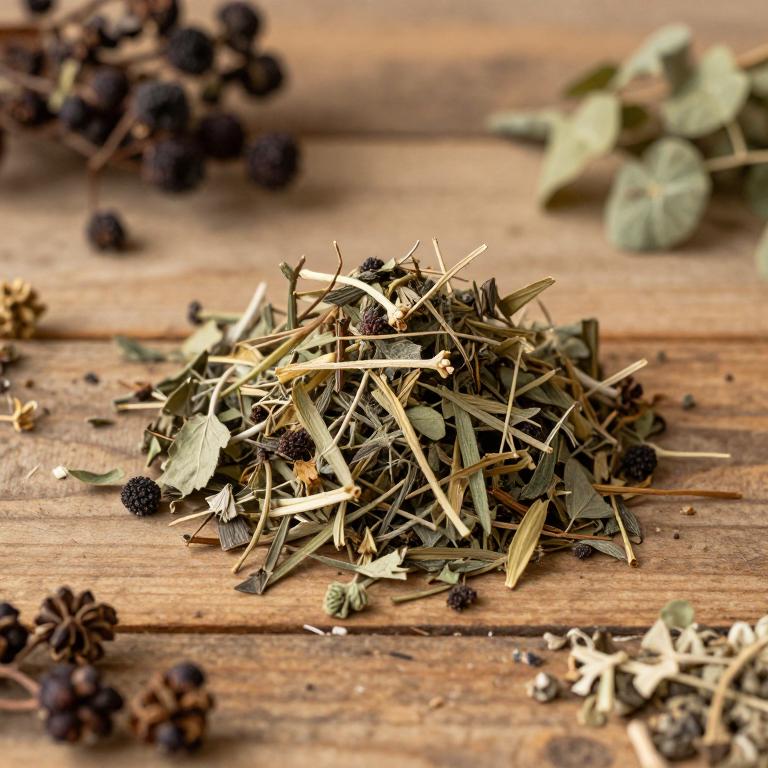
American beautyberry, scientifically known as Callicarpa americana, is a striking deciduous shrub native to the southeastern United States. Renowned for its vibrant, magenta-colored berry clusters, it serves as a vital food source for wildlife. Beyond its ornamental appeal, this plant possesses traditional medicinal properties used to soothe skin irritations.
Names and Synonyms
Common Names
- American Beautyberry
- American beauty-berry
- French-mulberry
- beauty-berry
Scientific Names
Accepted name
Callicarpa americanaSynonyms
- Callicarpa americana var. alba
- Johnsonia americana
- Callicarpa americana var. purpurea
- Callicarpa americana f. lactea
- Callicarpa americana var. lactea
- Callicarpa serrata
- Callicarpa viburnifolia
- Burchardia americana
- Burchardia callicarpa
Regional and Traditional Names
German:
- Amerikanische Schönfrucht
- Amerikanische Schönfrucht
French:
- Callicarpe d'Amérique
- Callicarpe d'Amérique
Sources: Wikidata, Catalogue of Life
Taxonomical Classification
This plant belongs to the kingdom Plantae and the phylum Streptophyta. Within the class Equisetopsida and subclass Magnoliidae, it is classified under the order Lamiales and the family Lamiaceae. Finally, its taxonomic designation is completed by the genus Callicarpa.
| Rank | Classification |
|---|---|
| Kingdom | Plantae |
| Phylum | Streptophyta |
| Class | Equisetopsida |
| Subclass | Magnoliidae |
| Order | Lamiales |
| Family | Lamiaceae |
| Genus | Callicarpa |
Sources: The World Checklist of Vascular Plants (WCVP)
Distribution
This plant exhibits a diverse geographical distribution across several regions of the United States. In the North-Central region, it can be found growing in Missouri and Oklahoma. Moving toward the South-Central area, the species is also present in Texas. Its range extends into the Southeastern United States, where it is common in Alabama. Finally, it continues its southeastern presence within the state of Arkansas.
| Region | Area |
|---|---|
| North-Central U.S.A. | Missouri |
| North-Central U.S.A. | Oklahoma |
| South-Central U.S.A. | Texas |
| Southeastern U.S.A. | Alabama |
| Southeastern U.S.A. | Arkansas |
| Southeastern U.S.A. | Florida |
| Southeastern U.S.A. | Georgia |
| Southeastern U.S.A. | Kentucky |
| Southeastern U.S.A. | Louisiana |
| Southeastern U.S.A. | Maryland |
Sources: The World Checklist of Vascular Plants (WCVP)
Botanical Identification
Life history
The life history of Callicarpa americana is characterized by its status as a perennial organism, ensuring its long-term presence within its ecological niche through repeated seasonal cycles. In terms of its structural growth strategy and life form, the plant is classified as a phanerophyte, as it maintains its conductive tissues and buds well above the soil surface, typically developing into a woody shrub. Additionally, within specific growth classifications, it can be described as a nanophanerophyte, reflecting its stature and the height at which its perennial buds are positioned. This life cycle allows the plant to establish a robust woody framework that can withstand seasonal variations while consistently producing its characteristic medicinal properties over multiple years.
- Life form :
- nanophanerophyte
- Life form :
- phanerophyte
- Lifecycle :
- perennial
Morphology
The morphology of Callicarpa americana is characterized by a woody growth form, primarily functioning as a self-supporting shrub. It typically reaches an average plant height of approximately 1.8 m. As a terrestrial species, it is not aquatic or an epiphyte, and it functions as an independent organism rather than a parasite. In terms of its structural habit, the plant is strictly self-supporting, lacking any climbing, vine, or liana tendencies.
- Aquatic :
- terrestrial
- Climber :
- self-supporting
- Epiphyte :
- terrestrial
- Growth form :
- shrub
- Parasite :
- independent
- Plant height mean:
- 1.8 m
- Woodiness :
- woody
Physiology
The physiology of Callicarpa americana is characterized by a C3 photosynthetic pathway, which dictates its metabolic processes and environmental adaptations. As a C3 plant, it utilizes the Calvin cycle to fix atmospheric carbon dioxide directly through the enzyme RuBisCO, a process that is highly efficient in the temperate to subtropical climates where the species typically thrives. This metabolic strategy necessitates a reliance on moderate temperatures and sufficient moisture, as the plant must manage photorespiration—a process that occurs when RuBisCO binds with oxygen instead of carbon dioxide—especially during periods of heat or water stress. To mitigate these physiological challenges, the plant employs various transpiration controls through its stomatal regulation to maintain turgor pressure and optimize gas exchange. Furthermore, its physiological vigor is supported by an efficient vascular system that facilitates the transport of water and nutrients to support its woody structure and the development of its characteristic drupes.
- Photosynthetic pathway :
- C3
Reproduction
The reproduction of Callicarpa americana is characterized by a specific seasonal flowering window and a distinct range of seed morphology. The flowering period typically commences in June and concludes in July, although the timing can be variable depending on environmental conditions. Following pollination, the plant produces seeds that exhibit significant variation in mass. The average seed mass is approximately 0.00591 g, but individual seeds can range from a minimum of 0.0002 g (2e-04 g) to a maximum of 0.01276 g.
- Flowering time :
- Jun
- Flowering time :
- Jul
- Seed mass max:
- 0.01276 g
- Seed mass mean:
- 0.00591 g
- Seed mass min:
- 2e-04 g
Sources: Global Inventory of Floras and Traits (GIFT)
Plant Parts
Callicarpa americana has 2 reported plant parts identified across 3 scientific publications and several other databases that are studied for medicinal purposes. The most consistently reported plant part include leaf, fruit.
| Plant part | Supporting sources | Consensus |
|---|---|---|
| Leaf | 2 supporting sources | ★☆☆☆☆ |
| Fruit | 1 supporting sources | ★☆☆☆☆ |
Leaf
- Frontiers in pharmacology
- Journal of natural products
Fruit
- Journal of natural products
Chemicals
Callicarpa americana has 63 reported phytochemicals identified across 3 scientific publications and several other databases. The most consistently reported chemicals include (E)-2-HEXENAL, (E)-beta-caryophyllene, (E)-beta-damascenone, (E,E)-2,4-Heptadienal, (Z)-3-HEXENOL.
| Chemical | Supporting sources | Consensus |
|---|---|---|
| (E)-2-HEXENAL | 1 supporting sources | ★☆☆☆☆ |
| (E)-beta-caryophyllene | 1 supporting sources | ★☆☆☆☆ |
| (E)-beta-damascenone | 1 supporting sources | ★☆☆☆☆ |
| (E,E)-2,4-Heptadienal | 1 supporting sources | ★☆☆☆☆ |
| (Z)-3-HEXENOL | 1 supporting sources | ★☆☆☆☆ |
| (Z)-3-hexenol acetate | 1 supporting sources | ★☆☆☆☆ |
| 1,8-Cineole | 1 supporting sources | ★☆☆☆☆ |
| 1-OCTEN-3-OL | 1 supporting sources | ★☆☆☆☆ |
| 2-HEXEN-1-OL | 1 supporting sources | ★☆☆☆☆ |
| 3-OCTANOL | 1 supporting sources | ★☆☆☆☆ |
(E)-2-HEXENAL
- Dr. Duke
(E)-beta-caryophyllene
- Dr. Duke
(E)-beta-damascenone
- Dr. Duke
(E,E)-2,4-Heptadienal
- Dr. Duke
(Z)-3-HEXENOL
- Dr. Duke
(Z)-3-hexenol acetate
- Dr. Duke
1,8-Cineole
- Dr. Duke
1-OCTEN-3-OL
- Dr. Duke
2-HEXEN-1-OL
- Dr. Duke
3-OCTANOL
- Dr. Duke
Activities
Callicarpa americana has 177 reported activities identified across 3 scientific publications and several other databases. The most consistently reported activities include Cytotoxic, (-)-Chronotropic, (-)-Inotropic, ACE-Inhibitor, AChE-Inhibitor.
| Activity | Supporting sources | Consensus |
|---|---|---|
| Cytotoxic | 2 supporting sources | ★☆☆☆☆ |
| (-)-Chronotropic | 1 supporting sources | ★☆☆☆☆ |
| (-)-Inotropic | 1 supporting sources | ★☆☆☆☆ |
| ACE-Inhibitor | 1 supporting sources | ★☆☆☆☆ |
| AChE-Inhibitor | 1 supporting sources | ★☆☆☆☆ |
| Acaricide | 1 supporting sources | ★☆☆☆☆ |
| Aldose-Reductase-Inhibitor | 1 supporting sources | ★☆☆☆☆ |
| Allelochemic | 1 supporting sources | ★☆☆☆☆ |
| Allelopathic | 1 supporting sources | ★☆☆☆☆ |
| Allergenic | 1 supporting sources | ★☆☆☆☆ |
Cytotoxic
- Dr. Duke
- Journal of natural products
(-)-Chronotropic
- Dr. Duke
(-)-Inotropic
- Dr. Duke
ACE-Inhibitor
- Dr. Duke
AChE-Inhibitor
- Dr. Duke
Acaricide
- Dr. Duke
Aldose-Reductase-Inhibitor
- Dr. Duke
Allelochemic
- Dr. Duke
Allelopathic
- Dr. Duke
Allergenic
- Dr. Duke
Conditions
Callicarpa americana has 4 reported investigations on conditions identified across 3 scientific publications and several other databases. The most consistently reported conditions include Methicillin-Resistant Staphylococcus aureus, acne vulgaris, fever, pruritis.
| Condition | Supporting sources | Consensus |
|---|---|---|
| Methicillin-resistant staphylococcus aureus | 1 supporting sources | ★☆☆☆☆ |
| Acne vulgaris | 1 supporting sources | ★☆☆☆☆ |
| Fever | 1 supporting sources | ★☆☆☆☆ |
| Pruritis | 1 supporting sources | ★☆☆☆☆ |
Methicillin-resistant staphylococcus aureus
- ACS infectious diseases
Acne vulgaris
- Frontiers in pharmacology
Fever
- Frontiers in pharmacology
Pruritis
- Frontiers in pharmacology
Preparations
Callicarpa americana has 1 reported preparations identified across 3 scientific publications and several other databases. The most consistently reported preparations include ethanol leaf extract.
| Preparation | Supporting sources | Consensus |
|---|---|---|
| Ethanol leaf extract | 1 supporting sources | ★☆☆☆☆ |
Ethanol leaf extract
- Frontiers in pharmacology