powderduff
Calliandra calothyrsus · Accepted scientific name
Scientific literature: Very Sparse (6 studies) · ★☆☆☆☆
Powderduff, scientifically known as Calliandra calothyrsus, is a versatile medicinal plant valued for its diverse therapeutic properties. Primarily used in traditional medicine, it offers significant healing potential for various ailments. Understanding its botanical characteristics and bioactive compounds is essential for exploring its role in holistic and modern pharmacology.
- Family
- Fabaceae
- Native range
- Asia-Tropical
- Parts used
- Leaf
- Common names
- Calliandra · Red Calliandra
- Scientific synonyms
- Anneslia Similis · Feuilleea Calothyrsa · 8 more
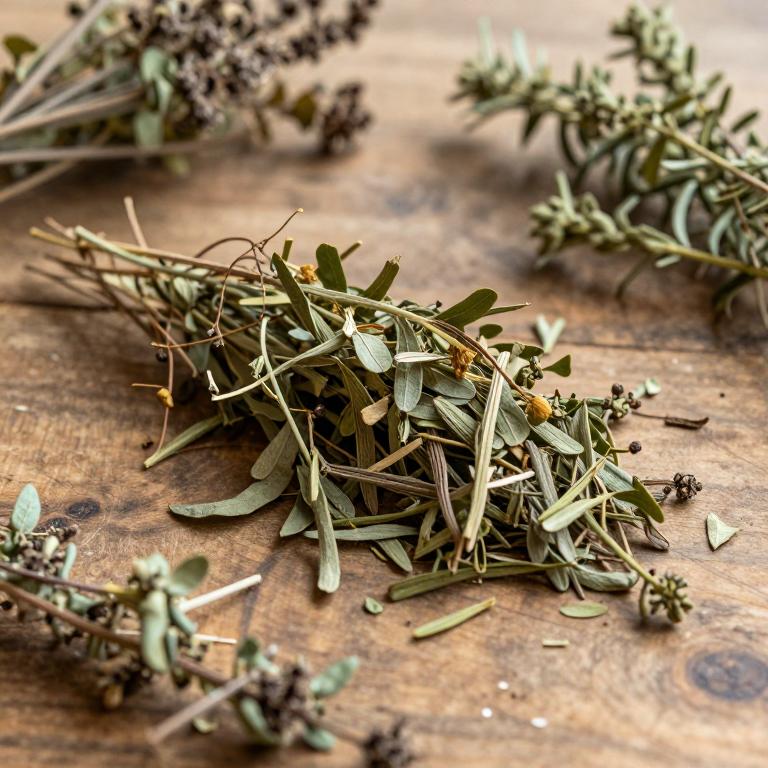
Names and Synonyms
Common Names
- calliandra
- red calliandra
Scientific Names
Accepted name
Calliandra calothyrsusSynonyms
- Anneslia similis
- Feuilleea calothyrsa
- Calliandra similis
- Calliandra confusa
- Anneslia confusa
- Calliandra acapulcensis
- Anneslia calothyrsa
- Calliandra houstoniana var. acapulcensis
- Calliandra houstoniana var. calothyrsus
- Anneslia acapulcensis
Regional and Traditional Names
Spanish:
- Barba de chivo
- Cabello de ángel
Sources: Wikidata, Catalogue of Life
Taxonomical Classification
This plant belongs to the kingdom Plantae and is classified within the phylum Streptophyta and the class Equisetopsida. Under the subclass Magnoliidae, it falls into the order Fabales and the family Fabaceae. Its specific taxonomic identity is defined by the genus Calliandra, which includes the medicinal species Calliandra calothyrsus.
| Rank | Classification |
|---|---|
| Kingdom | Plantae |
| Phylum | Streptophyta |
| Class | Equisetopsida |
| Subclass | Magnoliidae |
| Order | Fabales |
| Family | Fabaceae |
| Genus | Calliandra |
Sources: The World Checklist of Vascular Plants (WCVP)
Distribution
This plant exhibits a broad geographical distribution spanning across multiple diverse regions. Within the Indian Subcontinent, it can be found growing in both India and Bangladesh. Its presence extends into the Indo-China region, specifically documented in Myanmar. Moving further south, the species is also located within Malesia, particularly on the island of Jawa. Finally, its range reaches the North-Central Pacific, where it has established itself in Hawaii.
| Region | Area |
|---|---|
| Indian Subcontinent | Bangladesh |
| Indian Subcontinent | India |
| Indo-China | Myanmar |
| Malesia | Jawa |
| North-Central Pacific | Hawaii |
| Mexico | Mexico Northeast |
| Mexico | Mexico Gulf |
| Mexico | Mexico Northwest |
| Mexico | Mexico Southwest |
| Mexico | Mexico Southeast |
Sources: The World Checklist of Vascular Plants (WCVP)
Plant Parts
Calliandra calothyrsus has 1 reported plant parts identified across 1 scientific publications and several other databases that are studied for medicinal purposes. The most consistently reported plant part include leaf.
| Plant part | Supporting sources | Consensus |
|---|---|---|
| Leaf | 1 supporting sources | ★☆☆☆☆ |
Leaf
- Tropical animal health and production
Chemicals
Calliandra calothyrsus has 4 reported phytochemicals identified across 1 scientific publications and several other databases. The most consistently reported chemicals include Condensed Tannins, CT, Condensed Tannin, Tannin.
| Chemical | Supporting sources | Consensus |
|---|---|---|
| Condensed Tannins | 2 supporting sources | ★☆☆☆☆ |
| CT | 1 supporting sources | ★☆☆☆☆ |
| Condensed Tannin | 1 supporting sources | ★☆☆☆☆ |
| Tannin | 1 supporting sources | ★☆☆☆☆ |
Condensed Tannins
- Journal of applied microbiology
- The British journal of nutrition
CT
- The British journal of nutrition
Condensed Tannin
- Applied and environmental microbiology
Tannin
- Journal of applied microbiology
Preparations
Calliandra calothyrsus has 2 reported preparations identified across 1 scientific publications and several other databases. The most consistently reported preparations include leaf meal, roughage hay supplemented with calliandra (30%).
| Preparation | Supporting sources | Consensus |
|---|---|---|
| Leaf meal | 1 supporting sources | ★☆☆☆☆ |
| Roughage hay supplemented with calliandra (30%) | 1 supporting sources | ★☆☆☆☆ |
Leaf meal
- Tropical animal health and production
Roughage hay supplemented with calliandra (30%)
- Journal of applied microbiology