Calea urticifolia
Calea urticifolia · Accepted scientific name
Scientific literature: Very Sparse (17 studies) · ★☆☆☆☆
Calea urticiifolia, scientifically known as Calea urticiifolia, is a remarkable medicinal plant valued for its diverse therapeutic properties. Often found in specific tropical regions, this species is traditionally utilized in folk medicine to treat various ailments, offering significant botanical interest for researchers exploring its unique bioactive compounds and healing potential.
- Family
- Asteraceae
- Native range
- Africa
- Parts used
- Leaf
- Common names
- Not available
- Scientific synonyms
- Galinsoga Serrata · Mocinna Brachiata · 11 more
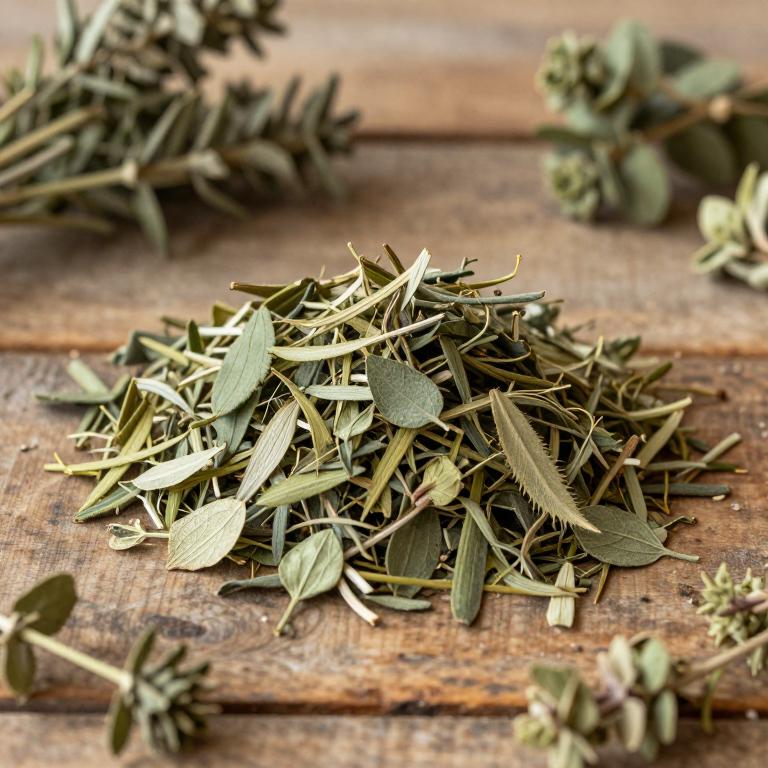
Names and Synonyms
Scientific Names
Accepted name
Calea urticifoliaSynonyms
- Galinsoga serrata
- Mocinna brachiata
- Calea axillaris var. urticifolia
- Calea cacosmoides
- Calea pellucidinerva
- Calea brachiata
- Caleacte urticifolia
- Galinsoga brachiata
- Mocinna serrata
- Solidago urticifolia
- Calea axillaris
- Calea urticifolia var. axillaris
- Calea urticifolia var. yucatanensis
Sources: Wikidata
Taxonomical Classification
This plant, Calea urticifolia, belongs to the kingdom Plantae and the phylum Streptophyta. Within the class Equisetopsida and subclass Magnoliidae, it is classified under the order Asterales. Finally, it is a member of the family Asteraceae and is identified under the genus Calea.
| Rank | Classification |
|---|---|
| Kingdom | Plantae |
| Phylum | Streptophyta |
| Class | Equisetopsida |
| Subclass | Magnoliidae |
| Order | Asterales |
| Family | Asteraceae |
| Genus | Calea |
Sources: The World Checklist of Vascular Plants (WCVP)
Distribution
This plant exhibits a wide geographical distribution spanning across two distinct continents. In Africa, its presence is noted within the West-Central Tropical region, specifically in the DR Congo. The species also thrives extensively throughout various regions of Mexico. Its Mexican range includes the central, northeastern, and northwestern territories. Additionally, the plant can be found growing within the Gulf region of Mexico.
| Region | Area |
|---|---|
| West-Central Tropical Africa | DR Congo |
| Mexico | Mexico Central |
| Mexico | Mexico Northeast |
| Mexico | Mexico Gulf |
| Mexico | Mexico Northwest |
| Mexico | Mexico Southwest |
| Mexico | Mexico Southeast |
| Central America | Belize |
| Central America | Costa Rica |
| Central America | El Salvador |
Sources: The World Checklist of Vascular Plants (WCVP)
Botanical Identification
Ecology
The ecology of Calea urticiifolia is characterized by its distribution across a broad altitudinal gradient, ranging from sea level up to an elevation of 2000 m AMSL. This species is primarily found within forest habitats, where it integrates into the complex structural layers of these ecosystems. Its ability to thrive from 0 to 2000 m AMSL indicates a significant ecological plasticity, allowing it to occupy diverse microclimates and varying environmental conditions found within forested landscapes at different mountain tiers.
- Elevational range max:
- 2000 m AMSL
- Elevational range min:
- 0 m AMSL
- Habitat :
- forest
Morphology
The morphology of Calea urticiifolia is characterized by a woody growth form, specifically manifesting as a shrub. It functions as an independent organism, exhibiting no parasitic tendencies, and is categorized as a terrestrial plant, ranging from aquatic to semiaquatic environments in certain contexts. Unlike climbing species such as lianas or vines, it is a self-supporting plant rather than an obligatory or facultative climber. Furthermore, it lacks epiphytic habits, maintaining a strictly terrestrial existence rather than acting as a holoepiphyte, hemiepiphyte, or any other form of epiphyte.
- Aquatic :
- terrestrial
- Climber :
- self-supporting
- Epiphyte :
- terrestrial
- Growth form :
- shrub
- Parasite :
- independent
- Woodiness :
- woody
Reproduction
The reproduction of Calea urticifolia is characterized by the production of minute seeds that vary in size, with a recorded seed mass ranging from a minimum of 2e-04 g to a maximum of 4e-04 g, resulting in a mean seed mass of 3e-04 g. These seeds are dispersed via an anemochorous syndrome, utilizing wind currents to facilitate their movement and colonization of new habitats.
- Dispersal syndrome :
- anemochorous
- Seed mass max:
- 4e-04 g
- Seed mass mean:
- 3e-04 g
- Seed mass min:
- 2e-04 g
Sources: Global Inventory of Floras and Traits (GIFT)
Plant Parts
Calea urticifolia has 1 reported plant parts identified across 2 scientific publications and several other databases that are studied for medicinal purposes. The most consistently reported plant part include leaf.
| Plant part | Supporting sources | Consensus |
|---|---|---|
| Leaf | 2 supporting sources | ★☆☆☆☆ |
Leaf
- Phytochemistry
- Journal of ethnopharmacology
Chemicals
Calea urticifolia has 6 reported phytochemicals identified across 2 scientific publications and several other databases. The most consistently reported chemicals include 2,3-Epoxyjuanislamin, CHLOROGENIC ACID, Calealactone B, Calein C, RUTIN.
| Chemical | Supporting sources | Consensus |
|---|---|---|
| 2,3-Epoxyjuanislamin | 1 supporting sources | ★☆☆☆☆ |
| CHLOROGENIC ACID | 1 supporting sources | ★☆☆☆☆ |
| Calealactone B | 1 supporting sources | ★☆☆☆☆ |
| Calein C | 1 supporting sources | ★☆☆☆☆ |
| RUTIN | 1 supporting sources | ★☆☆☆☆ |
| acacetin | 1 supporting sources | ★☆☆☆☆ |
2,3-Epoxyjuanislamin
- Phytochemistry
CHLOROGENIC ACID
- Evidence-based complementary and alternative medicine : eCAM
Calealactone B
- Phytochemistry
Calein C
- Phytochemistry
RUTIN
- Evidence-based complementary and alternative medicine : eCAM
acacetin
- Phytochemistry
Activities
Calea urticifolia has 1 reported activities identified across 2 scientific publications and several other databases. The most consistently reported activities include Antioxidant.
| Activity | Supporting sources | Consensus |
|---|---|---|
| Antioxidant | 1 supporting sources | ★☆☆☆☆ |
Antioxidant
- Journal of ethnopharmacology
Conditions
Calea urticifolia has 7 reported investigations on conditions identified across 2 scientific publications and several other databases. The most consistently reported conditions include diarrhea, fever, gastric ulcers, hyperglycemia, inflammation.
| Condition | Supporting sources | Consensus |
|---|---|---|
| Diarrhea | 1 supporting sources | ★☆☆☆☆ |
| Fever | 1 supporting sources | ★☆☆☆☆ |
| Gastric ulcers | 1 supporting sources | ★☆☆☆☆ |
| Hyperglycemia | 1 supporting sources | ★☆☆☆☆ |
| Inflammation | 1 supporting sources | ★☆☆☆☆ |
| Oxidative stress | 1 supporting sources | ★☆☆☆☆ |
| Type 2 diabetes | 1 supporting sources | ★☆☆☆☆ |
Diarrhea
- Phytochemistry
Fever
- Phytochemistry
Gastric ulcers
- Journal of ethnopharmacology
Hyperglycemia
- Evidence-based complementary and alternative medicine : eCAM
Inflammation
- Journal of ethnopharmacology
Oxidative stress
- Journal of ethnopharmacology
Type 2 diabetes
- Evidence-based complementary and alternative medicine : eCAM
Preparations
Calea urticifolia has 3 reported preparations identified across 2 scientific publications and several other databases. The most consistently reported preparations include extract, infusion, lyophilized aqueous extract.
| Preparation | Supporting sources | Consensus |
|---|---|---|
| Extract | 1 supporting sources | ★☆☆☆☆ |
| Infusion | 1 supporting sources | ★☆☆☆☆ |
| Lyophilized aqueous extract | 1 supporting sources | ★☆☆☆☆ |
Extract
- Evidence-based complementary and alternative medicine : eCAM
Infusion
- Evidence-based complementary and alternative medicine : eCAM
Lyophilized aqueous extract
- Journal of ethnopharmacology