Calceolaria pinifolia
Calceolaria pinifolia · Accepted scientific name
Scientific literature: Very Sparse (4 studies) · ★☆☆☆☆
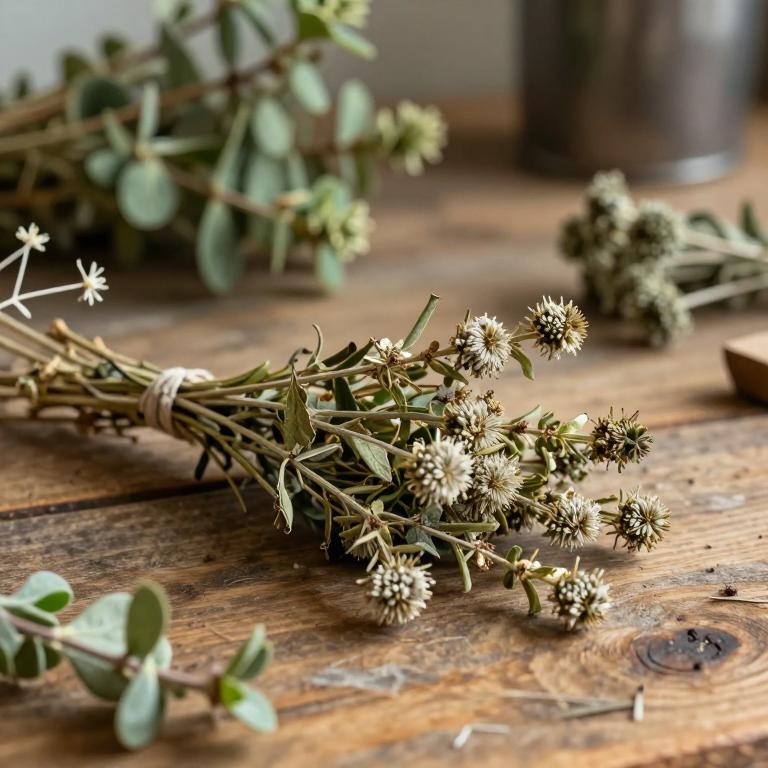
Calceolaria pinifolia, scientifically known as Calceolaria pinifolia, is a distinctive medicinal plant native to specific mountainous regions. Characterized by its unique, slipper-shaped flowers and fine, needle-like foliage, it is valued in traditional practices for its potential therapeutic properties and its remarkable ability to thrive in specialized ecological niches.
- Family
- Calceolariaceae
- Native range
- Southern America
- Parts used
- Not available
- Common names
- Not available
- Scientific synonyms
- Fagelia Pinifolia
Names and Synonyms
Scientific Names
Accepted name
Calceolaria pinifoliaSynonyms
- Fagelia pinifolia
Sources: Wikidata
Taxonomical Classification
This plant belongs to the kingdom Plantae and the phylum Streptophyta, specifically within the class Equisetopsida and subclass Magnoliidae. It is further classified under the order Lamiales and the family Calcefeuilleacea, falling into the genus Calceolaria.
| Rank | Classification |
|---|---|
| Kingdom | Plantae |
| Phylum | Streptophyta |
| Class | Equisetopsida |
| Subclass | Magnoliidae |
| Order | Lamiales |
| Family | Calceolariaceae |
| Genus | Calceolaria |
Sources: The World Checklist of Vascular Plants (WCVP)
Distribution
This plant exhibits a specific geographical distribution concentrated within the southern regions of South America. It can be found growing in the northwestern parts of Argentina. Additionally, the species is present throughout the central regions of Chile. Its habitat also extends further into the northern territories of Chile. Together, these areas define the natural range where this medicinal plant thrives.
| Region | Area |
|---|---|
| Southern South America | Argentina Northwest |
| Southern South America | Chile Central |
| Southern South America | Chile North |
Sources: The World Checklist of Vascular Plants (WCVP)
Botanical Identification
Ecology
The ecology of Calceolaria pinifolia is defined by its adaptation to high-altitude environments within the Andean mountain systems, where it thrives across a significant vertical gradient. This species is specifically distributed within an elevational range that extends from a minimum of 2600 m AMSL to a maximum of 4300 m AMSL. Occupying these high-montane and paramo-like habitats, the plant is subjected to intense solar radiation, fluctuating diurnal temperatures, and thinner atmospheric conditions characteristic of these upper reaches. Its presence within this specific altitudinal belt dictates its interaction with specialized high-elevation pollinators and its ability to withstand the unique microclimates found in these rugged, high-altitude ecosystems.
- Elevational range max:
- 4300 m AMSL
- Elevational range min:
- 2600 m AMSL
Life history
The life history of Calceolaria pinifolia is characterized by its classification as a perennial species, allowing it to persist through multiple growing seasons rather than completing its cycle in a single year. As a perennial, the plant establishes a long-term presence in its habitat, often developing robust root systems that support continuous growth and seasonal regeneration. This lifecycle enables the plant to endure varying environmental conditions, potentially undergoing periods of dormancy or slower growth during unfavorable periods before resuming active vegetative and reproductive phases. Through this sustained life strategy, Calceolaria pinifolia can engage in repeated flowering cycles, contributing to its long-term survival and reproductive success within its ecological niche.
- Lifecycle :
- perennial
Morphology
The morphology of Calceolaria pinifolia is characterized by its growth form as a non-woody herb, existing primarily as a forb. It functions as an independent organism, neither acting as a parasite nor an epiphyte, and maintains a terrestrial habitat rather than being aquatic or semiaquatic. In terms of its structural support and habit, the plant is self-supporting and does not exhibit climbing tendencies.
- Aquatic :
- terrestrial
- Climber :
- self-supporting
- Epiphyte :
- terrestrial
- Growth form :
- herb
- Parasite :
- independent
- Woodiness :
- non-woody
Reproduction
The reproduction of Calceolaria pinifolia is characterized by a highly uniform seed production profile, ensuring a consistent dispersal strategy for the species. The seeds produced by this plant exhibit a precise and stable mass with no observed variance across individual specimens. Specifically, the seed mass is constant at a mean value of 4e-05 g, which is mirrored by both the maximum and minimum recorded mass values of 4e-05 g. This lack of deviation in seed weight suggests a tightly regulated reproductive mechanism, where each seed is produced with identical energetic investment, facilitating a predictable pattern of germination and seedling establishment within its natural habitat.
- Seed mass mean:
- 4e-05 g
Sources: Global Inventory of Floras and Traits (GIFT)
Activities
Calceolaria pinifolia has 1 reported activities identified across 0 scientific publications and several other databases. The most consistently reported activities include Antibacterial.
| Activity | Supporting sources | Consensus |
|---|---|---|
| Antibacterial | 1 supporting sources | ★☆☆☆☆ |
Antibacterial
- Journal of natural products
Conditions
Calceolaria pinifolia has 3 reported investigations on conditions identified across 0 scientific publications and several other databases. The most consistently reported conditions include Bacillus subtilis, Escherichia coli, Staphylococcus aureus.
| Condition | Supporting sources | Consensus |
|---|---|---|
| Bacillus subtilis | 1 supporting sources | ★☆☆☆☆ |
| Escherichia coli | 1 supporting sources | ★☆☆☆☆ |
| Staphylococcus aureus | 1 supporting sources | ★☆☆☆☆ |
Bacillus subtilis
- Journal of natural products
Escherichia coli
- Journal of natural products
Staphylococcus aureus
- Journal of natural products