Sea Rocket
Cakile maritima · Accepted scientific name
Scientific literature: Very Sparse (13 studies) · ★☆☆☆☆
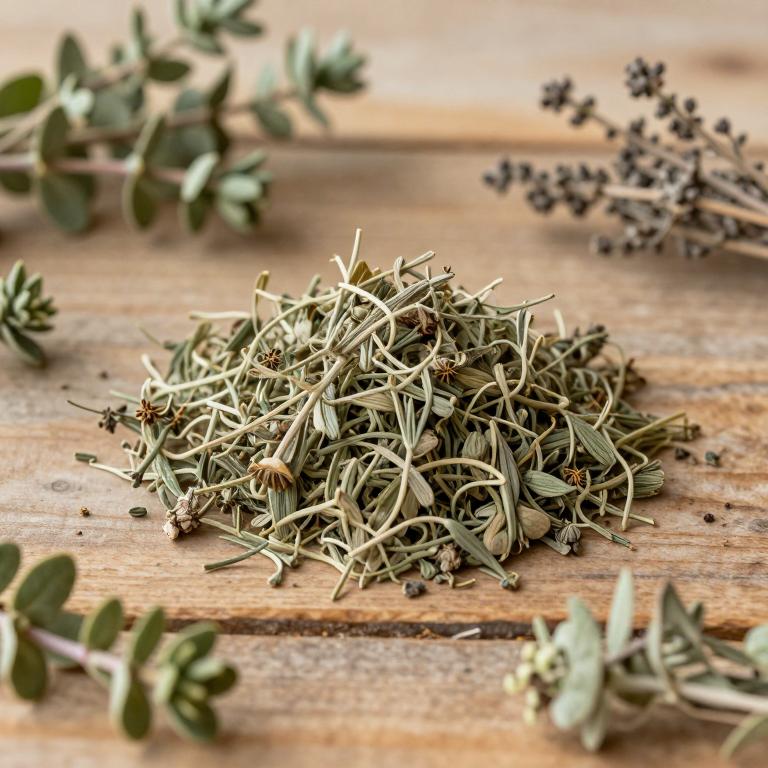
Sea Rocket, scientifically known as Cakile maritima, is a resilient succulent herb native to coastal sandy shores. Primarily found in maritime environments, this plant thrives in saline conditions. It possesses notable medicinal properties, traditionally utilized in various cultures for its antioxidant, anti-inflammatory, and antimicrobial benefits in herbal remedies.
Names and Synonyms
Common Names
- European sea-rocket
- Sea Rocket
- two-head sea rocket
- European Searocket
Scientific Names
Accepted name
Cakile maritimaSynonyms
- Rapistrum maritimum
- Rapistrum cakile
- Crucifera cakile
- Bunias cakile
Regional and Traditional Names
Spanish:
- Rábano de mar
- Oruga de mar
German:
- Europäischer Meersenf
- Europäischer Meersenf
- Europäischer Meersenf (Unterart)
- Strandrauke
French:
- Roquette de mer
- cakilier
- cakilier
- cakilier maritime
- caquillier maritime
- roquette de mer
Sources: Wikidata, Catalogue of Life
Taxonomical Classification
This plant belongs to the kingdom Plantae and is classified within the phylum Streptophyta and the class Equisetopsida. It is further organized under the subclass Magnoliidae and the order Brassicales, falling within the family Brassicaceae. Finally, its specific taxonomic identity is defined by the genus Cakile.
| Rank | Classification |
|---|---|
| Kingdom | Plantae |
| Phylum | Streptophyta |
| Class | Equisetopsida |
| Subclass | Magnoliidae |
| Order | Brassicales |
| Family | Brassicaceae |
| Genus | Cakile |
Sources: The World Checklist of Vascular Plants (WCVP)
Distribution
This plant, known as Cakile maritima, exhibits a specific distribution pattern across several Northern European regions. It can be found growing along the coastal areas of Denmark and Finland. Furthermore, its presence extends to the shores of Great Britain and Ireland. The species also inhabits the maritime environments of Norway. Collectively, these locations highlight the plant's preference for the northern coastal reaches of the continent.
| Region | Area |
|---|---|
| Northern Europe | Denmark |
| Northern Europe | Finland |
| Northern Europe | Great Britain |
| Northern Europe | Ireland |
| Northern Europe | Norway |
| Northern Europe | Sweden |
| Middle Europe | Belgium |
| Middle Europe | Czechia-Slovakia |
| Middle Europe | Germany |
| Middle Europe | Netherlands |
Sources: The World Checklist of Vascular Plants (WCVP)
Botanical Identification
Ecology
The ecology of Cakile maritima is defined by its specialized adaptation to coastal environments, primarily occurring within halophytic vegetation zones. It thrives in saline conditions where it serves as a key component of seaside plant communities. This species occupies a specific altitudinal niche, ranging from sea level up to a maximum elevation of 500 m AMSL.
- Elevational range max:
- 500 m AMSL
- Elevational range min:
- 0 m AMSL
- Habitat :
- halophytic vegetation
Life history
The life history of Cakile maritima is characterized by an annual lifecycle, meaning the plant completes its entire developmental process from germination to seed production within a single growing season. As a therophyte, its survival strategy relies on completing its life cycle rapidly and persisting through unfavorable conditions in the form of resistant seeds. This plant exhibits a deciduous nature, shedding its foliage as it reaches the end of its seasonal cycle. Morphologically, its classification as a therophyte ensures that the vegetative structure dies back completely at the end of the year, leaving only the seeds to await the next favorable period for regrowth.
- Deciduousness :
- deciduous
- Life form :
- therophyte
- Lifecycle :
- annual
Morphology
The morphology of Cakile maritima is characterized by its growth form as a non-woody herb and forb. As a self-supporting plant, it does not exhibit climbing or liana-like tendencies, instead maintaining an upright or spreading habit. It is a terrestrial species, functioning as an independent organism rather than a parasite or epiphyte. In terms of stature, the plant typically reaches a mean height of 0.204 m, though its size can vary significantly, with individual specimens ranging from a minimum height of 0.1 m to a maximum of 0.6 m.
- Aquatic :
- terrestrial
- Climber :
- self-supporting
- Epiphyte :
- terrestrial
- Growth form :
- herb
- Growth form :
- forb
- Parasite :
- independent
- Plant height max:
- 0.6 m
- Plant height mean:
- 0.204 m
- Plant height min:
- 0.1 m
- Woodiness :
- non-woody
Physiology
The physiology of Cakile maritima is characterized by a C3 photosynthetic pathway and a non-carnivorous nutritional strategy, functioning without the ability to fix nitrogen. The plant exhibits distinct succulence, an adaptive trait likely used for managing osmotic stress in its environment. Its leaf morphology is notably lobed, with leaf lengths ranging from a minimum of 3 cm to a maximum of 8 cm. The leaf width varies between 1 cm and 4 cm, resulting in a mean leaf width of 1.5 cm and a mean leaf size of approximately 8.8575 cm². Furthermore, the plant maintains a mean Specific Leaf Area (SLA) of 168.37 cm²/g, reflecting its structural investment in leaf tissue relative to its biomass.
- Carnivory :
- non-carnivorous
- Leaf form :
- lobed
- Leaf length max:
- 8 cm
- Leaf length min:
- 3 cm
- Leaf size mean:
- 8.8575 cm²
- Leaf width max:
- 4 cm
- Leaf width mean:
- 1.5 cm
- Leaf width min:
- 1 cm
- Nitrogen fixer :
- no
- Photosynthetic pathway :
- C3
- Specific Leaf Area (SLA) mean:
- 168.37 cm²/g
- Succulence :
- yes
Reproduction
The reproduction of Cakile maritima is characterized by a sexual process, as asexual reproduction is absent. The flowering period typically begins in February and concludes in June. The plant produces pink flowers that vary in length from a minimum of 0.4 cm to a maximum of 1 cm. The pollination syndrome is biotic, specifically utilizing insects, with bees serving as a key pollinator. Self-fertilization is present within the species, ensuring reproductive success. Following pollination, the plant develops a capsule-type fruit that is dehiscent. These fruits vary in size, with a mean length of 1.5 cm (ranging from 1 cm to 2.2 cm) and a mean width of 0.5 cm (ranging from 0.4 cm to 0.6 cm). The seeds produced have a mean mass of approximately 0.0233 g, with individual seed masses ranging from a minimum of 0.0042 g to a maximum of 0.03266 g. Finally, the dispersal syndrome is hydrochorous, meaning the seeds are primarily dispersed by water.
- Dehiscence :
- dehiscent
- Dispersal syndrome :
- hydrochorous
- Flower colour :
- pink
- Flower length max:
- 1 cm
- Flower length min:
- 0.4 cm
- Flowering time :
- Feb
- Flowering time :
- Jun
- Fruit length max:
- 2.2 cm
- Fruit length mean:
- 1.5 cm
- Fruit length min:
- 1 cm
- Fruit type :
- capsule
- Fruit width max:
- 0.6 cm
- Fruit width mean:
- 0.5 cm
- Fruit width min:
- 0.4 cm
- Pollination syndrome :
- insect
- Pollination syndrome :
- bee
- Pollination syndrome :
- biotic
- Reproduction asexual :
- absent
- Seed mass max:
- 0.03266 g
- Seed mass mean:
- 0.0233238786666667 g
- Seed mass min:
- 0.0042 g
- Self fertilization :
- present
Sources: Global Inventory of Floras and Traits (GIFT)
Chemicals
Cakile maritima has 10 reported phytochemicals identified across 0 scientific publications and several other databases. The most consistently reported chemicals include ANTHOCYANIN, CALCIUM, CHL, Carotenoid, Dianhydromannitol.
| Chemical | Supporting sources | Consensus |
|---|---|---|
| ANTHOCYANIN | 1 supporting sources | ★☆☆☆☆ |
| CALCIUM | 1 supporting sources | ★☆☆☆☆ |
| CHL | 1 supporting sources | ★☆☆☆☆ |
| Carotenoid | 1 supporting sources | ★☆☆☆☆ |
| Dianhydromannitol | 1 supporting sources | ★☆☆☆☆ |
| Gallic acid | 1 supporting sources | ★☆☆☆☆ |
| POTASSIUM | 1 supporting sources | ★☆☆☆☆ |
| PYRIDINE | 1 supporting sources | ★☆☆☆☆ |
| RUTIN | 1 supporting sources | ★☆☆☆☆ |
| pyrogallol | 1 supporting sources | ★☆☆☆☆ |
ANTHOCYANIN
- Physiologia plantarum
CALCIUM
- Physiologia plantarum
CHL
- Physiologia plantarum
Carotenoid
- Physiologia plantarum
Dianhydromannitol
- Scientific reports
Gallic acid
- Scientific reports
POTASSIUM
- Physiologia plantarum
PYRIDINE
- Scientific reports
RUTIN
- Scientific reports
pyrogallol
- Scientific reports
Activities
Cakile maritima has 1 reported activities identified across 0 scientific publications and several other databases. The most consistently reported activities include Antioxidant.
| Activity | Supporting sources | Consensus |
|---|---|---|
| Antioxidant | 1 supporting sources | ★☆☆☆☆ |
Antioxidant
- Immunological investigations
Conditions
Cakile maritima has 1 reported investigations on conditions identified across 0 scientific publications and several other databases. The most consistently reported conditions include colon adenocarcinomas.
| Condition | Supporting sources | Consensus |
|---|---|---|
| Colon adenocarcinomas | 1 supporting sources | ★☆☆☆☆ |
Colon adenocarcinomas
- Scientific reports
Preparations
Cakile maritima has 1 reported preparations identified across 0 scientific publications and several other databases. The most consistently reported preparations include methanol extract.
| Preparation | Supporting sources | Consensus |
|---|---|---|
| Methanol extract | 1 supporting sources | ★☆☆☆☆ |
Methanol extract
- Scientific reports