Byrsonima intermedia
Byrsonima intermedia · Accepted scientific name
Scientific literature: Very Sparse (25 studies) · ★☆☆☆☆
scientifically known as Byrsonima intermedia, is a versatile medicinal shrub native to the tropical regions of South America. Commonly valued in traditional folk medicine, this plant possesses significant therapeutic potential, frequently utilized for its anti-inflammatory, antimicrobial, and healing properties to treat various skin ailments and internal inflammatory conditions.
- Family
- Malpighiaceae
- Native range
- Southern America
- Parts used
- Leaf
- Common names
- Not available
- Scientific synonyms
- Byrsonima Intermedia F. Angustifolia · Byrsonima Intermedia F. Latifolia · 3 more
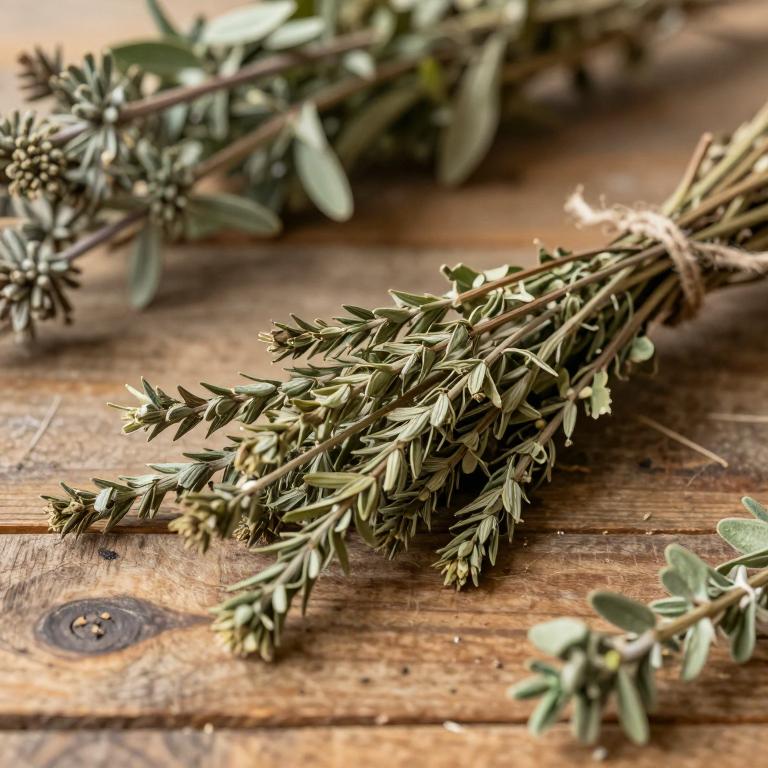
Names and Synonyms
Scientific Names
Accepted name
Byrsonima intermediaSynonyms
- Byrsonima intermedia f. angustifolia
- Byrsonima intermedia f. latifolia
- Byrsonima intermedia f. macrobotrya
- Byrsonima intermedia f. parvifolia
- Byrsonima bumeliifolia var. glabrifolia
Sources: Wikidata, Catalogue of Life
Taxonomical Classification
This plant belongs to the kingdom Plantae and is classified within the phylum Streptophyta and the class Equisetopsida. As a member of the subclass Magnoliidae and the order Malpighiales, it is further categorized under the family Malpighiaceae. Ultimately, its specific taxonomic identity is defined by the genus Byrsonima.
| Rank | Classification |
|---|---|
| Kingdom | Plantae |
| Phylum | Streptophyta |
| Class | Equisetopsida |
| Subclass | Magnoliidae |
| Order | Malpighiales |
| Family | Malpighiaceae |
| Genus | Byrsonima |
Sources: The World Checklist of Vascular Plants (WCVP)
Distribution
This plant exhibits a wide-ranging presence across the vast territory of Brazil. Its distribution covers the diverse landscapes of the Brazil North region and the Brazil Northeast area. Furthermore, it can be found growing throughout the Brazil West-Central territories. The species also extends its reach into the Brazil Southeast and the Brazil South regions. Consequently, this medicinal plant is widely distributed across nearly every major geographical zone in the country.
| Region | Area |
|---|---|
| Brazil | Brazil West-Central |
| Brazil | Brazil Northeast |
| Brazil | Brazil Southeast |
| Brazil | Brazil North |
| Brazil | Brazil South |
| Southern South America | Paraguay |
Sources: The World Checklist of Vascular Plants (WCVP)
Botanical Identification
Ecology
The ecology of Byrsonima intermedia is characterized by its presence within the Cerrado biome, where it adapts to the specific environmental conditions of this tropical savanna ecosystem. This species occupies a diverse altitudinal gradient, ranging from sea level up to a maximum elevation of 1000 m AMSL. This broad elevational range allows the plant to inhabit various microclimates within its native habitat, facilitating its distribution across different topographical landscapes within the Cerrado.
- Elevational range max:
- 1000 m AMSL
- Elevational range min:
- 0 m AMSL
- Habitat :
- Cerrado
Life history
The life history of Byrsonima intermedia is characterized by its status as a perennial species, allowing it to persist in its environment over multiple growing seasons. As a perennial, the plant does not complete its life cycle in a single year but instead maintains a continuous presence, often developing robust structures that facilitate long-term survival and repeated reproductive efforts. This extended lifecycle enables the plant to establish a stable foothold within its ecological niche, adapting to seasonal fluctuations and accumulating resources over time to support its growth and flowering phases across successive years.
- Lifecycle :
- perennial
Morphology
The morphology of Byrsonima intermedia is characterized by its woody growth form, primarily manifesting as a shrub or small tree that reaches a maximum plant height of 4 meters. As a self-supporting species, it does not exhibit climbing habits such as lianas or vines, nor does it function as an obligate or facultative climber. The plant is strictly terrestrial in its ecological habit, lacking aquatic or semiaquatic adaptations, and it does not function as an epiphyte (whether holoepiphyte or hemiepiphyte) or a parasite, maintaining an independent nutritional status. Its structural integrity is defined by its woody nature, which supports its stature within its terrestrial habitat.
- Aquatic :
- terrestrial
- Climber :
- self-supporting
- Epiphyte :
- terrestrial
- Growth form :
- tree
- Growth form :
- shrub
- Parasite :
- independent
- Plant height max:
- 4 m
- Woodiness :
- woody
Physiology
The physiology of Byrsonima intermedia is characterized by a C3 photosynthetic pathway, a metabolic strategy common to many woody shrubs in the Asteraceae family. Under this pathway, carbon fixation is initiated through the carboxylation of ribulose-1,5-bisphosphate (RuBP) by the enzyme RuBisCO, resulting in the immediate production of two molecules of 3-phosphoglycerate. This process occurs primarily within the mesophyll cells during daylight hours, facilitating the conversion of light energy into chemical energy through the Calvin cycle. Because it relies on the C3 pathway, the plant's gas exchange and water-use efficiency are closely tied to its stomatal conductance, where it must balance the intake of atmospheric carbon dioxide with the prevention of excessive transpirational water loss. This physiological framework dictates its resource allocation and growth patterns, particularly in its ability to manage photorespiration in varying environmental temperatures and light intensities.
- Photosynthetic pathway :
- C3
Sources: Global Inventory of Floras and Traits (GIFT)
Plant Parts
Byrsonima intermedia has 1 reported plant parts identified across 2 scientific publications and several other databases that are studied for medicinal purposes. The most consistently reported plant part include leaf.
| Plant part | Supporting sources | Consensus |
|---|---|---|
| Leaf | 2 supporting sources | ★☆☆☆☆ |
Leaf
- Journal of ethnopharmacology
- Brazilian journal of biology = Revista brasleira de biologia
Chemicals
Byrsonima intermedia has 6 reported phytochemicals identified across 2 scientific publications and several other databases. The most consistently reported chemicals include Flavonoids, Phenols, Proanthocyanidins, Triterpenes, sorbitol.
| Chemical | Supporting sources | Consensus |
|---|---|---|
| Flavonoids | 1 supporting sources | ★☆☆☆☆ |
| Phenols | 1 supporting sources | ★☆☆☆☆ |
| Proanthocyanidins | 1 supporting sources | ★☆☆☆☆ |
| Triterpenes | 1 supporting sources | ★☆☆☆☆ |
| sorbitol | 1 supporting sources | ★☆☆☆☆ |
| sucrose | 1 supporting sources | ★☆☆☆☆ |
Flavonoids
- Journal of ethnopharmacology
Phenols
- Frontiers in chemistry
Proanthocyanidins
- Frontiers in chemistry
Triterpenes
- Frontiers in chemistry
sorbitol
- Cryo letters
sucrose
- Cryo letters
Activities
Byrsonima intermedia has 6 reported activities identified across 2 scientific publications and several other databases. The most consistently reported activities include Antimicrobial, Antimutagenic, Antinociceptive, Antioxidant, Gastroprotective.
| Activity | Supporting sources | Consensus |
|---|---|---|
| Antimicrobial | 2 supporting sources | ★☆☆☆☆ |
| Antimutagenic | 1 supporting sources | ★☆☆☆☆ |
| Antinociceptive | 1 supporting sources | ★☆☆☆☆ |
| Antioxidant | 1 supporting sources | ★☆☆☆☆ |
| Gastroprotective | 1 supporting sources | ★☆☆☆☆ |
| Mutagenic | 1 supporting sources | ★☆☆☆☆ |
Antimicrobial
- Journal of ethnopharmacology
- BMC complementary and alternative medicine
Antimutagenic
- BMC complementary and alternative medicine
Antinociceptive
- Journal of ethnopharmacology
Antioxidant
- BMC complementary and alternative medicine
Gastroprotective
- Journal of ethnopharmacology
Mutagenic
- BMC complementary and alternative medicine
Conditions
Byrsonima intermedia has 5 reported investigations on conditions identified across 2 scientific publications and several other databases. The most consistently reported conditions include diarrhea, gastric ulcers, gastritis, gastrointestinal disorders, ulcers.
| Condition | Supporting sources | Consensus |
|---|---|---|
| Diarrhea | 1 supporting sources | ★☆☆☆☆ |
| Gastric ulcers | 1 supporting sources | ★☆☆☆☆ |
| Gastritis | 1 supporting sources | ★☆☆☆☆ |
| Gastrointestinal disorders | 1 supporting sources | ★☆☆☆☆ |
| Ulcers | 1 supporting sources | ★☆☆☆☆ |
Diarrhea
- Journal of ethnopharmacology
Gastric ulcers
- Journal of ethnopharmacology
Gastritis
- Evidence-based complementary and alternative medicine : eCAM
Gastrointestinal disorders
- Journal of ethnopharmacology
Ulcers
- Evidence-based complementary and alternative medicine : eCAM
Preparations
Byrsonima intermedia has 2 reported preparations identified across 2 scientific publications and several other databases. The most consistently reported preparations include aqueous extract, methanolic extracts.
| Preparation | Supporting sources | Consensus |
|---|---|---|
| Aqueous extract | 1 supporting sources | ★☆☆☆☆ |
| Methanolic extracts | 1 supporting sources | ★☆☆☆☆ |
Aqueous extract
- Journal of ethnopharmacology
Methanolic extracts
- Evidence-based complementary and alternative medicine : eCAM