common boxwood
Buxus sempervirens · Accepted scientific name
Scientific literature: Moderate (123 studies) · ★★★☆☆
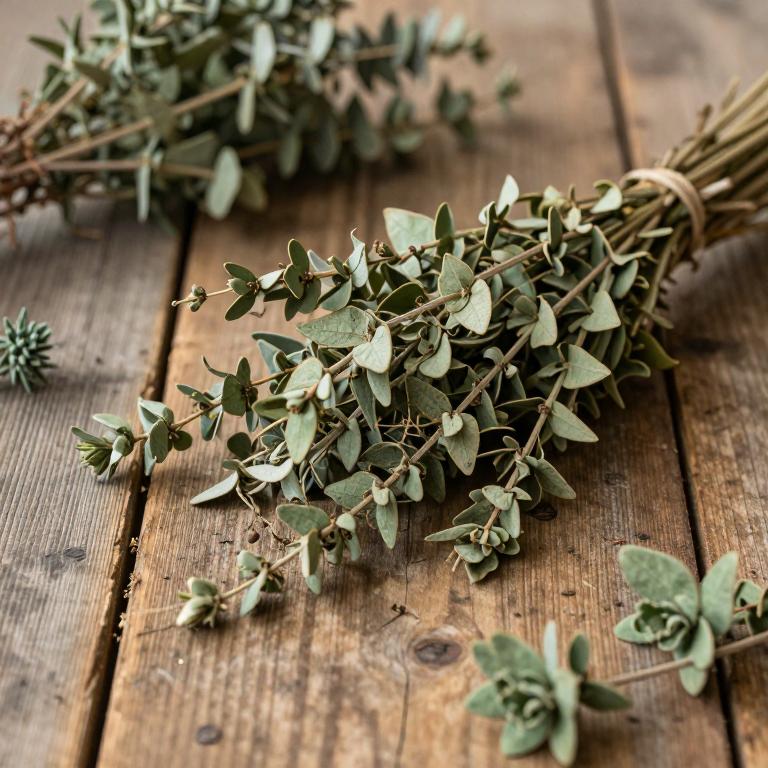
Common boxwood, scientifically known as Buxus sempervirens, is an evergreen shrub valued for its dense foliage and versatility. While primarily used in ornamental landscaping and topiary, various traditional medicinal practices have historically utilized its extracts. Understanding its botanical properties and chemical composition is essential for exploring its therapeutic potential.
Names and Synonyms
Common Names
- Box
- Caucasian boxwood
- European box
- French boxwood
- Persian boxwood
- Turkish boxwood
- boxtree
- boxwood
- boxwoodtree
- common box
- common boxwood
Scientific Names
Accepted name
Buxus sempervirensSynonyms
- Buxus sempervirens var. angustifolia
- Buxus sempervirens var. myrtifolia
- Buxus sempervirens f. pyramidalis
- Buxus sempervirens f. angustifolia
- Buxus sempervirens f. glauca
- Buxus sempervirens f. pendula
- Buxus sempervirens f. prostrata
- Buxus sempervirens subsp. hyrcana
- Buxus sempervirens f. handsworthiensis
- Buxus sempervirens pyramidalis
- Buxus sempervirens var. humilis
- Buxus sempervirens var. subfrtuticosa
- Buxus fruticosa
- Buxus sempervirens var. grandifolia
- Buxus sempervirens var. rosmarinifolium
- Buxus sempervirens var. rotundifolia
- Buxus sempervirens var. suffruticosa
- Buxus suffruticosa
- Buxus tenuifolia
- Buxus variegata
- Buxus vulgaris
- Buxus salicifolia
- Buxus sempervirens var. fruticosa
- Buxus sempervirens var. putata
- Buxus sempervirens var. arborescens
- Buxus sempervirens var. prostrata
- Buxus sempervirens var. handsworthiensis
- Buxus sempervirens f. rotundifolia
- Buxus sempervirens var. bullata
- Buxus sempervirens f. bullata
- Buxus sempervirens var. glauca
- Buxus rosmarinifolia
- Buxus sempervirens f. aureovariegata
- Buxus myrtifolia
- Buxus arborescens var. aureovariegata
- Buxus mucronata
- Buxus arborescens var. angustifolia
- Buxus marginata
- Buxus arborescens var. argenteovariegata
- Buxus hyrcana
- Buxus sempervirens f. argenteovariegata
- Buxus handsworthii
- Buxus arborescens var. aureolimbo
- Buxus colchica
- Buxus sempervirens var. marginata
- Buxus caucasica
- Buxus sempervirens f. marginata
- Buxus sempervirens f. suffruticosa
- Buxus elegantissima
- Buxus sempervirens f. myrtifolia
- Buxus cucullata
- Buxus sempervirens f. rosmarinifolium
- Buxus crispa
- Buxus sempervirens var. emarginata
- Buxus arborescens
- Buxus argentea
- Buxus sempervirens f. microrrhina
- Buxus aurea
- Buxus sempervirens var. pendula
- Buxus sempervirens var. pendula-variegata
Regional and Traditional Names
Spanish:
- Boj común
- Buxaquera
- Buxo arboreo
- Buxus myrtifolia
- Box dorado
- Alazquez
- Boj comun
- Bujarro
- Box pintado
- Buxo
- Box menor de parterre
- Buixo
- Buxus arborescens
- Buxus suffruticosa
- Buxus wallichiana
- Box grande
- Alarquez
- Buxo arbóreo
- Box común
- Boxe
- Box comun
- Buxo ordinario
German:
- Gewöhnlicher Buchsbaum
- Buchsbaum
- Buchsstrauch
- Buchsbaum
- Europäischer Buchsbaum
- Buchs
French:
- Buis toujours vert
- Buis
Sources: Wikidata, Catalogue of Life
Taxonomical Classification
This plant, known scientifically as Buxus sempervirens, belongs to the kingdom Plantae and the phylum Streptophyta. It is classified under the class Equisetopsida and the subclass Magnoliidae, falling within the order Buxales. Finally, it is a member of the family Buxaceae and the genus Buxus.
| Rank | Classification |
|---|---|
| Kingdom | Plantae |
| Phylum | Streptophyta |
| Class | Equisetopsida |
| Subclass | Magnoliidae |
| Order | Buxales |
| Family | Buxaceae |
| Genus | Buxus |
Sources: The World Checklist of Vascular Plants (WCVP)
Distribution
This plant, Buxus sempervirens, exhibits a specific distribution across several regions of the European continent. In Northern Europe, its presence can be identified within the territory of Great Britain. Moving into Middle Europe, the species is also found growing in Austria. Additionally, the plant is documented throughout Germany and Belgium. Finally, its geographical range extends further into the mountainous landscape of Switzerland.
| Region | Area |
|---|---|
| Northern Europe | Great Britain |
| Middle Europe | Austria |
| Middle Europe | Belgium |
| Middle Europe | Germany |
| Middle Europe | Switzerland |
| Southwestern Europe | Corse |
| Southwestern Europe | France |
| Southwestern Europe | Portugal |
| Southwestern Europe | Sardegna |
| Southwestern Europe | Spain |
Sources: The World Checklist of Vascular Plants (WCVP)
Botanical Identification
Ecology
The ecology of Buxus sempervirens is characterized by its preference for specific montane environments, primarily thriving within forest and mountain habitats. It occupies a distinct altitudinal niche, with an elevational range that reaches a maximum of 1600 m AMSL and maintains a mean elevation of approximately 1515 m AMSL. Furthermore, in terms of its symbiotic relationships, this species does not form mycorrhizal associations, as indicated by the absence of mycorrhiza in its growth patterns.
- Elevational range max:
- 1600 m AMSL
- Elevational range mean:
- 1515 m AMSL
- Habitat :
- forest, mountains
- Mycorrhiza :
- no
Life history
The life history of Buxus sempervirens is characterized by its status as a perennial species, ensuring a long-term presence within its ecological niche. As a phanerophyte, the plant maintains its photosynthetic organs on woody branches elevated above the ground, a trait further categorized under the phanerophyte life form classification. It exhibits an evergreen deciduousness, meaning it retains its foliage throughout the year rather than shedding it seasonally, which allows for continuous metabolic activity when environmental conditions are favorable.
- Deciduousness :
- evergreen
- Life form :
- phanerophyte
- Lifecycle :
- perennial
Morphology
The morphology of Buxus sempervirens is characterized by a woody growth form, specifically categorized as a shrub. It is a self-supporting plant that does not function as a climber or a liana, and it remains an independent organism rather than a parasite. The plant is strictly terrestrial in its habitat, neither being aquatic nor an epiphyte. In terms of stature, it exhibits significant variation in plant height, ranging from a minimum of 1 meter to a maximum of 8 meters, with an average height of approximately 3 meters.
- Aquatic :
- terrestrial
- Climber :
- self-supporting
- Epiphyte :
- terrestrial
- Growth form :
- shrub
- Parasite :
- independent
- Plant height max:
- 8 m
- Plant height mean:
- 3 m
- Plant height min:
- 1 m
- Woodiness :
- woody
Physiology
The physiology of Buxus sempervirens is characterized by a C3 photosynthetic pathway, which dictates its carbon fixation processes and metabolic efficiency. The plant exhibits a non-carnivorous nutritional strategy and does not function as a nitrogen fixer, relying instead on soil-based nutrient uptake. Its leaf morphology is defined by a mean leaf size of 1.3875 cm² and a mean Specific Leaf Area (SLA) of 70 cm²/g, indicating a relatively dense and compact leaf structure. Furthermore, the plant possesses a significant stem specific density (SSD) with a mean value of 910 mg/cm³, reflecting a robust and highly lignified structural composition.
- Carnivory :
- non-carnivorous
- Leaf size mean:
- 1.3875 cm²
- Nitrogen fixer :
- no
- Photosynthetic pathway :
- C3
- Specific Leaf Area (SLA) mean:
- 70 cm²/g
- Stem specific density (SSD) mean:
- 910 mg/cm³
Reproduction
The reproduction of Buxus sempervirens is characterized by a sexual process that is monoecious in nature, with asexual reproduction being absent. The flowering period typically commences in March and concludes in April, though the timing can be variable. Pollination is achieved through biotic mechanisms, specifically involving an insect pollination syndrome. The plant does not exhibit self-fertilization, necessitating external agents for successful fertilization. Following pollination, the plant develops dry, dehiscence-type capsule fruits, which reach a mean length of 0.8 cm. These capsules contain a high volume of seeds, with a count exceeding 1000 seeds per fruit. The seeds themselves are uniform in length, measuring consistently at 5 mm, and possess a mean mass of approximately 0.0138815 g (ranging from a minimum of 0.0124 g to a maximum of 0.01628 g). Dispersal is governed by an autochorous syndrome, meaning the plant utilizes autochorous methods to distribute its seeds.
- Dehiscence :
- dehiscent
- Dispersal syndrome :
- autochorous
- Flowering time :
- Mar
- Flowering time :
- Apr
- Fruit dryness :
- dry
- Fruit length mean:
- 0.8 cm
- Fruit type :
- capsule
- Pollination syndrome :
- insect
- Pollination syndrome :
- biotic
- Reproduction asexual :
- absent
- Reproduction sexual :
- monoecious
- Seed length mean:
- 5 mm
- Seed mass max:
- 0.01628 g
- Seed mass mean:
- 0.0138815 g
- Seed mass min:
- 0.0124 g
- Seeds_per_fruit :
- >1000
- Self fertilization :
- absent
Sources: Global Inventory of Floras and Traits (GIFT)
Plant Parts
Buxus sempervirens has 1 reported plant parts identified across 3 scientific publications and several other databases that are studied for medicinal purposes. The most consistently reported plant part include leaf.
| Plant part | Supporting sources | Consensus |
|---|---|---|
| Leaf | 3 supporting sources | ★★☆☆☆ |
Leaf
- Journal of natural products
- Bioorganic chemistry
- Cardiovascular & hematological disorders drug targets
Chemicals
Buxus sempervirens has 38 reported phytochemicals identified across 3 scientific publications and several other databases. The most consistently reported chemicals include Amentoflavone, Bebeerine, Bebuxine, Buxaline C, Buxaltine.
| Chemical | Supporting sources | Consensus |
|---|---|---|
| Amentoflavone | 1 supporting sources | ★☆☆☆☆ |
| Bebeerine | 1 supporting sources | ★☆☆☆☆ |
| Bebuxine | 1 supporting sources | ★☆☆☆☆ |
| Buxaline C | 1 supporting sources | ★☆☆☆☆ |
| Buxaltine | 1 supporting sources | ★☆☆☆☆ |
| Buxamine | 1 supporting sources | ★☆☆☆☆ |
| Buxandrine | 1 supporting sources | ★☆☆☆☆ |
| Buxanine | 1 supporting sources | ★☆☆☆☆ |
| Buxarine | 1 supporting sources | ★☆☆☆☆ |
| Buxatine | 1 supporting sources | ★☆☆☆☆ |
Amentoflavone
- Journal of natural products
Bebeerine
- Dr. Duke
Bebuxine
- Dr. Duke
Buxaline C
- Dr. Duke
Buxaltine
- Dr. Duke
Buxamine
- Dr. Duke
Buxandrine
- Dr. Duke
Buxanine
- Dr. Duke
Buxarine
- Dr. Duke
Buxatine
- Dr. Duke
Activities
Buxus sempervirens has 75 reported activities identified across 3 scientific publications and several other databases. The most consistently reported activities include Antioxidant, 5-Alpha-Reductase-Inhibitor, Allergenic, Alpha-Reductase-Inhibitor, Anemiagenic.
| Activity | Supporting sources | Consensus |
|---|---|---|
| Antioxidant | 3 supporting sources | ★★☆☆☆ |
| 5-Alpha-Reductase-Inhibitor | 1 supporting sources | ★☆☆☆☆ |
| Allergenic | 1 supporting sources | ★☆☆☆☆ |
| Alpha-Reductase-Inhibitor | 1 supporting sources | ★☆☆☆☆ |
| Anemiagenic | 1 supporting sources | ★☆☆☆☆ |
| Anthelmintic | 1 supporting sources | ★☆☆☆☆ |
| AntiHIV | 1 supporting sources | ★☆☆☆☆ |
| AntiMS | 1 supporting sources | ★☆☆☆☆ |
| Antiacne | 1 supporting sources | ★☆☆☆☆ |
| Antialopecic | 1 supporting sources | ★☆☆☆☆ |
Antioxidant
- Dr. Duke
- Cardiovascular & hematological agents in medicinal chemistry
- Iranian journal of pharmaceutical research : IJPR
5-Alpha-Reductase-Inhibitor
- Dr. Duke
Allergenic
- Dr. Duke
Alpha-Reductase-Inhibitor
- Dr. Duke
Anemiagenic
- Dr. Duke
Anthelmintic
- Dr. Duke
AntiHIV
- Dr. Duke
AntiMS
- Dr. Duke
Antiacne
- Dr. Duke
Antialopecic
- Dr. Duke
Conditions
Buxus sempervirens has 3 reported investigations on conditions identified across 3 scientific publications and several other databases. The most consistently reported conditions include malaria, blood glucose, oral glucose tolerance.
| Condition | Supporting sources | Consensus |
|---|---|---|
| Malaria | 2 supporting sources | ★☆☆☆☆ |
| Blood glucose | 1 supporting sources | ★☆☆☆☆ |
| Oral glucose tolerance | 1 supporting sources | ★☆☆☆☆ |
Malaria
- Journal of natural products
- Molecules (Basel, Switzerland)
Blood glucose
- Cardiovascular & hematological disorders drug targets
Oral glucose tolerance
- Cardiovascular & hematological disorders drug targets
Preparations
Buxus sempervirens has 6 reported preparations identified across 3 scientific publications and several other databases. The most consistently reported preparations include Buxus sempervirens leaf extract, METHANOLIC EXTRACTS, aqueous Buxus sempervirens extract, leaf extracts, methanol extract of twigs and leaves.
| Preparation | Supporting sources | Consensus |
|---|---|---|
| Buxus sempervirens leaf extract | 1 supporting sources | ★☆☆☆☆ |
| Methanolic extracts | 1 supporting sources | ★☆☆☆☆ |
| Aqueous buxus sempervirens extract | 1 supporting sources | ★☆☆☆☆ |
| Leaf extracts | 1 supporting sources | ★☆☆☆☆ |
| Methanol extract of twigs and leaves | 1 supporting sources | ★☆☆☆☆ |
| Supercritical extract | 1 supporting sources | ★☆☆☆☆ |
Buxus sempervirens leaf extract
- Cardiovascular & hematological disorders drug targets
Methanolic extracts
- Iranian journal of pharmaceutical research : IJPR
Aqueous buxus sempervirens extract
- Cardiovascular & hematological disorders drug targets
Leaf extracts
- Journal of natural products
Methanol extract of twigs and leaves
- Bioorganic chemistry
Supercritical extract
- Journal of natural products