Box Wattle
Buxus natalensis · Accepted scientific name
Scientific literature: Very Sparse (10 studies) · ★☆☆☆☆
Box Wattle, scientifically known as Buxus natalensis, is a versatile evergreen shrub native to subtropical regions. Renowned for its dense, lustrous foliage, this plant holds significant medicinal value in traditional practices. Its various components are utilized for their bioactive properties, offering therapeutic potential in treating various ailments and skin conditions.
- Family
- Buxaceae
- Native range
- Africa
- Parts used
- Not available
- Common names
- Box Wattle · Large-Leaved Box · 1 more
- Scientific synonyms
- Notobuxus Natalensis
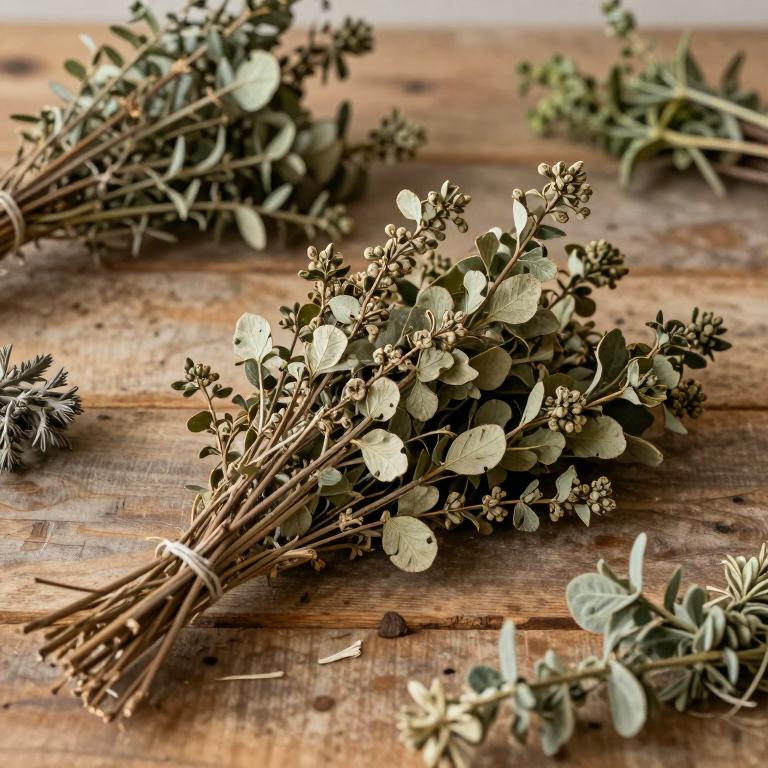
Names and Synonyms
Common Names
- Box Wattle
- Large-Leaved Box
- Natal Box
Scientific Names
Accepted name
Buxus natalensisSynonyms
- Notobuxus natalensis
Sources: Wikidata, Catalogue of Life
Taxonomical Classification
This plant belongs to the kingdom Plantae within the phylum Streptophyta and is classified under the class Equisetopsida. It is further categorized under the subclass Magnoliidae in the order Buxales, specifically within the family Buxaceae. Finally, its taxonomic identification is completed under the genus Buxus.
| Rank | Classification |
|---|---|
| Kingdom | Plantae |
| Phylum | Streptophyta |
| Class | Equisetopsida |
| Subclass | Magnoliidae |
| Order | Buxales |
| Family | Buxaceae |
| Genus | Buxus |
Sources: The World Checklist of Vascular Plants (WCVP)
Distribution
This plant is specifically located within the southern region of the African continent. Its documented geographical distribution is restricted to the province of KwaZulu-Natal. Within this specific area, it thrives in the unique environmental conditions provided by the local landscape. Because its range is so localized, it is considered a regional specialist of this South African territory. Consequently, the survival of the species is closely tied to the ecological stability of this particular province.
| Region | Area |
|---|---|
| Southern Africa | KwaZulu-Natal |
Sources: The World Checklist of Vascular Plants (WCVP)
Botanical Identification
Ecology
The ecology of Buxus natalensis is characterized by its ability to thrive across a diverse range of altitudinal gradients within its natural habitat. This species is found spanning an elevational range that begins at a minimum of 5 m AMSL and extends up to a maximum of 1100 m AMSL. This broad vertical distribution allows the plant to inhabit various microclimates, ranging from lowland coastal or riverine environments to higher-altitude montane regions. Such adaptability in elevation suggests that the species can tolerate a variety of temperature regimes and moisture availability, facilitating its presence in diverse forest types and scrublands throughout its geographic range.
- Elevational range max:
- 1100 m AMSL
- Elevational range min:
- 5 m AMSL
Life history
The life history of Buxus natalensis is characterized by its classification as a perennial species, allowing it to persist in its environment over many growing seasons rather than completing its cycle in a single year. As a long-lived woody shrub or small tree, it establishes a stable presence within its ecosystem, undergoing continuous growth and seasonal development. This perennial nature enables the plant to accumulate biomass steadily, contributing to the structural complexity of its habitat through repeated cycles of vegetative expansion and reproductive efforts.
- Lifecycle :
- perennial
Morphology
The morphology of Buxus natalensis is characterized by its growth form as a woody shrub that functions as a self-supporting, independent organism. It is a terrestrial species that does not exhibit parasitic or epiphytic behavior. In terms of physical dimensions, the plant reaches a height ranging from a minimum of 1 meter to a maximum of 5 meters.
- Aquatic :
- terrestrial
- Climber :
- self-supporting
- Epiphyte :
- terrestrial
- Growth form :
- shrub
- Parasite :
- independent
- Plant height max:
- 5 m
- Plant height min:
- 1 m
- Woodiness :
- woody
Sources: Global Inventory of Floras and Traits (GIFT)
Chemicals
Buxus natalensis has 10 reported phytochemicals identified across 0 scientific publications and several other databases. The most consistently reported chemicals include 31-Demethylbuxaminol A, Buxafuranamide, Buxalongifolamidine, Buxamine A, Buxaminol A.
| Chemical | Supporting sources | Consensus |
|---|---|---|
| 31-Demethylbuxaminol A | 1 supporting sources | ★☆☆☆☆ |
| Buxafuranamide | 1 supporting sources | ★☆☆☆☆ |
| Buxalongifolamidine | 1 supporting sources | ★☆☆☆☆ |
| Buxamine A | 1 supporting sources | ★☆☆☆☆ |
| Buxaminol A | 1 supporting sources | ★☆☆☆☆ |
| Buxaminol C | 1 supporting sources | ★☆☆☆☆ |
| Cyclobuxophylline K | 1 supporting sources | ★☆☆☆☆ |
| Cyclonataminol | 1 supporting sources | ★☆☆☆☆ |
| Methyl syringate | 1 supporting sources | ★☆☆☆☆ |
| p-Coumaroylputrescine | 1 supporting sources | ★☆☆☆☆ |
31-Demethylbuxaminol A
- Journal of natural products
Buxafuranamide
- Journal of natural products
Buxalongifolamidine
- Journal of natural products
Buxamine A
- Journal of natural products
Buxaminol A
- Journal of natural products
Buxaminol C
- Journal of natural products
Cyclobuxophylline K
- Journal of natural products
Cyclonataminol
- Journal of natural products
Methyl syringate
- Journal of natural products
p-Coumaroylputrescine
- Journal of natural products
Preparations
Buxus natalensis has 2 reported preparations identified across 0 scientific publications and several other databases. The most consistently reported preparations include extracts, methanolic extract.
| Preparation | Supporting sources | Consensus |
|---|---|---|
| Extracts | 1 supporting sources | ★☆☆☆☆ |
| Methanolic extract | 1 supporting sources | ★☆☆☆☆ |
Extracts
- Fitoterapia
Methanolic extract
- Journal of natural products