Balsam Tree
Bursera simaruba · Accepted scientific name
Scientific literature: Very Sparse (23 studies) · ★☆☆☆☆
Balsam Tree, scientifically known as Bursera simaruba, is a versatile tropical species native to Central and South America. Renowned for its medicinal properties, the tree produces a fragrant resin used traditionally to treat skin ailments, inflammation, and digestive issues. It remains a vital resource in many indigenous healing practices.
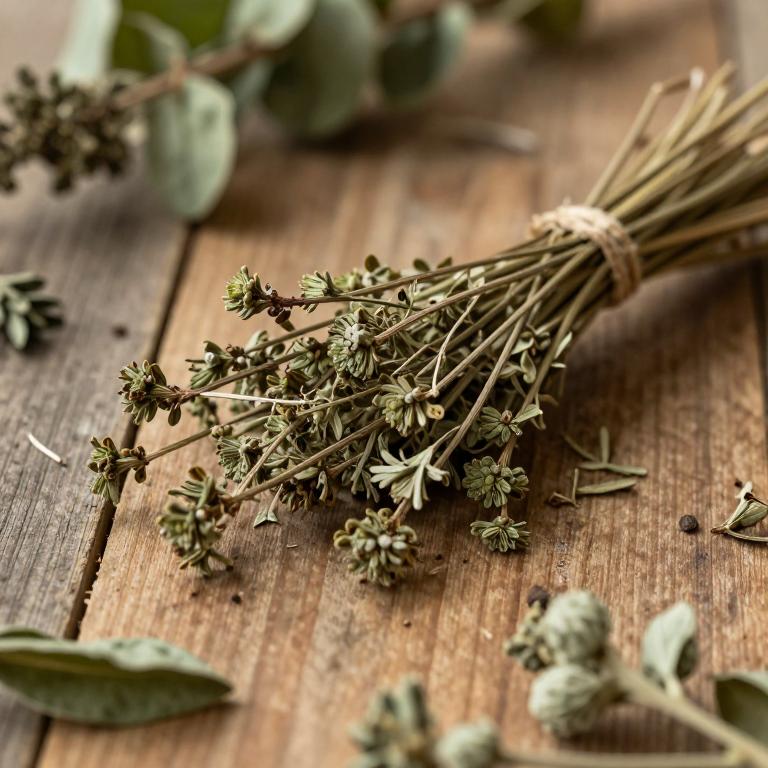
Names and Synonyms
Common Names
- Balsam Tree
- Gum Tree
- Lime Tree
- Terpentine Tree
- Tourist Tree
- White Man Tree
- Gum-elemi
- West Indian-birch
- Copperwood
- Red Birch
Scientific Names
Accepted name
Bursera simarubaSynonyms
- Bursera subpubescens
- Bursera bonairensis
- Terebinthus arborea
- Pistacia simaruba
- Elaphrium simaruba
- Elaphrium subpubescens
- Bursera simaruba var. yucatanensis
- Elaphrium integerrimum
- Elaphrium arboreum
- Bursera gummifera
- Bursera gummifera var. glabrata
- Bursera gummifera var. polyphylla
- Bursera integerrima
- Bursera arborea
- Terebinthus simaruba
Regional and Traditional Names
Spanish:
- Palo mulato
- Chaká
- Jiñocuajo
- Jinocuabo
- Bursera gummifera
- Pistacia simaruba
- Jiñocuabo
- Indio desnudo
- Chaka
- Chaca
- Chakaj
- Jiote
- Mulato
- Palo mulato
- Thi- un
- Tzaca
- gumbo limbo
- palo jiote
- Almácigo
- Cuajilote
- Indio desnudo
- Jiñocuabe
- Palo colorado
- Papelillo
- Resbalamono
- almácigo blanco
- cholo pelao
- karate
German:
- Amerikanischer Balsam
- Amerikanischer Balsam
French:
- gommier rouge
- bois de gommier blanc
- Gommier rouge
Sources: Wikidata, Catalogue of Life
Taxonomical Classification
This plant belongs to the kingdom Plantae and is classified under the phylum Streptophyta within the class Equisetopsida. It is further categorized under the subclass Magnoliidae and the order Sapindales. Finally, it is a member of the family Burseraceae and falls under the genus Bursera.
| Rank | Classification |
|---|---|
| Kingdom | Plantae |
| Phylum | Streptophyta |
| Class | Equisetopsida |
| Subclass | Magnoliidae |
| Order | Sapindales |
| Family | Burseraceae |
| Genus | Bursera |
Sources: The World Checklist of Vascular Plants (WCVP)
Distribution
This plant exhibits a wide geographical distribution spanning across parts of North America. In the Southeastern United States, its presence is specifically noted in Florida. Within Mexico, it is widely distributed across the Central and Northeast regions. Additionally, the species can be found throughout the Mexican Gulf territories. Finally, its range extends into the Northwest portion of Mexico.
| Region | Area |
|---|---|
| Southeastern U.S.A. | Florida |
| Mexico | Mexico Central |
| Mexico | Mexico Northeast |
| Mexico | Mexico Gulf |
| Mexico | Mexico Northwest |
| Mexico | Mexico Southwest |
| Mexico | Mexico Southeast |
| Central America | Belize |
| Central America | Costa Rica |
| Central America | El Salvador |
Sources: The World Checklist of Vascular Plants (WCVP)
Botanical Identification
Ecology
The ecology of Bursera simaruba is characterized by its distribution across a diverse elevational gradient, ranging from sea level (0 m AMSL) up to a maximum altitude of 1000 m AMSL. This species is primarily found within specific forest ecosystems, specifically inhabiting the Floresta Estacional Decidual and the Floresta Estacional Semi-decidual. These habitats suggest an adaptation to seasonal moisture patterns, where the plant thrives in environments that experience distinct dry periods, allowing it to integrate into the structural and biological dynamics of seasonal deciduous and semi-deciduous forests.
- Elevational range max:
- 1000 m AMSL
- Elevational range min:
- 0 m AMSL
- Habitat :
- Floresta Estacional Decidual, Floresta Estacional Semidecidual
Life history
The life history of Bursera simaruba is characterized by its status as a perennial species, allowing it to maintain a long-term presence within its tropical and subtropical habitats. As it progresses through its life stages, the plant exhibits a robust growth pattern typical of many trees in the Burseraceae family, often beginning its life in competitive forest understories or disturbed areas before establishing a dominant canopy position. Throughout its extended lifespan, the plant undergoes seasonal cycles of vegetative growth and reproductive phases, which are frequently synchronized with regional rainfall patterns. Its perennial nature ensures that it can withstand periods of environmental fluctuation, contributing to the stability of its ecosystem through continuous biomass production and periodic seed dispersal.
- Lifecycle :
- perennial
Morphology
The morphology of Bursera simaruba is characterized by its woody structure and diverse growth habits, primarily functioning as a self-supporting tree or shrub. This terrestrial species exhibits significant vertical development, with an average plant height of approximately 18.94 meters, though it can reach a maximum height of up to 30 meters. As an independent organism, it does not exhibit parasitic behavior, maintaining a self-supporting stature rather than acting as a liana, vine, or climber. Its growth form is predominantly woody, and it is strictly terrestrial in nature, lacking any aquatic, semiaquatic, or epiphytic characteristics.
- Aquatic :
- terrestrial
- Climber :
- self-supporting
- Epiphyte :
- terrestrial
- Growth form :
- tree
- Growth form :
- shrub
- Parasite :
- independent
- Plant height max:
- 30 m
- Plant height mean:
- 18.9366666666667 m
- Woodiness :
- woody
Physiology
The physiology of Bursera simaruba is characterized by a C3 photosynthetic pathway and a non-nitrogen-fixing biological nature. Its structural efficiency is reflected in its leaf traits, which exhibit a mean Specific Leaf Area (SLA) of 193.131 cm²/g, ranging within a narrow observed spectrum between a minimum and maximum of 182.9 cm²/g. The leaf dry matter content (LDMC) indicates a robust investment in leaf tissue, with a mean value of 273.45 mg/g, fluctuating from a minimum of 250 mg/g to a maximum of 296.9 mg/g. Furthermore, the plant's mechanical properties and biomass allocation are defined by its stem specific density (SSD), which remains consistent at a mean, minimum, and maximum value of 330 mg/cm³.
- Leaf dry matter content (LDMC) max:
- 296.9 mg/g
- Leaf dry matter content (LDMC) mean:
- 273.45 mg/g
- Leaf dry matter content (LDMC) min:
- 250 mg/g
- Nitrogen fixer :
- no
- Photosynthetic pathway :
- C3
- Specific Leaf Area (SLA) mean:
- 193.131 cm²/g
- Specific Leaf Area (SLA) min:
- 182.9 cm²/g
- Stem specific density (SSD) min:
- 330 mg/cm³
Reproduction
The reproduction of Bursera simaruba is driven by biotic pollination mechanisms, primarily relying on insects such as bees to facilitate the transfer of pollen. The species exhibits a lack of self-fertilization, ensuring genetic diversity through cross-pollination. Following successful fertilization, the plant produces seeds characterized by a mean length of approximately 4.9935 mm, with individual seed lengths ranging from a minimum of 3.1 mm to a maximum of 7 mm. These seeds possess a consistent volume of 270 mm³ and a mean mass of 0.0486 g, though individual seed masses can range from a minimum of 0.004 g to a maximum of 0.004 g. Dispersal is achieved through a zoochorous syndrome, specifically via endozoochory, where seeds are dispersed after being consumed by animals, facilitating the plant's spread across its habitat.
- Dispersal syndrome :
- zoochorous
- Dispersal syndrome :
- endozoochorous
- Pollination syndrome :
- insect
- Pollination syndrome :
- bee
- Pollination syndrome :
- biotic
- Seed length max:
- 7 mm
- Seed length mean:
- 4.9935 mm
- Seed length min:
- 3.1 mm
- Seed mass max:
- 0.004 g
- Seed mass mean:
- 0.0486 g
- Seed volume max:
- 270 mm³
- Self fertilization :
- absent
Sources: Global Inventory of Floras and Traits (GIFT)
Chemicals
Bursera simaruba has 3 reported phytochemicals identified across 0 scientific publications and several other databases. The most consistently reported chemicals include Terpenoids, VITAMIN E, resin.
| Chemical | Supporting sources | Consensus |
|---|---|---|
| Terpenoids | 1 supporting sources | ★☆☆☆☆ |
| VITAMIN E | 1 supporting sources | ★☆☆☆☆ |
| resin | 1 supporting sources | ★☆☆☆☆ |
Terpenoids
- American journal of primatology
VITAMIN E
- Journal of ethnopharmacology
resin
- Dr. Duke
Activities
Bursera simaruba has 2 reported activities identified across 0 scientific publications and several other databases. The most consistently reported activities include Antifungal, Antihypertensive.
| Activity | Supporting sources | Consensus |
|---|---|---|
| Antifungal | 1 supporting sources | ★☆☆☆☆ |
| Antihypertensive | 1 supporting sources | ★☆☆☆☆ |
Antifungal
- Phytotherapy research : PTR
Antihypertensive
- Iranian journal of basic medical sciences
Conditions
Bursera simaruba has 14 reported investigations on conditions identified across 0 scientific publications and several other databases. The most consistently reported conditions include hypertension, Pityriasis versicolor, Pneumocystis pneumonia, Porphyromonas gingivalis, Staphylococcus aureus.
| Condition | Supporting sources | Consensus |
|---|---|---|
| Hypertension | 2 supporting sources | ★☆☆☆☆ |
| Pityriasis versicolor | 1 supporting sources | ★☆☆☆☆ |
| Pneumocystis pneumonia | 1 supporting sources | ★☆☆☆☆ |
| Porphyromonas gingivalis | 1 supporting sources | ★☆☆☆☆ |
| Staphylococcus aureus | 1 supporting sources | ★☆☆☆☆ |
| Streptococcus mutans | 1 supporting sources | ★☆☆☆☆ |
| Athlete's foot | 1 supporting sources | ★☆☆☆☆ |
| Dyslipidemia | 1 supporting sources | ★☆☆☆☆ |
| Infectious diseases | 1 supporting sources | ★☆☆☆☆ |
| Inflammation | 1 supporting sources | ★☆☆☆☆ |
Hypertension
- Journal of intercultural ethnopharmacology
- Iranian journal of basic medical sciences
Pityriasis versicolor
- Phytotherapy research : PTR
Pneumocystis pneumonia
- Phytotherapy research : PTR
Porphyromonas gingivalis
- Journal of ethnopharmacology
Staphylococcus aureus
- Journal of ethnopharmacology
Streptococcus mutans
- Journal of ethnopharmacology
Athlete's foot
- Phytotherapy research : PTR
Dyslipidemia
- Iranian journal of basic medical sciences
Infectious diseases
- Journal of ethnopharmacology
Inflammation
- Journal of ethnopharmacology
Preparations
Bursera simaruba has 7 reported preparations identified across 0 scientific publications and several other databases. The most consistently reported preparations include cyclohexane, ethanol, ethanol extract, ethanolic extracts, extracts.
| Preparation | Supporting sources | Consensus |
|---|---|---|
| Cyclohexane | 1 supporting sources | ★☆☆☆☆ |
| Ethanol | 1 supporting sources | ★☆☆☆☆ |
| Ethanol extract | 1 supporting sources | ★☆☆☆☆ |
| Ethanolic extracts | 1 supporting sources | ★☆☆☆☆ |
| Extracts | 1 supporting sources | ★☆☆☆☆ |
| Hexane leaf extract | 1 supporting sources | ★☆☆☆☆ |
| Pith | 1 supporting sources | ★☆☆☆☆ |
Cyclohexane
- Phytotherapy research : PTR
Ethanol
- Phytotherapy research : PTR
Ethanol extract
- Iranian journal of basic medical sciences
Ethanolic extracts
- Journal of ethnopharmacology
Extracts
- Natural product research
Hexane leaf extract
- Journal of ethnopharmacology
Pith
- American journal of primatology