hare's-ear
Bupleurum · Accepted scientific name
Scientific literature: Very Sparse (35 studies) · ★☆☆☆☆
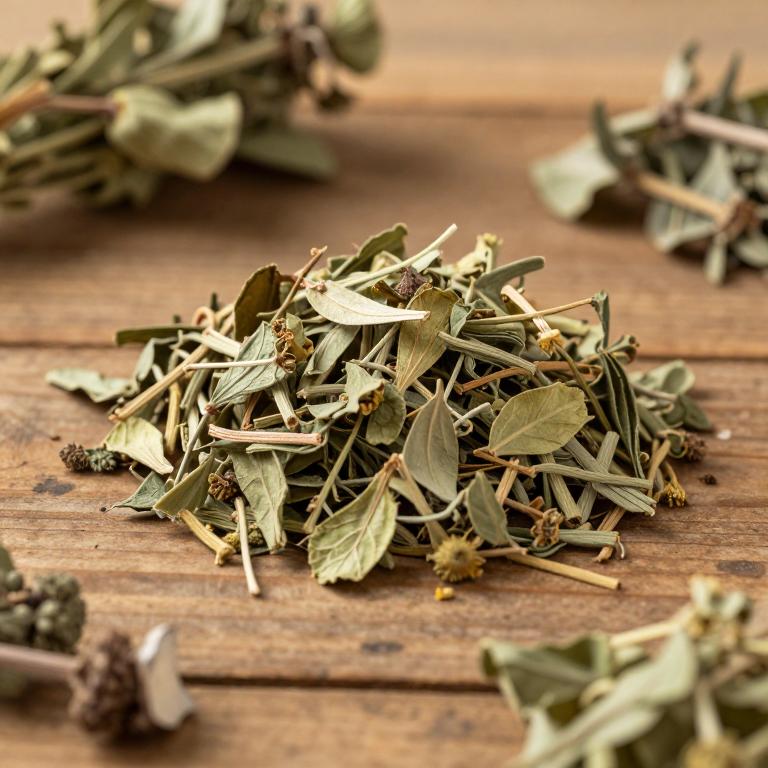
hare's-ear, scientifically known as Bupleurum, is a versatile genus of flowering plants within the Apiaceae family. Renowned in traditional medicine, particularly in East Asian practices, its roots are utilized to support liver health, reduce inflammation, and relieve stress. This resilient herb offers significant therapeutic potential for holistic wellness.
Names and Synonyms
Common Names
- hare's-ear
- thoroughwax
- thorow-wax
- Thorow Wax
Scientific Names
Accepted name
BupleurumSynonyms
- Isophyllum
- Diaphyllum
- Agostana
- Agrostana
- Zigara
- Glochidopleurum
- Trachypleurum
- Odontea
- Orimaria
- Pteraton
- Perfoliata
- Perfolisa
- Diatropa
- Buprestis
- Tepso
Regional and Traditional Names
Spanish:
- Buprestis
- Bupleureae
German:
- Hasenohren
- Hasenohr
- Hasenohren
French:
- Buplèvre
- Buplevre
- Buplèvres
- Buplèvre
Sources: Wikidata, Catalogue of Life
Taxonomical Classification
This plant belongs to the kingdom Plantae and is classified under the phylum Streptophyta and the class Equisetopsida. Within the subclass Magnoliidae, it falls under the order Apiales and the family Apiaceae. Finally, the medicinal species is categorized under the genus Bupleurum.
| Rank | Classification |
|---|---|
| Kingdom | Plantae |
| Phylum | Streptophyta |
| Class | Equisetopsida |
| Subclass | Magnoliidae |
| Order | Apiales |
| Family | Apiaceae |
| Genus | Bupleurum |
Sources: The World Checklist of Vascular Plants (WCVP)
Distribution
This plant exhibits a specific distribution pattern across the northern regions of Europe. It can be found growing in the coastal and inland areas of Denmark. Its presence extends further north into the landscapes of Norway and Finland. Additionally, this medicinal species is established within the British Isles, including Great Britain and Ireland. Together, these locations define its primary geographical range in the northern hemisphere.
| Region | Area |
|---|---|
| Northern Europe | Denmark |
| Northern Europe | Finland |
| Northern Europe | Great Britain |
| Northern Europe | Ireland |
| Northern Europe | Norway |
| Northern Europe | Sweden |
| Middle Europe | Austria |
| Middle Europe | Belgium |
| Middle Europe | Czechia-Slovakia |
| Middle Europe | Germany |
Sources: The World Checklist of Vascular Plants (WCVP)
Plant Parts
Bupleurum has 1 reported plant parts identified across 3 scientific publications and several other databases that are studied for medicinal purposes. The most consistently reported plant part include root.
| Plant part | Supporting sources | Consensus |
|---|---|---|
| Root | 3 supporting sources | ★★☆☆☆ |
Root
- Journal of chromatography
- Molecules (Basel, Switzerland)
- Journal of pharmaceutical and biomedical analysis
Chemicals
Bupleurum has 11 reported phytochemicals identified across 3 scientific publications and several other databases. The most consistently reported chemicals include Saikosaponins, Lignans, 3''-O-Acetylsaikosaponin d, 6''-O-Acetylsaikosaponin D, 6''-O-acetylsaikosaponin A.
| Chemical | Supporting sources | Consensus |
|---|---|---|
| Saikosaponins | 3 supporting sources | ★★☆☆☆ |
| Lignans | 2 supporting sources | ★☆☆☆☆ |
| 3''-O-Acetylsaikosaponin d | 1 supporting sources | ★☆☆☆☆ |
| 6''-O-Acetylsaikosaponin D | 1 supporting sources | ★☆☆☆☆ |
| 6''-O-acetylsaikosaponin A | 1 supporting sources | ★☆☆☆☆ |
| Flavonoid | 1 supporting sources | ★☆☆☆☆ |
| Saikosaponin | 1 supporting sources | ★☆☆☆☆ |
| Saikosaponin A | 1 supporting sources | ★☆☆☆☆ |
| Saikosaponin C | 1 supporting sources | ★☆☆☆☆ |
| Saikosaponin D | 1 supporting sources | ★☆☆☆☆ |
Saikosaponins
- International journal of molecular sciences
- Chinese herbal medicines
- The Journal of pharmacy and pharmacology
Lignans
- Journal of ethnopharmacology
- The Journal of pharmacy and pharmacology
3''-O-Acetylsaikosaponin d
- Journal of pharmaceutical and biomedical analysis
6''-O-Acetylsaikosaponin D
- Journal of pharmaceutical and biomedical analysis
6''-O-acetylsaikosaponin A
- Journal of pharmaceutical and biomedical analysis
Flavonoid
- Journal of ethnopharmacology
Saikosaponin
- Genes
Saikosaponin A
- Yao xue xue bao = Acta pharmaceutica Sinica
Saikosaponin C
- Yao xue xue bao = Acta pharmaceutica Sinica
Saikosaponin D
- Yao xue xue bao = Acta pharmaceutica Sinica
Activities
Bupleurum has 4 reported activities identified across 3 scientific publications and several other databases. The most consistently reported activities include Hepatoprotective, Antidiabetic, Antimicrobial, Antiviral.
| Activity | Supporting sources | Consensus |
|---|---|---|
| Hepatoprotective | 2 supporting sources | ★☆☆☆☆ |
| Antidiabetic | 1 supporting sources | ★☆☆☆☆ |
| Antimicrobial | 1 supporting sources | ★☆☆☆☆ |
| Antiviral | 1 supporting sources | ★☆☆☆☆ |
Hepatoprotective
- Journal of ethnopharmacology
- The Journal of pharmacy and pharmacology
Antidiabetic
- Journal of ethnopharmacology
Antimicrobial
- Journal of ethnopharmacology
Antiviral
- The Journal of pharmacy and pharmacology
Conditions
Bupleurum has 12 reported investigations on conditions identified across 3 scientific publications and several other databases. The most consistently reported conditions include cancer, diabetes complications, fever, gastric ulcer, infectious diseases.
| Condition | Supporting sources | Consensus |
|---|---|---|
| Cancer | 1 supporting sources | ★☆☆☆☆ |
| Diabetes complications | 1 supporting sources | ★☆☆☆☆ |
| Fever | 1 supporting sources | ★☆☆☆☆ |
| Gastric ulcer | 1 supporting sources | ★☆☆☆☆ |
| Infectious diseases | 1 supporting sources | ★☆☆☆☆ |
| Inflammation | 1 supporting sources | ★☆☆☆☆ |
| Irregular menstruation | 1 supporting sources | ★☆☆☆☆ |
| Liver disease | 1 supporting sources | ★☆☆☆☆ |
| Pain | 1 supporting sources | ★☆☆☆☆ |
| Rectal prolapse | 1 supporting sources | ★☆☆☆☆ |
Cancer
- Journal of ethnopharmacology
Diabetes complications
- BMC complementary and alternative medicine
Fever
- Journal of ethnopharmacology
Gastric ulcer
- Journal of ethnopharmacology
Infectious diseases
- The Journal of pharmacy and pharmacology
Inflammation
- Journal of ethnopharmacology
Irregular menstruation
- Journal of ethnopharmacology
Liver disease
- Journal of ethnopharmacology
Pain
- Journal of ethnopharmacology
Rectal prolapse
- Journal of ethnopharmacology
Preparations
Bupleurum has 5 reported preparations identified across 3 scientific publications and several other databases. The most consistently reported preparations include Bupleuri Radix, KY88, KY88 LIVER LIVO, KY88 Liver Livo, Radix Buplurei.
| Preparation | Supporting sources | Consensus |
|---|---|---|
| Bupleuri radix | 1 supporting sources | ★☆☆☆☆ |
| Ky88 | 1 supporting sources | ★☆☆☆☆ |
| Ky88 liver livo | 1 supporting sources | ★☆☆☆☆ |
| Ky88 liver livo | 1 supporting sources | ★☆☆☆☆ |
| Radix buplurei | 1 supporting sources | ★☆☆☆☆ |
Bupleuri radix
- Yao xue xue bao = Acta pharmaceutica Sinica
Ky88
- Acta pharmacologica Sinica
Ky88 liver livo
- Acta pharmacologica Sinica
Ky88 liver livo
- Hong Kong medical journal = Xianggang yi xue za zhi
Radix buplurei
- Nan fang yi ke da xue xue bao = Journal of Southern Medical University