Bupleurum salicifolium
Bupleurum salicifolium · Accepted scientific name
Scientific literature: Very Sparse (24 studies) · ★☆☆☆☆
Bupleurum salicifolium, scientifically known as Bupleurum salicifolium, is a perennial herb renowned for its therapeutic potential in traditional medicine. Primarily used to support liver health and reduce inflammation, this plant contains bioactive compounds that offer antioxidant benefits. It remains a significant subject of study for modern pharmacological research.
- Family
- Apiaceae
- Native range
- Africa
- Parts used
- Not available
- Common names
- Not available
- Scientific synonyms
- Not available
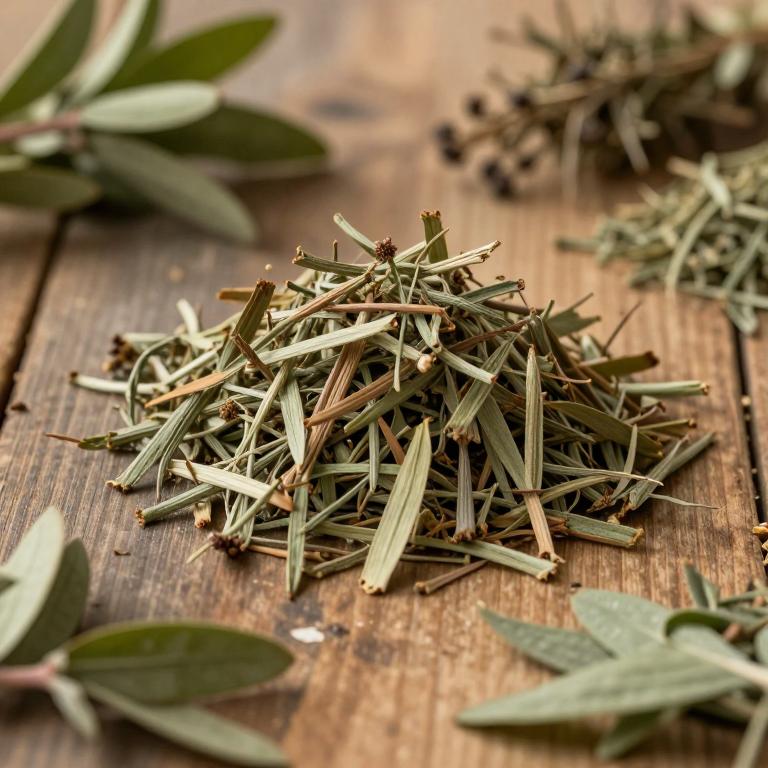
Names and Synonyms
Scientific Names
Accepted name
Bupleurum salicifoliumRegional and Traditional Names
Spanish:
- Anís salvaje
- Anís de risco
- Anis salvaje
- Anis de risco
Sources: Wikidata
Taxonomical Classification
This plant belongs to the kingdom Plantae and the phylum Streptophyta, falling under the class Equisetopsida and subclass Magnoliidae. Within the order Apiales, it is classified under the family Apiaceae. Finally, it is categorized under the genus Bupleurum as the species Bupleurum salicifolium.
| Rank | Classification |
|---|---|
| Kingdom | Plantae |
| Phylum | Streptophyta |
| Class | Equisetopsida |
| Subclass | Magnoliidae |
| Order | Apiales |
| Family | Apiaceae |
| Genus | Bupleurum |
Sources: The World Checklist of Vascular Plants (WCVP)
Distribution
This plant is specifically found within the Macaronesian region. Its primary distribution includes the Canary Islands, where it grows in unique ecological niches. Additionally, this species is also present on the island of Madeira. These specific locations represent the limited geographical range of the species. Consequently, its habitat is restricted to these distinct volcanic archipelagos.
| Region | Area |
|---|---|
| Macaronesia | Canary Is. |
| Macaronesia | Madeira |
Sources: The World Checklist of Vascular Plants (WCVP)
Botanical Identification
Ecology
The ecology of Bupleurum salicifolium is characterized by its preference for specific montane and subalpine environments, where it typically thrives within diverse herbaceous layers. This species is distributed across a defined altitudinal gradient, primarily occupying mid-to-low mountain habitats. Its ecological niche is constrained by an elevational range that reaches a maximum threshold of 1000 m AMSL, positioning it in zones that offer a balance of seasonal moisture and sufficient sunlight. Within these habitats, the plant often integrates into open meadows, rocky slopes, or forest margins, where it competes for resources among various perennial herbs and grasses. The environmental conditions at these elevations influence its growth patterns, phenology, and reproductive success, making it a specialized component of the local plant community within its specific topographical limits.
- Elevational range max:
- 1000 m AMSL
Life history
The life history of Bupleurum salicifolium is characterized by its status as a perennial species, allowing it to persist through multiple growing seasons. As a perennial, the plant establishes a stable presence in its habitat, undergoing various developmental stages that contribute to its long-term survival and reproductive success. This life cycle enables the plant to accumulate energy reserves over time, facilitating its ability to flower and produce seeds across different years, which provides a more consistent reproductive strategy compared to annual or biennial species. Through this perennial habit, Bupleurum salicifolium can effectively navigate seasonal environmental changes and maintain its population within its specific ecological niche.
- Lifecycle :
- perennial
Morphology
The morphology of Bupleurum salicifolium is characterized by a woody growth form, manifesting as a shrub or subshrub. The plant reaches a height ranging from a minimum of 0.5 m to a maximum of 2 m. Due to its woody nature, the structural framework of the plant is more robust than non-woody herbs, supporting its stature within its typical habitat.
- Growth form :
- shrub
- Plant height max:
- 2 m
- Plant height min:
- 0.5 m
- Woodiness :
- woody
Physiology
The physiology of Bupleurum salicifolium is characterized by a C3 photosynthetic pathway, which dictates its carbon fixation processes and metabolic efficiency in its natural habitat. Its vegetative structure is defined by distinct leaf morphology, featuring elliptic leaf forms that play a critical role in gas exchange and light interception. The dimensions of these leaves are highly specific, maintaining a leaf length of approximately 10 cm, while the leaf width varies significantly between a minimum of 0.3 cm and a maximum of 1.5 cm. This narrow, elongated leaf geometry, combined with its C3 metabolism, influences the plant's transpiration rates and overall energy production capabilities.
- Leaf form :
- elliptic
- Leaf length max:
- 10 cm
- Leaf width max:
- 1.5 cm
- Leaf width min:
- 0.3 cm
- Photosynthetic pathway :
- C3
Reproduction
The reproduction of Bupleurum salicifolium is characterized by a specific flowering phenology and distinct morphological structures. The plant typically initiates its flowering period in June and continues through August, though the timing can be variable. The flowers are green in color and are organized in an umbel inflorescence. Following pollination, the plant produces fruits that maintain a consistent length of approximately 0.7 cm. The width of these fruits varies slightly, ranging from a minimum of 0.25 cm to a maximum of 0.3 cm.
- Flower colour :
- green
- Flowering time :
- Jun
- Flowering time :
- Aug
- Fruit length max:
- 0.7 cm
- Fruit width max:
- 0.3 cm
- Fruit width min:
- 0.25 cm
- Inflorescence :
- umbel
Sources: Global Inventory of Floras and Traits (GIFT)
Chemicals
Bupleurum salicifolium has 9 reported phytochemicals identified across 0 scientific publications and several other databases. The most consistently reported chemicals include Betulin, 6,7,8-Trimethoxycoumarin, Bursehernin, Guayadequiol, Herniarin.
| Chemical | Supporting sources | Consensus |
|---|---|---|
| Betulin | 2 supporting sources | ★☆☆☆☆ |
| 6,7,8-Trimethoxycoumarin | 1 supporting sources | ★☆☆☆☆ |
| Bursehernin | 1 supporting sources | ★☆☆☆☆ |
| Guayadequiol | 1 supporting sources | ★☆☆☆☆ |
| Herniarin | 1 supporting sources | ★☆☆☆☆ |
| Kaerophyllin | 1 supporting sources | ★☆☆☆☆ |
| MATAIRESINOL DIMETHYL ETHER | 1 supporting sources | ★☆☆☆☆ |
| Pluviatolide | 1 supporting sources | ★☆☆☆☆ |
| p-Hydroxyphenethyl alcohol | 1 supporting sources | ★☆☆☆☆ |
Betulin
- Dr. Duke
- Journal of natural products
6,7,8-Trimethoxycoumarin
- Journal of natural products
Bursehernin
- Journal of natural products
Guayadequiol
- Journal of natural products
Herniarin
- Journal of natural products
Kaerophyllin
- Journal of natural products
MATAIRESINOL DIMETHYL ETHER
- Journal of natural products
Pluviatolide
- Journal of natural products
p-Hydroxyphenethyl alcohol
- Journal of natural products
Activities
Bupleurum salicifolium has 12 reported activities identified across 0 scientific publications and several other databases. The most consistently reported activities include AntiHIV, Anticarcinomic, Antifeedant, Antiflu, Antiinflammatory.
| Activity | Supporting sources | Consensus |
|---|---|---|
| AntiHIV | 1 supporting sources | ★☆☆☆☆ |
| Anticarcinomic | 1 supporting sources | ★☆☆☆☆ |
| Antifeedant | 1 supporting sources | ★☆☆☆☆ |
| Antiflu | 1 supporting sources | ★☆☆☆☆ |
| Antiinflammatory | 1 supporting sources | ★☆☆☆☆ |
| Antitumor | 1 supporting sources | ★☆☆☆☆ |
| Antiviral | 1 supporting sources | ★☆☆☆☆ |
| Aphidifuge | 1 supporting sources | ★☆☆☆☆ |
| Cytotoxic | 1 supporting sources | ★☆☆☆☆ |
| Hypolipemic | 1 supporting sources | ★☆☆☆☆ |
AntiHIV
- Dr. Duke
Anticarcinomic
- Dr. Duke
Antifeedant
- Dr. Duke
Antiflu
- Dr. Duke
Antiinflammatory
- Dr. Duke
Antitumor
- Dr. Duke
Antiviral
- Dr. Duke
Aphidifuge
- Dr. Duke
Cytotoxic
- Dr. Duke
Hypolipemic
- Dr. Duke
Conditions
Bupleurum salicifolium has 2 reported investigations on conditions identified across 0 scientific publications and several other databases. The most consistently reported conditions include Bacillus subtilis, Staphylococcus aureus.
| Condition | Supporting sources | Consensus |
|---|---|---|
| Bacillus subtilis | 1 supporting sources | ★☆☆☆☆ |
| Staphylococcus aureus | 1 supporting sources | ★☆☆☆☆ |
Bacillus subtilis
- Journal of natural products
Staphylococcus aureus
- Journal of natural products