Stiff-leaved Hare's Ear
Bupleurum rigidum · Accepted scientific name
Scientific literature: Very Sparse (11 studies) · ★☆☆☆☆
Stiff-leaved Hare's Ear, scientifically known as Bupleurum rigidum, is a perennial herb native to East Asian landscapes. Renowned in traditional medicine, it contains bioactive compounds like saikosaponins. These properties offer significant anti-inflammatory and hepatoprotective benefits, making it a valuable botanical resource for supporting liver health and immune function.
- Family
- Apiaceae
- Native range
- Europe
- Parts used
- Root
- Common names
- Stiff-Leaved Hare'S Ear
- Scientific synonyms
- Bupleurum Rigidum Subsp. Eurigidum
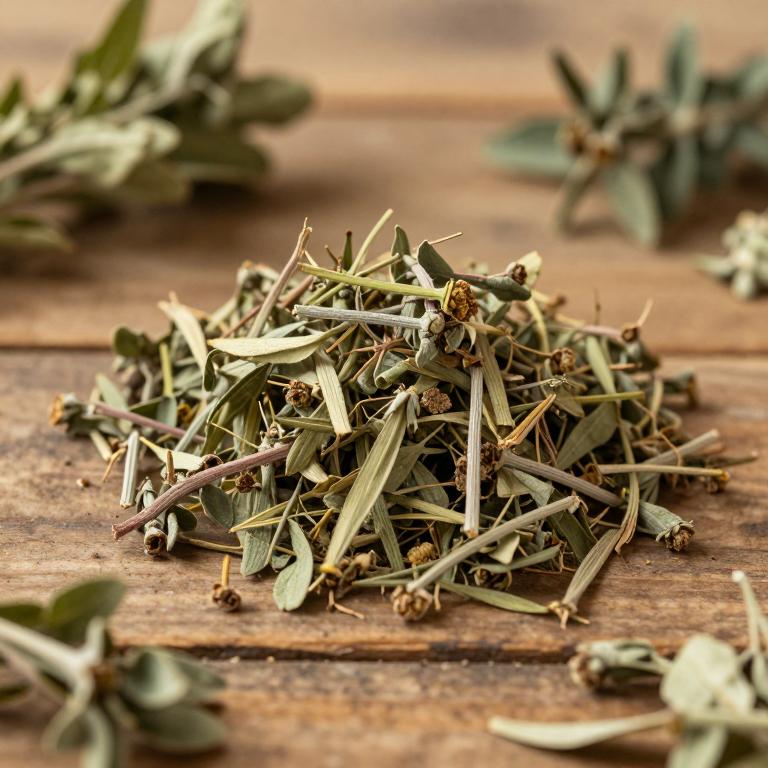
Names and Synonyms
Common Names
- Stiff-leaved Hare's Ear
Scientific Names
Accepted name
Bupleurum rigidumSynonyms
- Bupleurum rigidum subsp. eurigidum
Regional and Traditional Names
Spanish:
- Clujia basta
- Hierba de las cinco venas
- Lengua de liebre
- Bupleurum paniculatum
- Enoria rigida
French:
- Buplèvre rigide
Sources: Wikidata, Catalogue of Life
Taxonomical Classification
This plant belongs to the kingdom Plantae and the phylum Streptophyta, falling under the class Equisetopsida and subclass Magnoliidae. Within the order Apiales, it is classified under the family Apiaceae. Specifically, its taxonomic identity is defined by the genus Bupleurum, with the species being Bupleurum rigidum.
| Rank | Classification |
|---|---|
| Kingdom | Plantae |
| Phylum | Streptophyta |
| Class | Equisetopsida |
| Subclass | Magnoliidae |
| Order | Apiales |
| Family | Apiaceae |
| Genus | Bupleurum |
Sources: The World Checklist of Vascular Plants (WCVP)
Distribution
This plant exhibits a diverse geographical distribution across the Mediterranean region. In Southwestern Europe, it can be found growing within the territories of France, Portugal, and Spain. Its range extends further east into Southeastern Europe, specifically inhabiting parts of Italy. Additionally, the species is present in Northern Africa, where it is located in Algeria. Together, these locations highlight the plant's preference for the warm climates of the Mediterranean basin.
| Region | Area |
|---|---|
| Southwestern Europe | France |
| Southwestern Europe | Portugal |
| Southwestern Europe | Spain |
| Southeastern Europe | Italy |
| Northern Africa | Algeria |
| Northern Africa | Morocco |
Sources: The World Checklist of Vascular Plants (WCVP)
Botanical Identification
Life history
The life history of Bupleurum rigidum is characterized by its status as a perennial species, meaning it lives for more than two years and maintains its presence in the ecosystem through multiple growing seasons. Throughout its life cycle, the plant undergoes various developmental stages typical of its genus, often exhibiting a growth pattern that can be categorized as variable depending on environmental conditions. As a perennial, it establishes a robust root system that allows it to survive periods of dormancy and re-emerge to complete its reproductive phases annually. This longevity enables the plant to contribute consistently to its habitat, cycling through vegetative growth and flowering periods over several years.
- Lifecycle :
- perennial
Morphology
The morphology of Bupleurum rigidum is characterized by its growth form as a woody herb and a forb, exhibiting a self-supporting structure rather than functioning as a climber, liana, or vine. It is a terrestrial plant, existing as an independent organism that does not exhibit parasitic or epiphytic behavior. Structurally, it maintains a self-supporting habit and possesses a woody nature in its development.
- Aquatic :
- terrestrial
- Climber :
- self-supporting
- Epiphyte :
- terrestrial
- Growth form :
- herb
- Growth form :
- forb
- Parasite :
- independent
- Woodiness :
- woody
Physiology
The physiology of Bupleurum rigidum is fundamentally characterized by a C3 photosynthetic pathway, a metabolic strategy typical of most temperate herbaceous perennials. This pathway involves the direct fixation of atmospheric carbon dioxide by the enzyme ribulose-1,5-bisphosphate carboxylase/oxygenase (RuBisCO) within the mesophyll cells, leading to the initial formation of a three-carbon compound, 3-phosphoglycerate. This metabolic framework dictates the plant's efficiency in carbon assimilation and water-use patterns, particularly in relation to its environmental adaptations. The plant's physiological processes are closely tied to its ability to manage photorespiration and optimize gas exchange under varying light and temperature regimes, ensuring the efficient synthesis of organic compounds necessary for its growth and the production of secondary metabolites.
- Photosynthetic pathway :
- C3
Sources: Global Inventory of Floras and Traits (GIFT)
Plant Parts
Bupleurum rigidum has 1 reported plant parts identified across 1 scientific publications and several other databases that are studied for medicinal purposes. The most consistently reported plant part include root.
| Plant part | Supporting sources | Consensus |
|---|---|---|
| Root | 1 supporting sources | ★☆☆☆☆ |
Root
- Journal of natural products
Chemicals
Bupleurum rigidum has 7 reported phytochemicals identified across 1 scientific publications and several other databases. The most consistently reported chemicals include Buddlejasaponin IV, 8-Acetylharpagide, Harpagoside, Saikosaponin 1, Saikosaponin 2.
| Chemical | Supporting sources | Consensus |
|---|---|---|
| Buddlejasaponin IV | 2 supporting sources | ★☆☆☆☆ |
| 8-Acetylharpagide | 1 supporting sources | ★☆☆☆☆ |
| Harpagoside | 1 supporting sources | ★☆☆☆☆ |
| Saikosaponin 1 | 1 supporting sources | ★☆☆☆☆ |
| Saikosaponin 2 | 1 supporting sources | ★☆☆☆☆ |
| Scorodioside | 1 supporting sources | ★☆☆☆☆ |
| Verbascoside | 1 supporting sources | ★☆☆☆☆ |
Buddlejasaponin IV
- Planta medica
- Journal of natural products
8-Acetylharpagide
- Planta medica
Harpagoside
- Planta medica
Saikosaponin 1
- Life sciences
Saikosaponin 2
- Life sciences
Scorodioside
- Planta medica
Verbascoside
- Planta medica
Activities
Bupleurum rigidum has 1 reported activities identified across 1 scientific publications and several other databases. The most consistently reported activities include Antiinflammatory.
| Activity | Supporting sources | Consensus |
|---|---|---|
| Antiinflammatory | 1 supporting sources | ★☆☆☆☆ |
Antiinflammatory
- Life sciences
Conditions
Bupleurum rigidum has 1 reported investigations on conditions identified across 1 scientific publications and several other databases. The most consistently reported conditions include poliovirus type 1.
| Condition | Supporting sources | Consensus |
|---|---|---|
| Poliovirus type 1 | 1 supporting sources | ★☆☆☆☆ |
Poliovirus type 1
- Planta medica
Preparations
Bupleurum rigidum has 1 reported preparations identified across 1 scientific publications and several other databases. The most consistently reported preparations include n-BuOH extract.
| Preparation | Supporting sources | Consensus |
|---|---|---|
| N-buoh extract | 1 supporting sources | ★☆☆☆☆ |
N-buoh extract
- Journal of natural products