Fruticose Thorowax
Bupleurum fruticescens · Accepted scientific name
Scientific literature: Very Sparse (3 studies) · ★☆☆☆☆
Fruticose Thorowax, scientifically known as Bupleurum fruticescens, is a resilient perennial herb prized in traditional medicine. Characterized by its woody base and delicate yellow blooms, this plant contains bioactive compounds used to support liver health, reduce inflammation, and boost immune function, making it a valuable botanical resource.
- Family
- Apiaceae
- Native range
- Europe
- Parts used
- Not available
- Common names
- Fruticose Thorowax
- Scientific synonyms
- Bupleurum Fruticescens F. Elatius · Buprestis Frutescens · 5 more
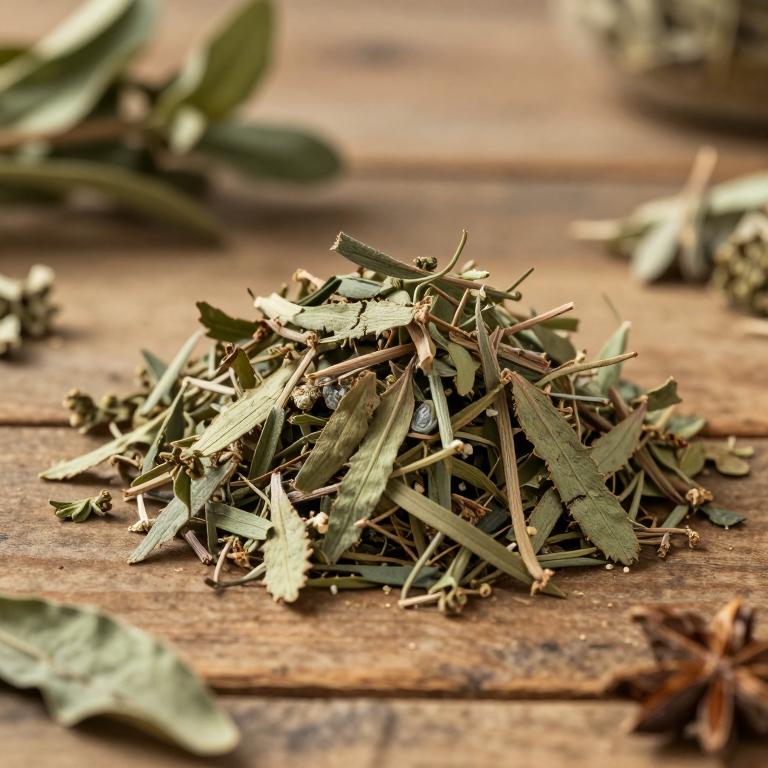
Names and Synonyms
Common Names
- Fruticose Thorowax
Scientific Names
Accepted name
Bupleurum fruticescensSynonyms
- Bupleurum fruticescens f. elatius
- Buprestis frutescens
- Tenoria fruticescens
- Bupleurum frutescens
- Bupleurum fruticescens var. elatius
- Bupleurum mucronatum
- Bupleurum hispanicum
Regional and Traditional Names
Spanish:
- Bupleurum ranunculoides var. provinciale
- Bupleurum ranunculoides var. cebennense
- Bupleurum ranunculoides var. aricense
- Bupleurum ramosum
- Bupleurum laricense
- Bupleurum caricinum
- Bupleurum brasianum
- Bupleurum aricense
- Bupleurum telonense
- Bupleurum ranunculoides proles telonense
- Boja de las calenturas
- Enerdo
- Hierba cebollá
- Hierba de los cuarenta nudos
- Hinojo de perro
- Hierba cebolla
- Hinojo de perro
French:
- Buplèvre arbustif
- Buplèvre épineux
Sources: Wikidata, Catalogue of Life
Taxonomical Classification
This plant belongs to the kingdom Plantae within the phylum Streptophyta and the class Equisetopsida. It is further classified under the subclass Magnoliidae and the order Apiales. Finally, it is a member of the family Apiaceae and falls under the genus Bupleurum.
| Rank | Classification |
|---|---|
| Kingdom | Plantae |
| Phylum | Streptophyta |
| Class | Equisetopsida |
| Subclass | Magnoliidae |
| Order | Apiales |
| Family | Apiaceae |
| Genus | Bupleurum |
Sources: The World Checklist of Vascular Plants (WCVP)
Distribution
This plant exhibits a specific range within the European continent. In Middle Europe, its presence can be documented in Germany. Moving toward the Mediterranean region, it is also found in Southwestern Europe. Specifically, the species is known to grow within the territory of Spain. Therefore, its distribution spans from central regions to the southern reaches of the continent.
| Region | Area |
|---|---|
| Middle Europe | Germany |
| Southwestern Europe | Spain |
Sources: The World Checklist of Vascular Plants (WCVP)
Botanical Identification
Life history
The life history of Bupleurum fruticescens is characterized by its nature as a perennial plant, allowing it to persist through multiple growing seasons. As a perennial, it avoids the rapid, single-season completion of annuals or the two-year cycle of biennials, instead establishing a stable presence in its habitat through the development of robust root systems that store energy for subsequent years. This life cycle enables the species to withstand seasonal fluctuations and contribute to long-term population stability within its ecosystem.
- Lifecycle :
- perennial
Morphology
The morphology of Bupleurum fruticescens is characterized by its growth form as a shrub, functioning as a self-supporting plant rather than a climber or vine. It is a terrestrial species, lacking aquatic or semiaquatic tendencies, and it does not exhibit epiphytic behavior, remaining rooted in the soil. As an independent organism, it does not function as a parasite. Structurally, the plant is defined by its non-woody nature, lacking the heavy lignification found in true trees, which distinguishes its physical composition from more robustly woody species.
- Aquatic :
- terrestrial
- Climber :
- self-supporting
- Epiphyte :
- terrestrial
- Growth form :
- shrub
- Parasite :
- independent
- Woodiness :
- non-woody
Reproduction
Reproduction in Bupleurum fruticescens is primarily achieved through the production of seeds contained within specialized fruit structures. The reproductive process culminates in the development of fruits that are characterized as dry rather than fleshy, ensuring that the seeds are released effectively for dispersal. These dry fruits serve as the primary vessel for protecting and transporting the genetic material of the plant. Once the maturity of the fruit is reached, the dryness of the structure facilitates the eventual liberation of seeds into the environment, allowing for the establishment of new individuals and the continuation of the species' life cycle.
- Fruit dryness :
- dry
Sources: Global Inventory of Floras and Traits (GIFT)
Chemicals
Bupleurum fruticescens has 2 reported phytochemicals identified across 0 scientific publications and several other databases. The most consistently reported chemicals include ALPHA-PINENE, BETA-CARYOPHYLLENE.
| Chemical | Supporting sources | Consensus |
|---|---|---|
| ALPHA-PINENE | 1 supporting sources | ★☆☆☆☆ |
| BETA-CARYOPHYLLENE | 1 supporting sources | ★☆☆☆☆ |
ALPHA-PINENE
- Planta medica
BETA-CARYOPHYLLENE
- Planta medica
Preparations
Bupleurum fruticescens has 2 reported preparations identified across 0 scientific publications and several other databases. The most consistently reported preparations include BuOH extract, essential oil.
| Preparation | Supporting sources | Consensus |
|---|---|---|
| Buoh extract | 1 supporting sources | ★☆☆☆☆ |
| Essential oil | 1 supporting sources | ★☆☆☆☆ |
Buoh extract
- Planta medica
Essential oil
- Planta medica