Bupleurum franchetii
Bupleurum franchetii · Accepted scientific name
Scientific literature: Very Sparse (6 studies) · ★☆☆☆☆
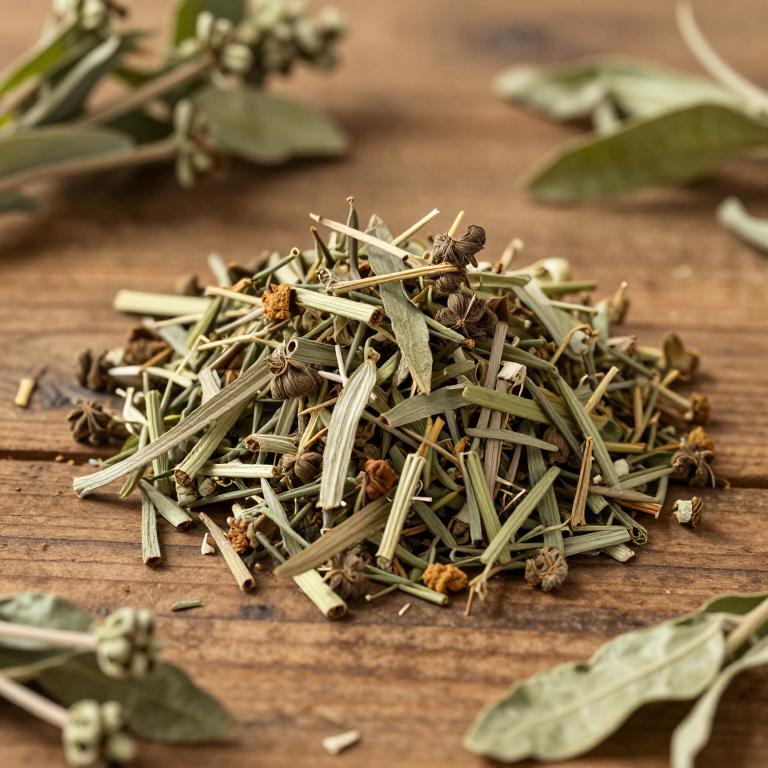
, scientifically known as Bupleurum franchetii, is a traditional medicinal herb widely utilized in East Asian pharmacology. Often referred to as Chai Hu, this perennial plant is prized for its ability to relieve stagnation, clear heat, and soothe the liver. It plays a crucial role in treating various inflammatory conditions.
- Family
- Apiaceae
- Native range
- Asia-Temperate
- Parts used
- Not available
- Common names
- Not available
- Scientific synonyms
- Bupleurum Longicaule Var. Franchetii
Names and Synonyms
Scientific Names
Accepted name
Bupleurum franchetiiSynonyms
- Bupleurum longicaule var. franchetii
Taxonomical Classification
This plant belongs to the kingdom Plantae within the phylum Streptophyta and the class Equisetopsida. It is further classified under the subclass Magnoliidae and the order Apiales. Finally, it is a member of the family Apiaceae and falls under the genus Bupleurum.
| Rank | Classification |
|---|---|
| Kingdom | Plantae |
| Phylum | Streptophyta |
| Class | Equisetopsida |
| Subclass | Magnoliidae |
| Order | Apiales |
| Family | Apiaceae |
| Genus | Bupleurum |
Sources: The World Checklist of Vascular Plants (WCVP)
Distribution
This plant, known as Bupleurum franchetii, exhibits a specific distribution pattern across several regions of China. It is widely documented to grow within the South-Central part of the country. Furthermore, its range extends northward into the Inner Mongolia region. The species is also found throughout the North-Central areas of China. Consequently, these diverse locations highlight the plant's broad presence across different Chinese provinces.
| Region | Area |
|---|---|
| China | China South-Central |
| China | Inner Mongolia |
| China | China North-Central |
Sources: The World Checklist of Vascular Plants (WCVP)
Chemicals
Bupleurum franchetii has 6 reported phytochemicals identified across 0 scientific publications and several other databases. The most consistently reported chemicals include Saikosaponin A, Saikosaponin B2, Saikosaponin C, Saikosaponin D, Saikosaponin E.
| Chemical | Supporting sources | Consensus |
|---|---|---|
| Saikosaponin A | 1 supporting sources | ★☆☆☆☆ |
| Saikosaponin B2 | 1 supporting sources | ★☆☆☆☆ |
| Saikosaponin C | 1 supporting sources | ★☆☆☆☆ |
| Saikosaponin D | 1 supporting sources | ★☆☆☆☆ |
| Saikosaponin E | 1 supporting sources | ★☆☆☆☆ |
| quercetin | 1 supporting sources | ★☆☆☆☆ |
Saikosaponin A
- Zhongguo Zhong yao za zhi = Zhongguo zhongyao zazhi = China journal of Chinese materia medica
Saikosaponin B2
- Zhongguo Zhong yao za zhi = Zhongguo zhongyao zazhi = China journal of Chinese materia medica
Saikosaponin C
- Zhongguo Zhong yao za zhi = Zhongguo zhongyao zazhi = China journal of Chinese materia medica
Saikosaponin D
- Zhongguo Zhong yao za zhi = Zhongguo zhongyao zazhi = China journal of Chinese materia medica
Saikosaponin E
- Zhongguo Zhong yao za zhi = Zhongguo zhongyao zazhi = China journal of Chinese materia medica
quercetin
- Zhongguo Zhong yao za zhi = Zhongguo zhongyao zazhi = China journal of Chinese materia medica