dwarf oxeye
Buphthalmum speciosissimum · Accepted scientific name
Scientific literature: Very Sparse (15 studies) · ★☆☆☆☆
Dwarf oxeye, scientifically known as Buphthalmum speciosissimum, is a resilient perennial herb cherished in traditional herbalism. Native to specific Asian regions, this botanical treasure is valued for its unique bioactive compounds. It offers therapeutic potential in treating inflammatory conditions, providing a natural approach to holistic wellness and healing.
- Family
- Asteraceae
- Native range
- Europe
- Parts used
- Not available
- Common names
- Dwarf Oxeye
- Scientific synonyms
- Telekia Speciosissima · Xerolekia Speciosissima
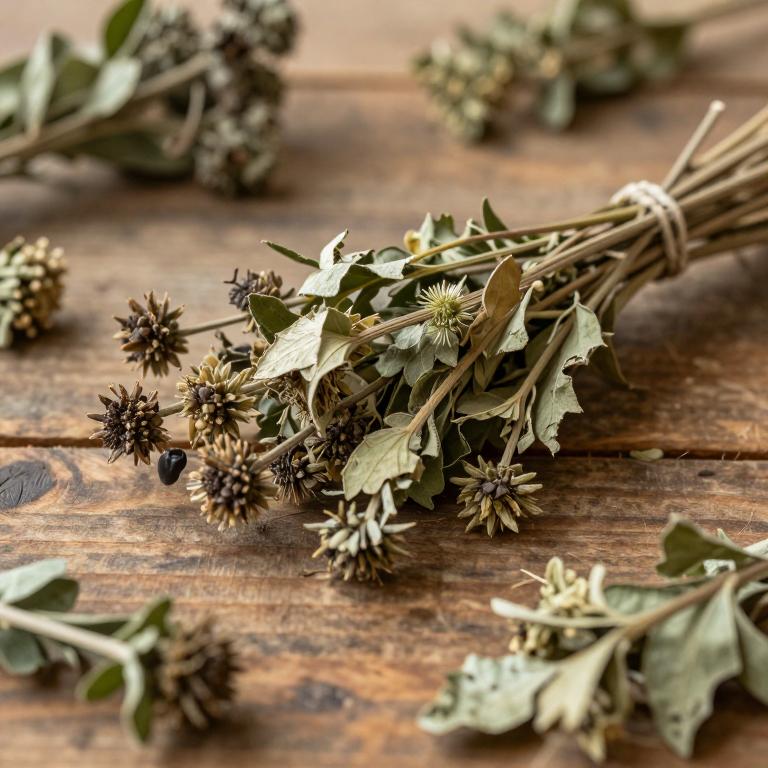
Names and Synonyms
Common Names
- dwarf oxeye
Scientific Names
Accepted name
Buphthalmum speciosissimumSynonyms
- Telekia speciosissima
- Xerolekia speciosissima
Regional and Traditional Names
German:
- Prächtige Telekia
Sources: Wikidata, Catalogue of Life
Taxonomical Classification
This plant belongs to the kingdom Plantae and is classified under the phylum Streptophyta within the class Equisetopsida. As a member of the subclass Magnoliidae and the order Asterales, it is further categorized into the family Asteraceae. Finally, its specific taxonomic identity is defined by the genus Buphthalmum.
| Rank | Classification |
|---|---|
| Kingdom | Plantae |
| Phylum | Streptophyta |
| Class | Equisetopsida |
| Subclass | Magnoliidae |
| Order | Asterales |
| Family | Asteraceae |
| Genus | Buphthalmum |
Sources: The World Checklist of Vascular Plants (WCVP)
Distribution
This plant, known scientifically as Buphthalmum speciosissimum, possesses a very specific and limited geographical range. Its natural occurrence is restricted to the region of Southeastern Europe. Within this broader territory, the species is specifically documented in Italy. This indicates that it does not inhabit the vast majority of the European continent. Consequently, its presence is localized to particular habitats found within the Italian peninsula.
| Region | Area |
|---|---|
| Southeastern Europe | Italy |
Sources: The World Checklist of Vascular Plants (WCVP)
Botanical Identification
Life history
The life history of Buphthalmum speciosissimum is characterized by its status as a perennial plant, allowing it to persist through multiple growing seasons. As a perennial species, it does not complete its life cycle in a single year like annuals or two years like biennials; instead, it maintains established root systems that facilitate regrowth and long-term survival in its natural habitat. This life cycle enables the plant to endure environmental fluctuations and invest energy into robust vegetative structures and reproductive efforts over several years.
- Lifecycle :
- perennial
Morphology
The morphology of Buphthalmum speciosissimum is characterized by its growth form as a non-woody herb, functioning primarily as a forb. This plant is a self-supporting species, exhibiting no climbing or liana-like tendencies, and it maintains an independent lifestyle as a non-parasitic organism. In terms of its ecological habitat and positioning, it is classified as terrestrial, rather than being aquatic, semiaquatic, or epiphytic. The structure of the plant is entirely non-woody, reinforcing its classification as a herbaceous species that grows upright without the need for external support or climbing mechanisms.
- Aquatic :
- terrestrial
- Climber :
- self-supporting
- Epiphyte :
- terrestrial
- Growth form :
- herb
- Parasite :
- independent
- Woodiness :
- non-woody
Physiology
The physiology of Buphthalmum speciosissimum is fundamentally characterized by its reliance on the C3 photosynthetic pathway, a metabolic strategy common among many temperate herbaceous perennials. This process involves the direct fixation of atmospheric carbon dioxide by the enzyme RuBisCO within the mesophyll cells, leading to the initial formation of a three-carbon compound, 3-phosphoglycerate. Under typical environmental conditions, the plant utilizes this pathway to drive the synthesis of carbohydrates necessary for growth, flowering, and seed production. The efficiency of this C3 mechanism is highly dependent on ambient temperature and moisture availability, as the plant must balance carbon assimilation with transpirational water loss through its stomata. Consequently, its physiological performance and metabolic rate fluctuate according to seasonal variations, optimizing energy capture during favorable growing periods to support its complex reproductive structures.
- Photosynthetic pathway :
- C3
Reproduction
The reproduction of Buphthalmum speciosissimum is centered around the production of minute seeds that play a critical role in its life cycle and dispersal. The seed mass of this species is notably small, exhibiting specific quantitative characteristics that define its reproductive output. On average, the seed mass is approximately 0.0004316665 g, reflecting a highly miniaturized seed structure. The variability within the population shows that individual seed masses range from a minimum of 0.00033 g to a maximum of 0.00069 g. These lightweight seeds are likely adapted for efficient dispersal, allowing the plant to colonize suitable habitats through wind or environmental movement.
- Seed mass max:
- 0.00069 g
- Seed mass mean:
- 0.0004316665 g
- Seed mass min:
- 0.00033 g
Sources: Global Inventory of Floras and Traits (GIFT)
Chemicals
Buphthalmum speciosissimum has 13 reported phytochemicals identified across 0 scientific publications and several other databases. The most consistently reported chemicals include 1,5-Dicaffeoylquinic acid, 2,3-dihydroaromaticin, Astragalin, CHLOROGENIC ACID, Flavonoids.
| Chemical | Supporting sources | Consensus |
|---|---|---|
| 1,5-Dicaffeoylquinic acid | 1 supporting sources | ★☆☆☆☆ |
| 2,3-dihydroaromaticin | 1 supporting sources | ★☆☆☆☆ |
| Astragalin | 1 supporting sources | ★☆☆☆☆ |
| CHLOROGENIC ACID | 1 supporting sources | ★☆☆☆☆ |
| Flavonoids | 1 supporting sources | ★☆☆☆☆ |
| Isoquercitrin | 1 supporting sources | ★☆☆☆☆ |
| LOLIOLIDE | 1 supporting sources | ★☆☆☆☆ |
| Methyl caffeate | 1 supporting sources | ★☆☆☆☆ |
| Quercetagitrin | 1 supporting sources | ★☆☆☆☆ |
| Quercimeritrin | 1 supporting sources | ★☆☆☆☆ |
1,5-Dicaffeoylquinic acid
- Molecules (Basel, Switzerland)
2,3-dihydroaromaticin
- Molecules (Basel, Switzerland)
Astragalin
- Molecules (Basel, Switzerland)
CHLOROGENIC ACID
- Molecules (Basel, Switzerland)
Flavonoids
- Molecules (Basel, Switzerland)
Isoquercitrin
- Molecules (Basel, Switzerland)
LOLIOLIDE
- Molecules (Basel, Switzerland)
Methyl caffeate
- Molecules (Basel, Switzerland)
Quercetagitrin
- Molecules (Basel, Switzerland)
Quercimeritrin
- Molecules (Basel, Switzerland)
Preparations
Buphthalmum speciosissimum has 3 reported preparations identified across 0 scientific publications and several other databases. The most consistently reported preparations include hydroalcoholic extract from the aerial parts, hydroalcoholic extract from the capitula, nonpolar extract from the aerial parts.
| Preparation | Supporting sources | Consensus |
|---|---|---|
| Hydroalcoholic extract from the aerial parts | 1 supporting sources | ★☆☆☆☆ |
| Hydroalcoholic extract from the capitula | 1 supporting sources | ★☆☆☆☆ |
| Nonpolar extract from the aerial parts | 1 supporting sources | ★☆☆☆☆ |
Hydroalcoholic extract from the aerial parts
- Molecules (Basel, Switzerland)
Hydroalcoholic extract from the capitula
- Molecules (Basel, Switzerland)
Nonpolar extract from the aerial parts
- Molecules (Basel, Switzerland)