scented grass bulbine
Bulbine capitata · Accepted scientific name
Scientific literature: Very Sparse (12 studies) · ★☆☆☆☆
Scented grass bulbine, scientifically known as Bulbine capitata, is a versatile perennial succulent prized for its ornamental beauty and medicinal properties. Native to South Africa, this hardy plant features fleshy leaves and bright yellow blooms, traditionally used in various cultures to treat inflammation, skin conditions, and digestive ailments.
- Family
- Asphodelaceae
- Native range
- Africa
- Parts used
- Root
- Common names
- Scented Grass Bulbine
- Scientific synonyms
- Bulbine Stenophylla · Bulbine Asphodeloides Var. Otaviensis · 1 more
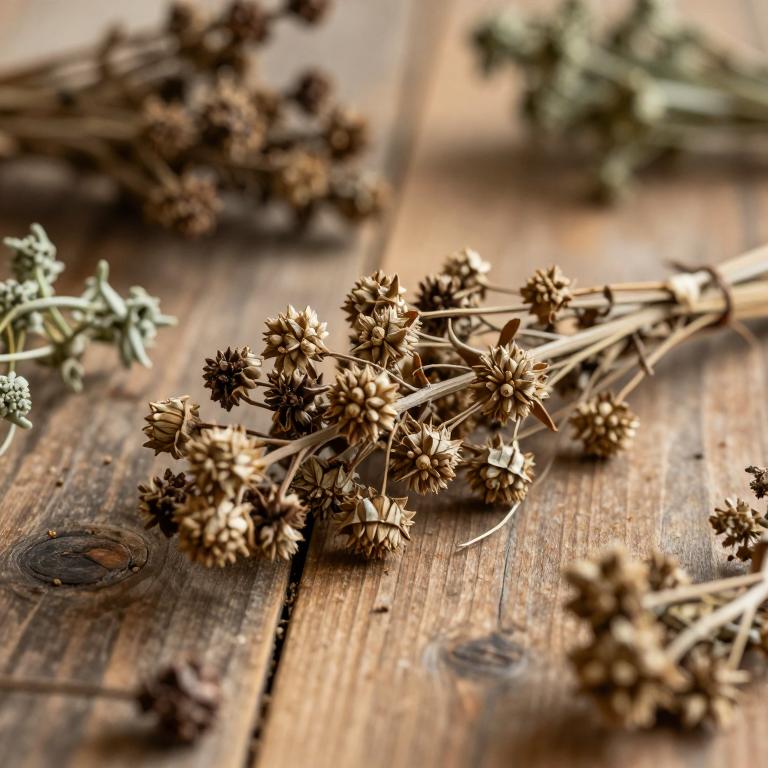
Names and Synonyms
Common Names
- scented grass bulbine
Scientific Names
Accepted name
Bulbine capitataSynonyms
- Bulbine stenophylla
- Bulbine asphodeloides var. otaviensis
- Bulbine lydenburgensis
Sources: Wikidata, Catalogue of Life
Taxonomical Classification
This plant, known scientifically as Bulbine capitaata, belongs to the kingdom Plantae and the phylum Streptophyta. Within the class Equisetopsida and subclass Magnoliidae, it is classified under the order Asparagales. Finally, it is a member of the family Asphodelaceae and is situated within the genus Bulbine.
| Rank | Classification |
|---|---|
| Kingdom | Plantae |
| Phylum | Streptophyta |
| Class | Equisetopsida |
| Subclass | Magnoliidae |
| Order | Asparagales |
| Family | Asphodelaceae |
| Genus | Bulbine |
Sources: The World Checklist of Vascular Plants (WCVP)
Distribution
This plant is widely distributed across various regions within Southern Africa. It can be found growing in the landscapes of Botswana and Namibia. Additionally, its presence extends to the province of KwaZulu-Natal. The species is also documented within the Free State region. Finally, its geographical range includes the territory of Eswatini.
| Region | Area |
|---|---|
| Southern Africa | Botswana |
| Southern Africa | Namibia |
| Southern Africa | KwaZulu-Natal |
| Southern Africa | Free State |
| Southern Africa | Eswatini |
| Southern Africa | Northern Provinces |
Sources: The World Checklist of Vascular Plants (WCVP)
Botanical Identification
Ecology
The ecology of Bulbine capitata is defined by its ability to inhabit diverse topographical gradients, allowing it to thrive across a broad altitudinal spectrum. This species is typically found within an elevational range that begins at a minimum of 230 m AMSL and extends up to a maximum of 1850 m AMSL. Such a wide vertical distribution suggests an adaptability to varying climatic conditions, ranging from warmer, lower-altitude environments to the cooler, more temperate zones found at higher elevations. This broad ecological niche enables the plant to colonize various landscapes within its range, provided the specific moisture and soil requirements of its native habitats are met.
- Elevational range max:
- 1850 m AMSL
- Elevational range min:
- 230 m AMSL
Life history
The life history of Bulbine capitaata is characterized by its status as a perennial plant, allowing it to persist in its environment through multiple growing seasons. It functions as a cryptophyte, ensuring its survival by keeping its regenerative organs protected underground. Specifically, its life form is classified as a geophyte, utilizing specialized underground storage organs to endure unfavorable environmental conditions and facilitate regrowth.
- Life form :
- geophyte
- Life form :
- cryptophyte
- Lifecycle :
- perennial
Morphology
The morphology of Bulbine capitaata is characterized by its growth form as a non-woody herb, functioning as a self-supporting plant that does not require climbing structures. As a terrestrial species, it maintains an independent lifestyle, neither acting as a parasite nor as an epiphyte. The plant exhibits a compact stature, with a height that typically ranges from a minimum of 0.21 m to a maximum of 0.41 m, resulting in a mean plant height of approximately 0.3 m.
- Aquatic :
- terrestrial
- Climber :
- self-supporting
- Epiphyte :
- terrestrial
- Growth form :
- herb
- Parasite :
- independent
- Plant height max:
- 0.41 m
- Plant height mean:
- 0.3 m
- Plant height min:
- 0.21 m
- Woodiness :
- non-woody
Physiology
The physiology of Bulbine capitata is characterized by specific metabolic and nutritional processes that govern its growth and survival. In terms of carbon assimilation, the plant utilizes a C3 photosynthetic pathway, relying on the standard Calvin cycle to fix atmospheric carbon dioxide into organic compounds. Furthermore, regarding its nutrient acquisition capabilities, Bulbine capitata is not a nitrogen fixer, meaning it lacks the symbiotic relationships with nitrogen-fixing bacteria required to convert atmospheric nitrogen into usable forms and must instead rely on the uptake of available nitrogen from the soil through its root system.
- Nitrogen fixer :
- no
- Photosynthetic pathway :
- C3
Reproduction
The reproduction of Bulbine capitaata is primarily driven by biotic mechanisms, relying on living organisms to facilitate the transfer of pollen. The plant exhibits a specialized pollination syndrome characterized by biotic interactions, specifically targeting insect vectors to ensure genetic exchange. Within this framework, the plant utilizes insect pollination as its main method, with a particular emphasis on bees as key pollinators. This reliance on specific insect movements allows for efficient cross-pollination, ensuring the successful fertilization and subsequent seed production necessary for the species' lifecycle.
- Pollination syndrome :
- insect
- Pollination syndrome :
- bee
- Pollination syndrome :
- biotic
Sources: Global Inventory of Floras and Traits (GIFT)
Plant Parts
Bulbine capitata has 1 reported plant parts identified across 1 scientific publications and several other databases that are studied for medicinal purposes. The most consistently reported plant part include root.
| Plant part | Supporting sources | Consensus |
|---|---|---|
| Root | 1 supporting sources | ★☆☆☆☆ |
Root
- Planta medica
Chemicals
Bulbine capitata has 9 reported phytochemicals identified across 1 scientific publications and several other databases. The most consistently reported chemicals include 1-Acetoxymethyl-8-hydroxynaphtho[2,3-c]furan-4,9-dione, 1-acetoxymethyl-5,8-dihydroxynaphtho[2,3-c]furan-4,9-dione, 5,8-Dihydroxy-1-tigloylmethylnaphtho[2,3-c]furan-4,9-dione, 5,8-dihydroxy-1-hydroxymethylnaphtho[2,3-c]furan-4,9-dione, 5,8-dihydroxy-1-methylnaphtho[2,3-c]furan-4,9-dione.
| Chemical | Supporting sources | Consensus |
|---|---|---|
| 1-Acetoxymethyl-8-hydroxynaphtho[2,3-c]furan-4,9-dione | 1 supporting sources | ★☆☆☆☆ |
| 1-acetoxymethyl-5,8-dihydroxynaphtho[2,3-c]furan-4,9-dione | 1 supporting sources | ★☆☆☆☆ |
| 5,8-Dihydroxy-1-tigloylmethylnaphtho[2,3-c]furan-4,9-dione | 1 supporting sources | ★☆☆☆☆ |
| 5,8-dihydroxy-1-hydroxymethylnaphtho[2,3-c]furan-4,9-dione | 1 supporting sources | ★☆☆☆☆ |
| 5,8-dihydroxy-1-methylnaphtho[2,3-c]furan-4,9-dione | 1 supporting sources | ★☆☆☆☆ |
| 5-hydroxy-8-methoxy-1-methylnaphtho[2,3-c]furan-4,9-dione | 1 supporting sources | ★☆☆☆☆ |
| 8-hydroxy-1-methylnaphtho[2,3-c]furan-4,9-dione | 1 supporting sources | ★☆☆☆☆ |
| 8-hydroxy-5-methoxy-1-methylnaphtho[2,3-c]furan-4,9-dione | 1 supporting sources | ★☆☆☆☆ |
| Chrysophanol | 1 supporting sources | ★☆☆☆☆ |
1-Acetoxymethyl-8-hydroxynaphtho[2,3-c]furan-4,9-dione
- Planta medica
1-acetoxymethyl-5,8-dihydroxynaphtho[2,3-c]furan-4,9-dione
- Planta medica
5,8-Dihydroxy-1-tigloylmethylnaphtho[2,3-c]furan-4,9-dione
- Planta medica
5,8-dihydroxy-1-hydroxymethylnaphtho[2,3-c]furan-4,9-dione
- Planta medica
5,8-dihydroxy-1-methylnaphtho[2,3-c]furan-4,9-dione
- Planta medica
5-hydroxy-8-methoxy-1-methylnaphtho[2,3-c]furan-4,9-dione
- Planta medica
8-hydroxy-1-methylnaphtho[2,3-c]furan-4,9-dione
- Planta medica
8-hydroxy-5-methoxy-1-methylnaphtho[2,3-c]furan-4,9-dione
- Planta medica
Chrysophanol
- Planta medica
Activities
Bulbine capitata has 2 reported activities identified across 1 scientific publications and several other databases. The most consistently reported activities include Antioxidant, Antiplasmodial.
| Activity | Supporting sources | Consensus |
|---|---|---|
| Antioxidant | 1 supporting sources | ★☆☆☆☆ |
| Antiplasmodial | 1 supporting sources | ★☆☆☆☆ |
Antioxidant
- Planta medica
Antiplasmodial
- Planta medica
Preparations
Bulbine capitata has 1 reported preparations identified across 1 scientific publications and several other databases. The most consistently reported preparations include roots.
| Preparation | Supporting sources | Consensus |
|---|---|---|
| Roots | 1 supporting sources | ★☆☆☆☆ |
Roots
- Planta medica