African Beardstyle
Bulbine abyssinica · Accepted scientific name
Scientific literature: Very Sparse (21 studies) · ★☆☆☆☆
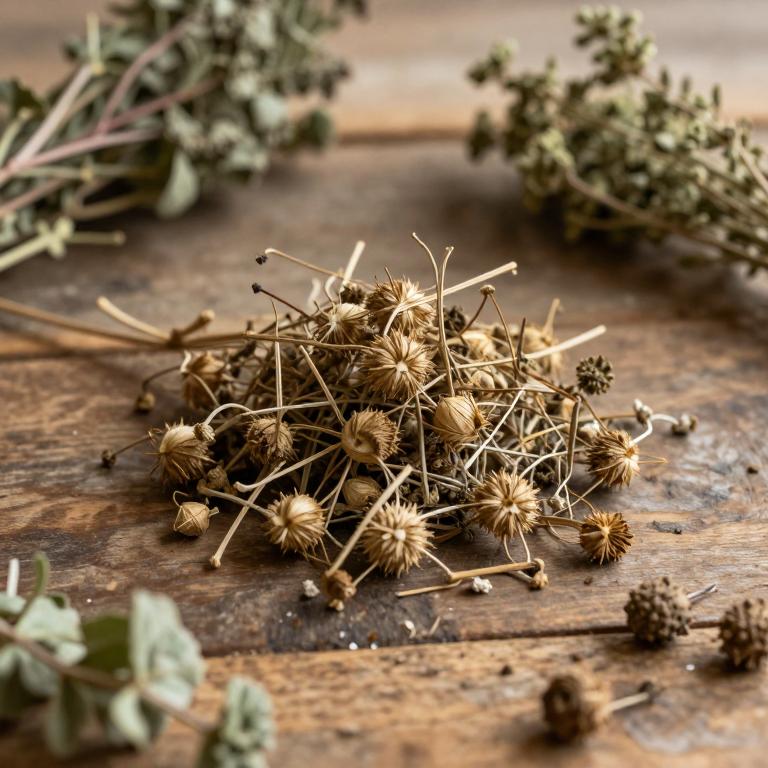
African Beardstyle, scientifically known as Bulbine abyssinica, is a resilient succulent native to various African regions. Renowned for its medicinal properties, this plant is traditionally used to treat skin ailments, inflammation, and digestive issues. Its fleshy leaves provide a natural source of bioactive compounds, making it a botanical treasure.
Names and Synonyms
Common Names
- African Beardstyle
- African Kopieva
- Bushy Bulbine
- Yellow Cat's Tail
Scientific Names
Accepted name
Bulbine abyssinicaSynonyms
- Bulbine asphodeloides var. xanthobotrys
- Bulbine xanthobotrys
- Bulbine asphodeloides var. filifolioides
- Bulbine asphodeloides var. monticola
- Bulbine huilensis
- Bulbine hamata
- Bulbine latitepala
- Bulbine decurvata
Sources: Wikidata, Catalogue of Life
Taxonomical Classification
This plant, Bulbine abyssinica, belongs to the kingdom Plantae and the phylum Streptophyta. Within the class Equisetopsida and subclass Magnoliidae, it is categorized under the order Asparagales. Finally, it is classified under the family Asphodelaceae and the genus Bulbine.
| Rank | Classification |
|---|---|
| Kingdom | Plantae |
| Phylum | Streptophyta |
| Class | Equisetopsida |
| Subclass | Magnoliidae |
| Order | Asparagales |
| Family | Asphodelaceae |
| Genus | Bulbine |
Sources: The World Checklist of Vascular Plants (WCVP)
Distribution
This plant is primarily found within the diverse landscapes of West-Central Tropical Africa. Its specific geographical range includes the nation of Burundi, where it grows in local habitats. It is also documented to inhabit the territories of Congo and Equatorial Guinea. Furthermore, the species can be located within the borders of Rwanda. Finally, its distribution extends into the vast expanse of the DR Congo.
| Region | Area |
|---|---|
| West-Central Tropical Africa | Burundi |
| West-Central Tropical Africa | Congo |
| West-Central Tropical Africa | Equatorial Guinea |
| West-Central Tropical Africa | Rwanda |
| West-Central Tropical Africa | DR Congo |
| Northeast Tropical Africa | Eritrea |
| Northeast Tropical Africa | Ethiopia |
| Northeast Tropical Africa | Somalia |
| Northeast Tropical Africa | Sudan-South Sudan |
| East Tropical Africa | Kenya |
Sources: The World Checklist of Vascular Plants (WCVP)
Botanical Identification
Ecology
The ecology of Bulbine abyssinica is characterized by its adaptability to diverse altitudinal gradients within its native habitats. This species thrives across a broad vertical distribution, occupying ecological niches that span from low-lying areas at an elevation of 250 m AMSL to high-altitude environments reaching up to 2000 m AMSL. This wide elevational range suggests that the plant is capable of tolerating varying climatic conditions, including fluctuations in temperature, moisture availability, and atmospheric pressure associated with different mountain zones. Such a broad ecological amplitude allows it to persist in a variety of terrain types within its geographic range, ranging from warmer, more humid lower elevations to the cooler, potentially more seasonal conditions found at higher elevations.
- Elevational range max:
- 2000 m AMSL
- Elevational range min:
- 250 m AMSL
Life history
The life history of Bulbine abyssinica is characterized by its status as a perennial plant, allowing it to persist through multiple growing seasons and maintain a stable presence within its ecosystem. As a geophyte, it survives unfavorable environmental conditions by retreating to underground storage organs, such as bulbs or fleshy roots, which protect its vital tissues and provide the necessary energy reserves for regrowth once conditions become favorable. This specialized life form enables the species to endure periods of dormancy, facilitating a continuous lifecycle that relies on these subterranean structures for long-term survival and seasonal regeneration.
- Life form :
- geophyte
- Lifecycle :
- perennial
Morphology
The morphology of Bulbine abyssinica is characterized by its growth form as a non-woody herb, exhibiting a self-supporting structure that does not function as a climber, liana, or vine. As a terrestrial species, it is neither aquatic nor an epiphyte, and it exists as an independent organism rather than a parasite. The plant maintains a relatively low stature, with a height range spanning from a minimum of 0.15 m to a maximum of 0.91 m, resulting in a mean plant height of approximately 0.7 m.
- Aquatic :
- terrestrial
- Climber :
- self-supporting
- Epiphyte :
- terrestrial
- Growth form :
- herb
- Parasite :
- independent
- Plant height max:
- 0.91 m
- Plant height mean:
- 0.7 m
- Plant height min:
- 0.15 m
- Woodiness :
- non-woody
Physiology
The physiology of Bulbine abyssinica is characterized by specific metabolic processes that dictate its growth and survival in its natural habitat. Primarily, the plant utilizes a C3 photosynthetic pathway, a method of carbon fixation that involves the direct carboxylation of ribulose-1,5-bisphosphate by the enzyme RuBisCO. In terms of nutrient cycling and symbiotic relationships, the species is not a nitrogen fixer, meaning it lacks the specialized biological mechanisms or symbiotic associations with diazotrophic bacteria required to convert atmospheric nitrogen into usable forms for its development.
- Nitrogen fixer :
- no
- Photosynthetic pathway :
- C3
Reproduction
The reproduction of Bulbine abyssinica is characterized by a biotic pollination syndrome, relying on living organisms to facilitate the transfer of pollen. Specifically, the plant utilizes insect-mediated pollination, with bees identified as a primary pollinator. The reproductive process is designed to promote genetic diversity, as self-fertilization is noted to be absent in this species. Following successful pollination, the plant produces seeds with varying sizes; the individual seed mass ranges from a minimum of 0.00059 g to a maximum of 0.00253 g, maintaining an average seed mass of approximately 0.001386 g.
- Pollination syndrome :
- insect
- Pollination syndrome :
- bee
- Pollination syndrome :
- biotic
- Seed mass max:
- 0.00253 g
- Seed mass mean:
- 0.001386 g
- Seed mass min:
- 0.00059 g
- Self fertilization :
- absent
Sources: Global Inventory of Floras and Traits (GIFT)
Plant Parts
Bulbine abyssinica has 1 reported plant parts identified across 1 scientific publications and several other databases that are studied for medicinal purposes. The most consistently reported plant part include leaf.
| Plant part | Supporting sources | Consensus |
|---|---|---|
| Leaf | 1 supporting sources | ★☆☆☆☆ |
Leaf
- Pharmacognosy research
Chemicals
Bulbine abyssinica has 8 reported phytochemicals identified across 1 scientific publications and several other databases. The most consistently reported chemicals include CARVONE, Flavonoids, Proanthocyanidins, Psoralen, Saponins.
| Chemical | Supporting sources | Consensus |
|---|---|---|
| CARVONE | 1 supporting sources | ★☆☆☆☆ |
| Flavonoids | 1 supporting sources | ★☆☆☆☆ |
| Proanthocyanidins | 1 supporting sources | ★☆☆☆☆ |
| Psoralen | 1 supporting sources | ★☆☆☆☆ |
| Saponins | 1 supporting sources | ★☆☆☆☆ |
| Tannins | 1 supporting sources | ★☆☆☆☆ |
| polyphenols | 1 supporting sources | ★☆☆☆☆ |
| quercetin | 1 supporting sources | ★☆☆☆☆ |
CARVONE
- Pharmacognosy research
Flavonoids
- Evidence-based complementary and alternative medicine : eCAM
Proanthocyanidins
- Evidence-based complementary and alternative medicine : eCAM
Psoralen
- Pharmacognosy research
Saponins
- Evidence-based complementary and alternative medicine : eCAM
Tannins
- Evidence-based complementary and alternative medicine : eCAM
polyphenols
- Pharmacognosy research
quercetin
- Pharmacognosy research
Activities
Bulbine abyssinica has 3 reported activities identified across 1 scientific publications and several other databases. The most consistently reported activities include Antioxidant, Antibacterial, Antidiabetic.
| Activity | Supporting sources | Consensus |
|---|---|---|
| Antioxidant | 2 supporting sources | ★☆☆☆☆ |
| Antibacterial | 1 supporting sources | ★☆☆☆☆ |
| Antidiabetic | 1 supporting sources | ★☆☆☆☆ |
Antioxidant
- Pharmacognosy research
- Evidence-based complementary and alternative medicine : eCAM
Antibacterial
- Evidence-based complementary and alternative medicine : eCAM
Antidiabetic
- Pharmacognosy research
Conditions
Bulbine abyssinica has 6 reported investigations on conditions identified across 1 scientific publications and several other databases. The most consistently reported conditions include back pain, bilharzia, diabetes mellitus, dysentery, infertility.
| Condition | Supporting sources | Consensus |
|---|---|---|
| Back pain | 1 supporting sources | ★☆☆☆☆ |
| Bilharzia | 1 supporting sources | ★☆☆☆☆ |
| Diabetes mellitus | 1 supporting sources | ★☆☆☆☆ |
| Dysentery | 1 supporting sources | ★☆☆☆☆ |
| Infertility | 1 supporting sources | ★☆☆☆☆ |
| Rheumatism | 1 supporting sources | ★☆☆☆☆ |
Back pain
- Evidence-based complementary and alternative medicine : eCAM
Bilharzia
- Evidence-based complementary and alternative medicine : eCAM
Diabetes mellitus
- Evidence-based complementary and alternative medicine : eCAM
Dysentery
- Evidence-based complementary and alternative medicine : eCAM
Infertility
- Evidence-based complementary and alternative medicine : eCAM
Rheumatism
- Evidence-based complementary and alternative medicine : eCAM