Buddleja thyrsoides
Buddleja thyrsoides · Accepted scientific name
Scientific literature: Very Sparse (5 studies) · ★☆☆☆☆
, scientifically known as Buddlejia thyrsoides, is a resilient medicinal shrub valued for its diverse therapeutic properties. Often used in traditional practices to address inflammatory conditions and respiratory ailments, this plant offers significant bioactive compounds. Understanding its botanical characteristics and healing potential is essential for exploring its ethnobotanical significance.
- Family
- Scrophulariaceae
- Native range
- Southern America
- Parts used
- Flower · Leaf
- Common names
- Not available
- Scientific synonyms
- Buddleja Chloroleuca
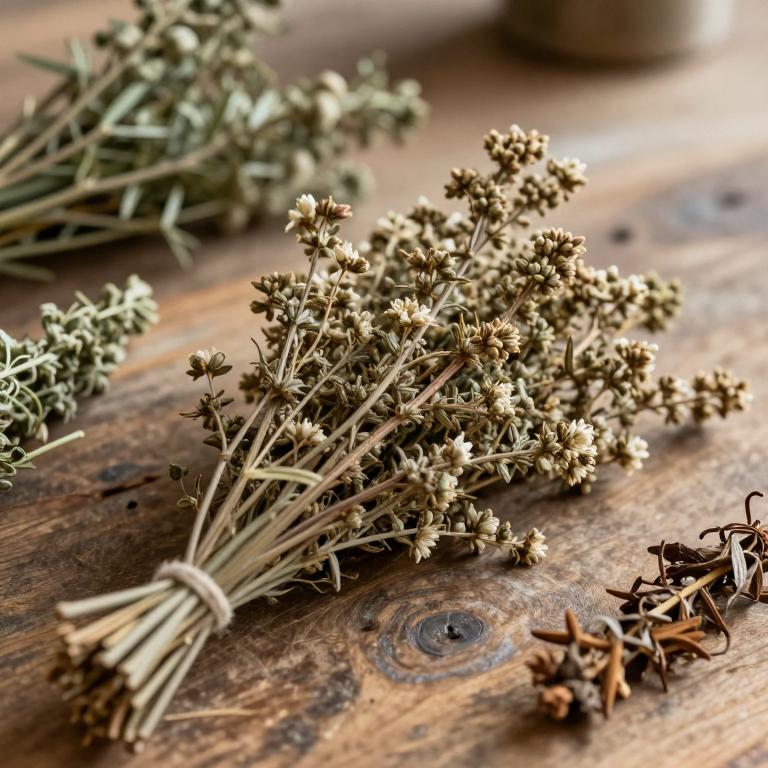
Names and Synonyms
Scientific Names
Accepted name
Buddleja thyrsoidesSynonyms
- Buddleja chloroleuca
Sources: Wikidata
Taxonomical Classification
This plant belongs to the kingdom Plantae and the phylum Streptophyta, falling under the class Equisetopsida and the subclass Magnoliidae. Within the order Lamiales, it is classified under the family Scrophulariaceae. Finally, its taxonomic identity is defined by the genus Buddleja, specifically the species Buddleja thyrsoides.
| Rank | Classification |
|---|---|
| Kingdom | Plantae |
| Phylum | Streptophyta |
| Class | Equisetopsida |
| Subclass | Magnoliidae |
| Order | Lamiales |
| Family | Scrophulariaceae |
| Genus | Buddleja |
Sources: The World Checklist of Vascular Plants (WCVP)
Distribution
This plant is primarily found across specific regions of Southern South America. In the southern part of Brazil, it occupies a notable ecological niche. Its presence also extends into the northeastern territories of Argentina. Furthermore, the species is distributed within the borders of Uruguay. Consequently, its geographical range is concentrated in these southern latitudes.
| Region | Area |
|---|---|
| Brazil | Brazil South |
| Southern South America | Argentina Northeast |
| Southern South America | Uruguay |
Sources: The World Checklist of Vascular Plants (WCVP)
Botanical Identification
Ecology
The ecology of Buddleja thyrsoides is characterized by its distribution across a specific altitudinal gradient, primarily occupying lowland environments. This species thrives within an elevational range that begins at 0 m AMSL and extends up to a maximum of 500 m AMSL. Within this low-altitude niche, the plant typically adapts to the local soil compositions and moisture availability characteristic of these lower elevations, playing a functional role in its specific habitat ecosystem.
- Elevational range max:
- 500 m AMSL
- Elevational range min:
- 0 m AMSL
Life history
The life history of Buddleja thyrsoides is characterized by its status as a perennial organism, allowing it to persist through multiple growing seasons. As a long-lived species, it avoids the rapid turnover associated with annual or biennial cycles, instead focusing on establishing a robust woody structure that can withstand environmental fluctuations over many years. This perennial nature facilitates a continuous developmental strategy where the plant undergoes seasonal cycles of vegetative growth and reproductive phases, ensuring long-term survival and the ability to accumulate biomass over time.
- Lifecycle :
- perennial
Morphology
The morphology of Buddleja thyrsoides is characterized by a woody growth form, specifically functioning as a self-supporting shrub. As a terrestrial species, it does not exhibit aquatic or semiaquatic tendencies, nor does it function as an epiphyte. The plant maintains an independent existence, showing no parasitic behavior, and possesses a robust, woody structure that allows it to stand as a self-supporting shrub rather than acting as a liana, vine, or climbing plant.
- Aquatic :
- terrestrial
- Climber :
- self-supporting
- Epiphyte :
- terrestrial
- Growth form :
- shrub
- Parasite :
- independent
- Woodiness :
- woody
Sources: Global Inventory of Floras and Traits (GIFT)
Plant Parts
Buddleja thyrsoides has 2 reported plant parts identified across 2 scientific publications and several other databases that are studied for medicinal purposes. The most consistently reported plant part include flower, leaf.
| Plant part | Supporting sources | Consensus |
|---|---|---|
| Flower | 1 supporting sources | ★☆☆☆☆ |
| Leaf | 1 supporting sources | ★☆☆☆☆ |
Flower
- Natural product research
Leaf
- Natural product research
Activities
Buddleja thyrsoides has 1 reported activities identified across 2 scientific publications and several other databases. The most consistently reported activities include Antiplatelet.
| Activity | Supporting sources | Consensus |
|---|---|---|
| Antiplatelet | 1 supporting sources | ★☆☆☆☆ |
Antiplatelet
- Natural product research
Conditions
Buddleja thyrsoides has 2 reported investigations on conditions identified across 2 scientific publications and several other databases. The most consistently reported conditions include bronchitis, cough.
| Condition | Supporting sources | Consensus |
|---|---|---|
| Bronchitis | 1 supporting sources | ★☆☆☆☆ |
| Cough | 1 supporting sources | ★☆☆☆☆ |
Bronchitis
- Natural product research
Cough
- Natural product research
Preparations
Buddleja thyrsoides has 2 reported preparations identified across 2 scientific publications and several other databases. The most consistently reported preparations include Crude ethanolic (70%) extract, infusion of its leaves and flowers.
| Preparation | Supporting sources | Consensus |
|---|---|---|
| Crude ethanolic (70%) extract | 1 supporting sources | ★☆☆☆☆ |
| Infusion of its leaves and flowers | 1 supporting sources | ★☆☆☆☆ |
Crude ethanolic (70%) extract
- Natural product research
Infusion of its leaves and flowers
- Natural product research